Best Things to Do in Switzerland: The Complete Travel Guide

There is a moment that happens to almost every person who visits Switzerland for the first time.
You are standing somewhere — on a mountain, beside a lake, in a small village with flowers on every balcony — and you realize that the photographs you have seen your entire life do not actually do this place justice.
Switzerland is more beautiful in person than any image of it has ever managed to convey.
The mountains are bigger. The lakes are a more impossible shade of blue-green than any camera captures. The villages are quieter and more perfectly preserved than any travel blog prepares you for.
And there is more to do here than most travelers ever realize.
Switzerland is not just a backdrop for beautiful photographs. It is a country with world-class cities, extraordinary food, centuries of culture, and outdoor experiences that exist nowhere else on earth quite like this.
This guide covers all of it.
Read more about: Europe Capsule Wardrobe 2026: Pack 10 Items, Create 30 Outfits
Before You Go: What to Know About Switzerland
Switzerland is a small country that fits an extraordinary amount of variety into a very small space.
You can have breakfast beside a lake in Lucerne, lunch in a medieval old town in Bern, and dinner watching the sun set behind the Matterhorn in Zermatt — all in the same day if you plan it well.
The country has four official languages. German in the north and centre. French in the west. Italian in the south. Romansh in parts of the east. You will notice the shift in culture and character between regions as clearly as you notice the shift in language.
The Swiss train system is one of the finest in the world. It is punctual, comfortable, scenic, and genuinely the best way to travel between cities and regions. Buy a Swiss Travel Pass if you are staying more than a few days. It pays for itself quickly.
Switzerland is expensive. This is simply true. Budget accordingly and do not let it catch you by surprise.
And go in any season. Switzerland in summer is green and warm and perfect for hiking. Switzerland in winter is snow-covered, magical, and perfect for skiing. Spring brings wildflowers to the mountain meadows. Autumn turns everything golden. Every season is the right season.
Read more about: Best Things to Do in Switzerland: The Complete Travel Guide
The Best Cities to Visit in Switzerland
Zurich
Explore the Old Town
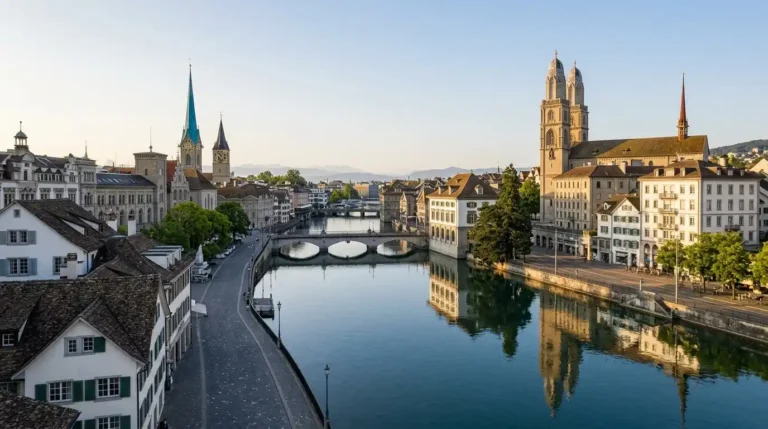
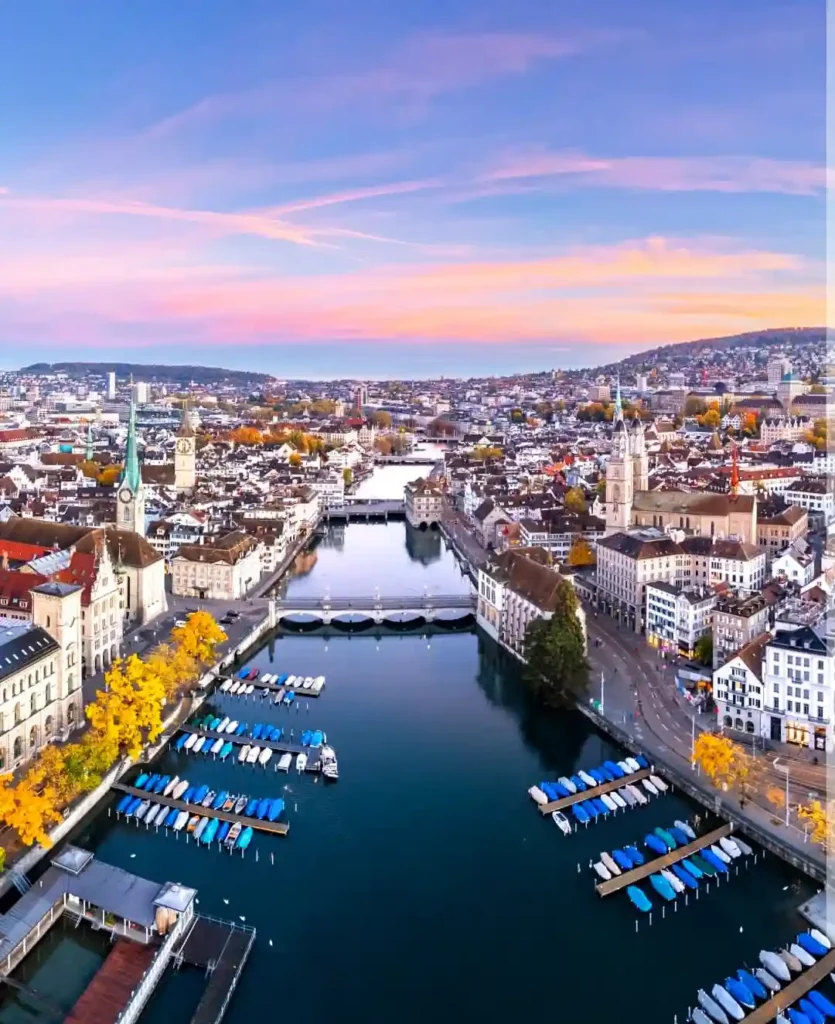
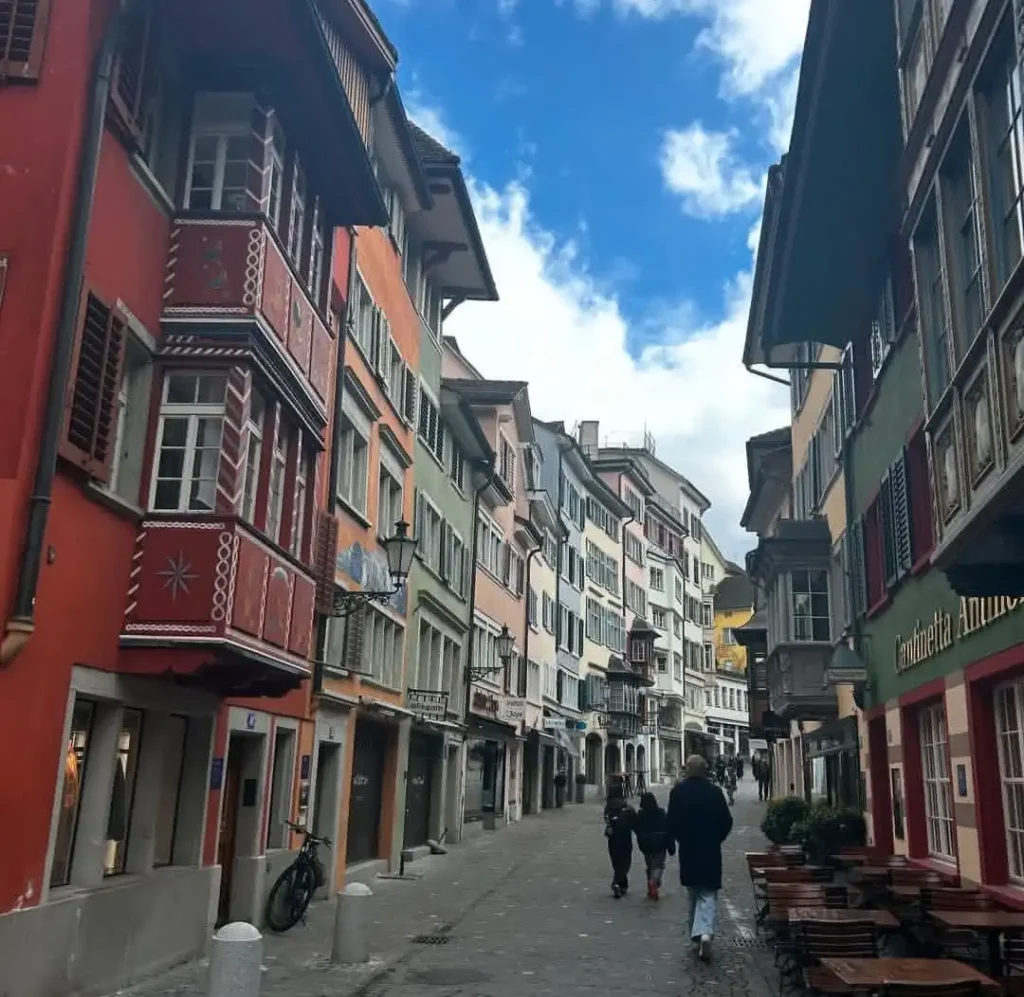
Zurich’s Altstadt is one of the most beautifully preserved medieval old towns in Europe.
Narrow cobblestone streets wind between centuries-old guild houses. The twin towers of the Grossmünster cathedral rise above the rooftops. The River Limmat runs clean and clear through the middle of everything.
Walk across the bridges. Explore the small streets of Niederdorf on the east bank. Find a café and sit long enough to understand why people who visit Zurich for a weekend often end up living there.
The old town is best explored on foot and without a map. Getting slightly lost here is not a problem. It is the whole point.
Visit the Kunsthaus Zurich
The Kunsthaus is one of the finest art museums in Europe and one of the most underrated.
Its collection spans seven centuries and includes works by Monet, Picasso, Munch, Giacometti, and an extraordinary collection of Swiss art that most visitors know very little about before they arrive.
The museum expanded significantly in 2021 with a new building that doubled its exhibition space. Allow at least three hours. It deserves more.
Read more about it: Mountain Outfit Ideas for Women: 15 Stylish and Practical Looks for Every Adventure
Swim in Lake Zurich
Zurich has a swimming culture that surprises almost every visitor who does not know about it in advance.
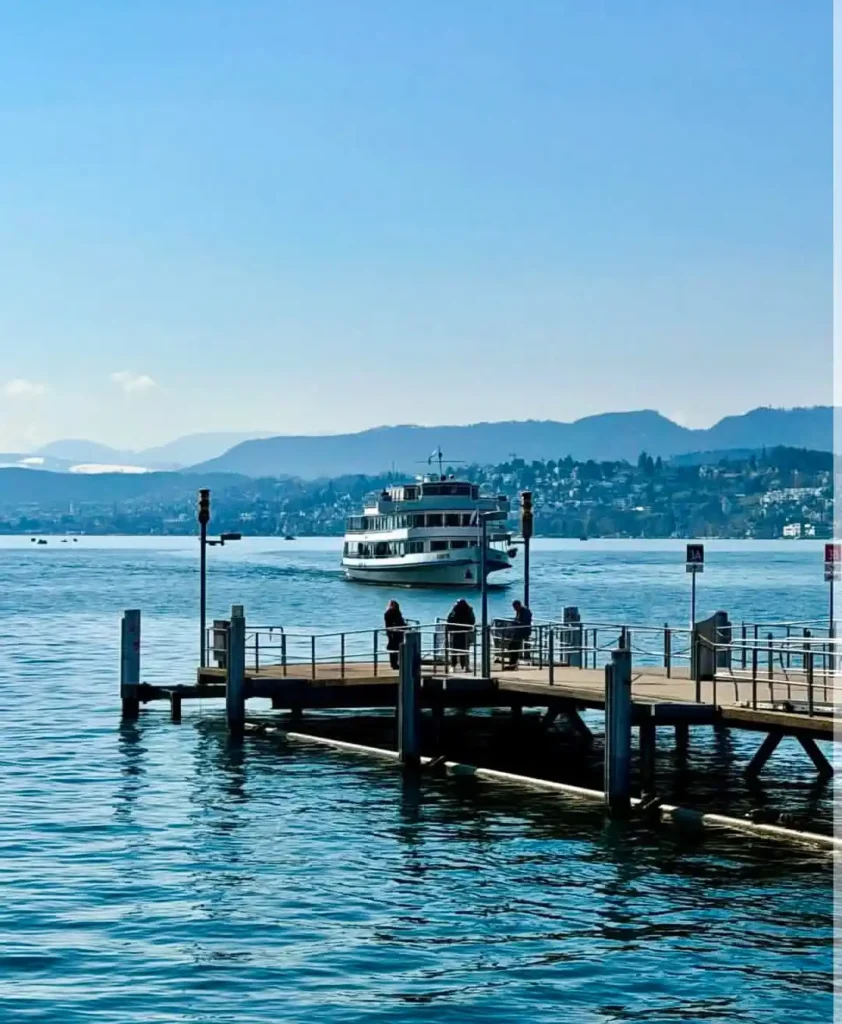
In summer the city’s lake and river swimming spots — called badis — fill with locals swimming in clean, cold, impossibly clear water. The Strandbad Mythenquai on Lake Zurich is one of the finest urban swimming spots in Europe.
Jump in. The water is cold and perfect. This is exactly what Zurich does in summer and you should do it too.
Eat and Drink in Zurich West
The Zurich West neighborhood is where the city’s creative energy lives.
Former industrial buildings converted into restaurants, bars, galleries, and music venues. The Langstrasse area for late night energy. The Viadukt market arches for daytime eating and shopping.
This is the Zurich that feels most alive and most of the moment. Spend an evening here. Stay later than you planned to.
Lucerne
Walk Across the Chapel Bridge
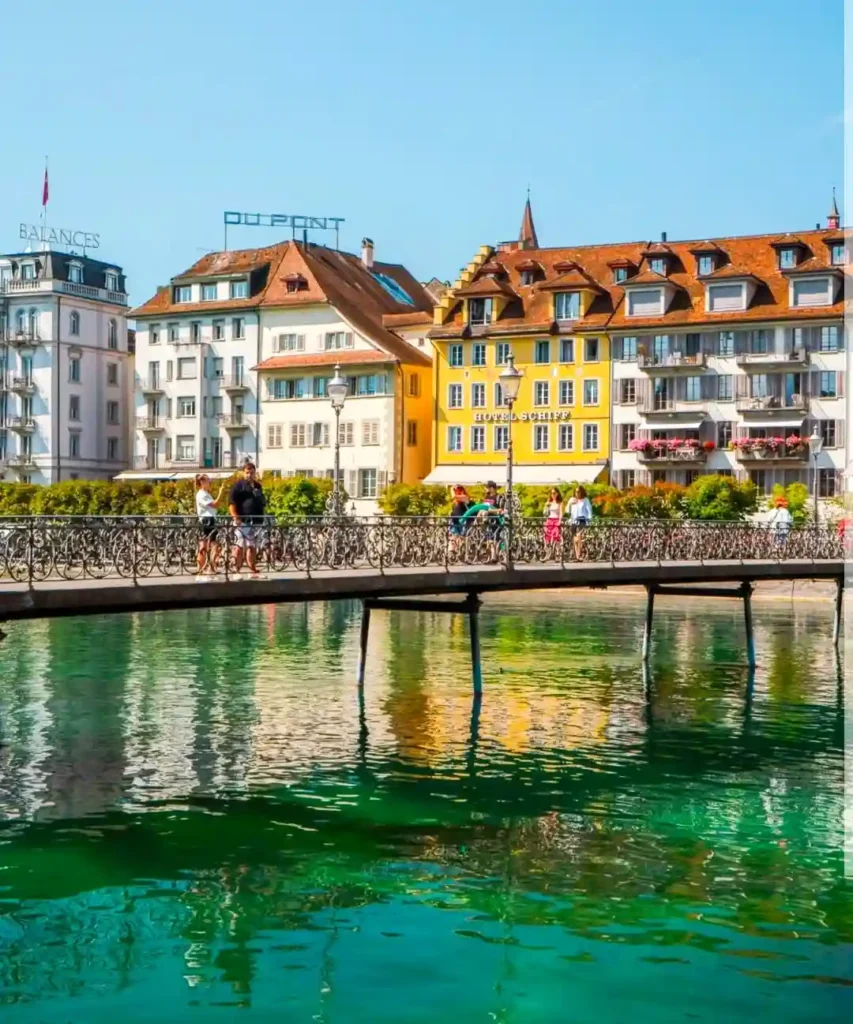
The Chapel Bridge is the most photographed structure in Switzerland and it earns every photograph taken of it.
A covered wooden bridge built in 1333 stretching across the River Reuss with the Water Tower rising beside it. Inside the bridge ceiling are a series of 17th century paintings depicting Swiss history and legend.
Walk across it in the morning before the crowds arrive. The light on the water at that hour is something genuinely beautiful.
Take the Boat on Lake Lucerne
Lake Lucerne is one of the most beautiful lakes in a country full of beautiful lakes.
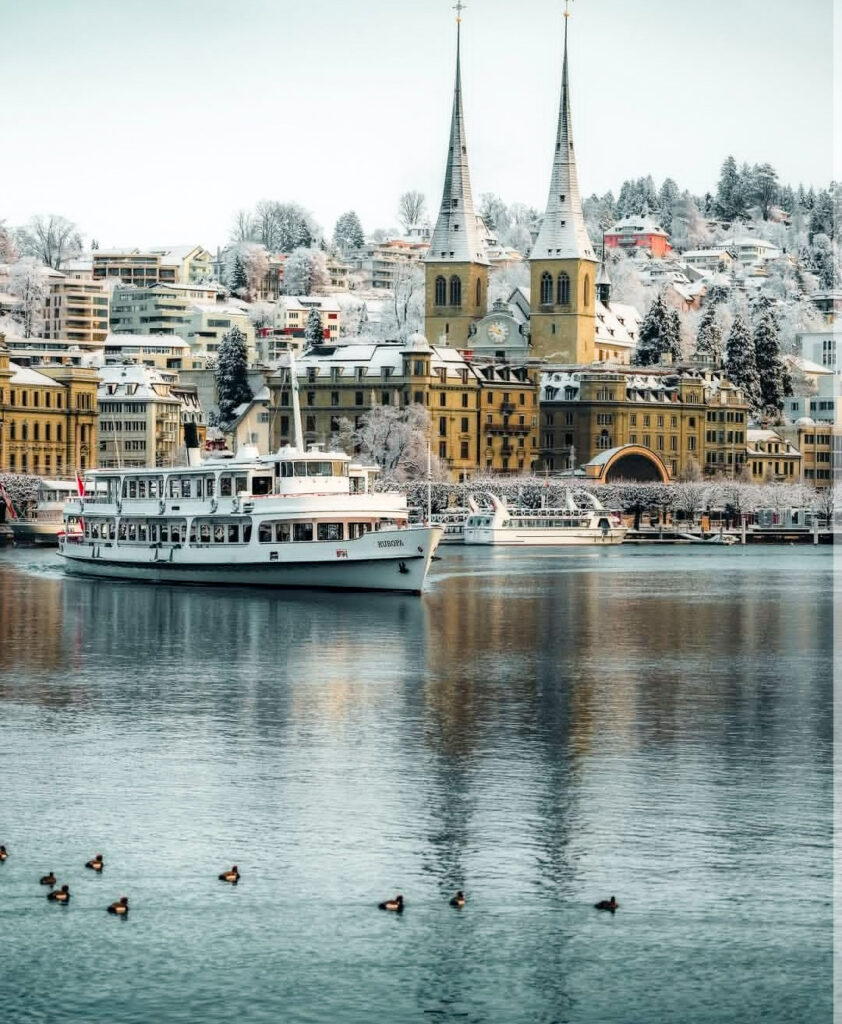
Take one of the historic paddle steamers across the water. Sit on the upper deck. Watch the mountains appear and shift as the boat moves. Watch the small villages slide past on the shoreline.
This is Switzerland at its most peaceful and most perfect.
Ride Up Mount Pilatus or Rigi
Both mountains rise directly above Lucerne and both offer extraordinary views across the lake and the Alps beyond.
Mount Pilatus has the steepest cogwheel railway in the world climbing to its summit. Mount Rigi — called the Queen of the Mountains — is accessible by cogwheel railway from several directions and offers a panoramic view that has been drawing visitors since the 19th century.
Go on a clear day. The view is the entire point.
Wander the Old Town
Lucerne’s old town is compact, beautifully preserved, and full of painted facades, medieval fountains, and quiet squares where locals sit and watch the day pass.
Cross the Spreuerbrücke — the lesser-known but equally beautiful covered bridge a few minutes from the Chapel Bridge. Find the Lion Monument carved directly into a cliff face. Climb the old city walls for a view over the rooftops.
Lucerne rewards slow wandering more than almost any city in Switzerland.
Bern
Walk the Arcaded Streets
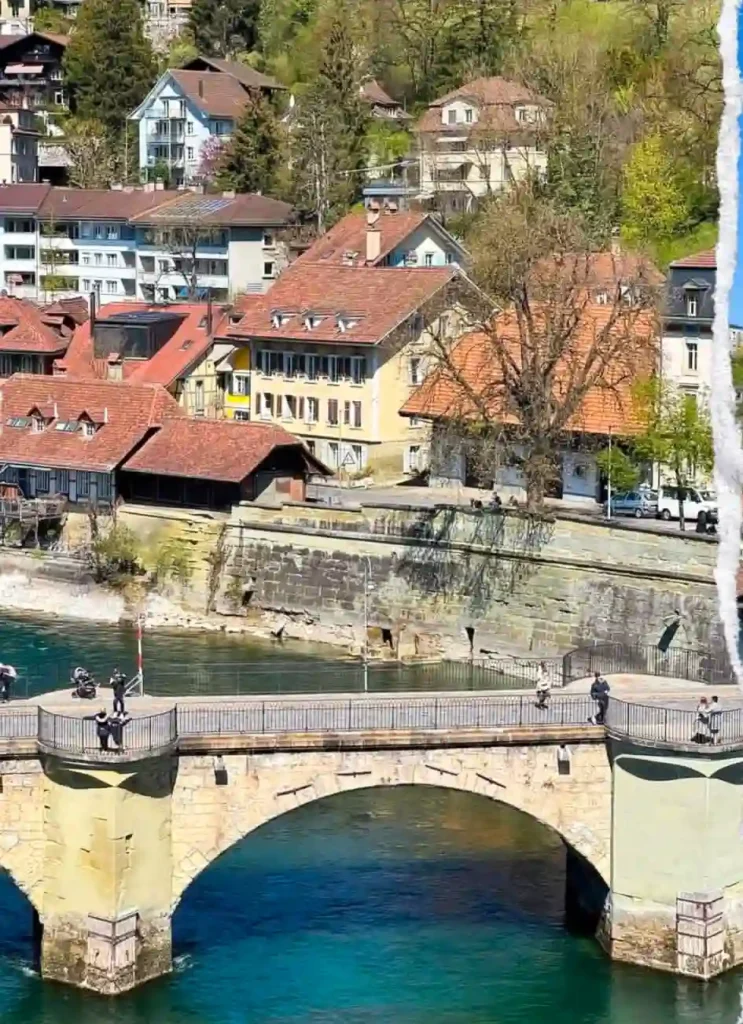
Bern is the Swiss capital and one of the most underrated cities in Europe.
Its old town — a UNESCO World Heritage site — is built around six kilometres of covered arcaded walkways called Lauben that run continuously along the main streets. In rain, in shine, in snow — you walk under cover the entire way through the city centre.
The architecture is medieval and remarkably intact. The fountains in the middle of the streets are centuries old and still running. The whole city feels like it has been quietly, carefully preserved.
Visit the Einstein House
Albert Einstein lived in Bern from 1902 to 1909 and developed his Special Theory of Relativity while working as a patent clerk here.
His apartment on Kramgasse is now a small museum that shows the rooms as they were when he lived in them. It is one of those places that feels genuinely significant in the quietest, most understated way.
See the Bears of Bern
Bern means bear. The bear has been the symbol of the city for centuries.
The BernMobil bear park beside the old town houses a small family of brown bears in a natural enclosure beside the River Aare. They are part of a tradition that goes back to 1513.
Walk down to the river below the bear park. The view back up to the old town from the river bank is one of the best in the city.
Swim in the Aare
The Aare River flows through Bern in a wide, fast-moving curve that the city has used as a natural swimming pool for generations.
In summer locals float downstream in the clean cold current — sometimes for kilometers — before climbing out and walking back through the city to do it again.
It is one of the most joyful and unexpected things you can do in a European capital city. Do not miss it if you visit in warm weather.
Geneva
Visit the Jet d’Eau
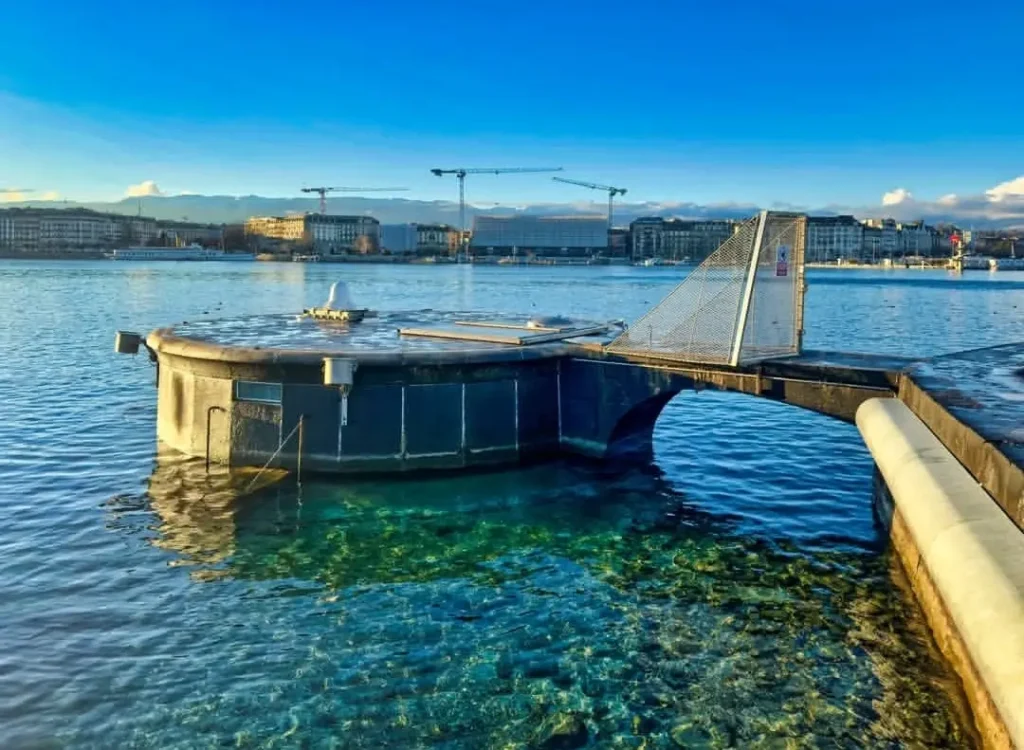
The Jet d’Eau is Geneva’s most iconic image. A single jet of water shooting 140 metres into the air above Lake Geneva.
It is visible from almost everywhere in the city. Up close it is genuinely dramatic — the noise and the spray and the sheer force of 500 litres of water per second launched into the sky.
Walk out along the pier to stand beside it. Get slightly wet. That is part of it.
Explore the Old Town
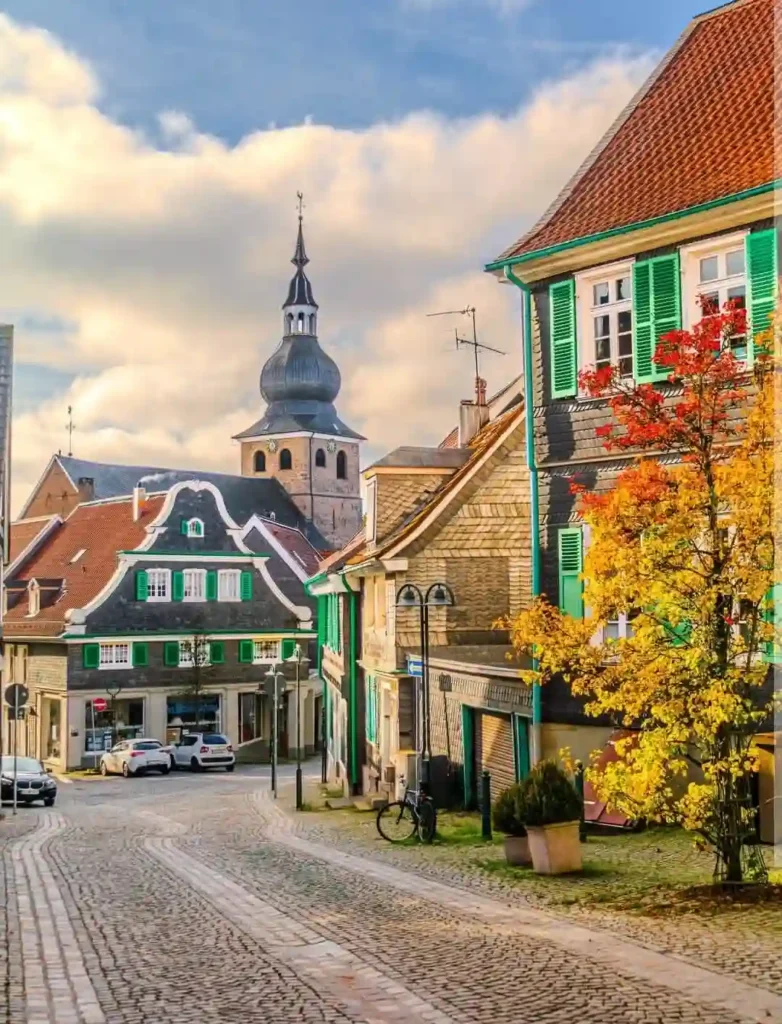
Geneva’s Vieille Ville climbs up a hill above the lake in a tangle of steep streets, hidden squares, and medieval buildings.
At the top stands the St. Pierre Cathedral, which you can climb for a view across the city and the lake to the Alps beyond. The Maison Tavel beside it is the oldest house in Geneva and now a small museum of city history.
Sit in the Place du Bourg-de-Four — the oldest square in Geneva — with a coffee and watch the city move around you. This is one of the finest squares in Switzerland.
Walk Along Lake Geneva
The lakefront promenade in Geneva is one of the most beautiful urban lakeside walks in Europe.
Flower gardens. Fountains. The Jet d’Eau in the distance. The Alps on the French side of the lake turning pink in the late afternoon light.
Walk it at golden hour. There is no better time.
Visit the Red Cross Museum
The International Committee of the Red Cross was founded in Geneva in 1863 and the city remains the headquarters of international humanitarian organizations.
The Red Cross Museum on the edge of the old town is one of the finest museums in Switzerland. Thoughtful, powerful, beautifully designed. It tells the story of humanitarian action across 150 years of history.
Allow two hours minimum. It will stay with you long after you leave.
The Best Mountain Experiences in Switzerland
Zermatt and the Matterhorn
See the Matterhorn
There is no mountain in the world more immediately recognizable than the Matterhorn.
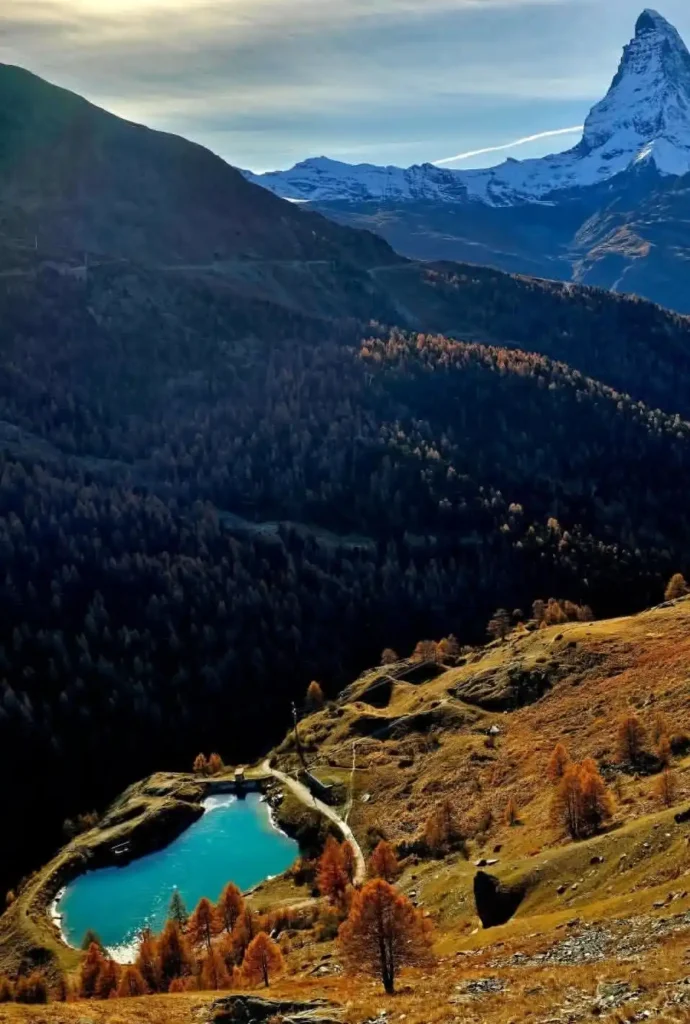
That distinctive pyramidal peak rising 4478 metres above the car-free village of Zermatt is one of the great natural images of Europe. And seeing it in person — suddenly appearing at the end of a street, or rising above a ridge as your train approaches — is a genuinely powerful moment.
The best views of the Matterhorn from Zermatt are from the Gornergrat — a mountain ridge reached by cogwheel railway — where the peak appears in full with the Gorner Glacier below it.
Go early morning. The light is extraordinary and the crowds have not yet arrived.
Hike the Five Lakes Walk
The Five Lakes Walk above Zermatt is one of the most beautiful day hikes in Switzerland.
A circular route past five mountain lakes, each of which reflects the Matterhorn when conditions are right. The most famous reflection is in the Riffelsee — a small, still lake where on clear mornings the perfect upside-down image of the Matterhorn appears in the water.
This hike is accessible to most fitness levels and takes three to four hours at a comfortable pace.
Ski or Snowboard in Winter
Zermatt has one of the finest ski areas in the Alps. The Klein Matterhorn cable car reaches 3883 metres — the highest cable car station in Europe — and the skiing extends across three countries: Switzerland, Italy, and France.
The season runs from November to April and the glacier skiing above the village runs year-round.
Grindelwald and the Jungfrau Region
Visit the Jungfraujoch
The Jungfraujoch is called the Top of Europe and at 3454 metres above sea level the name is not entirely without justification.
A spectacular railway journey — partly through a tunnel bored directly through the Eiger — climbs to a station built into the saddle between the Jungfrau and Mönch peaks. From there the Aletsch Glacier — the longest glacier in the Alps — stretches away into the distance.
It is cold at the top regardless of the season below. Bring a layer.
Book tickets in advance. This is one of the most visited attractions in Switzerland.
Hike to Bachalpsee
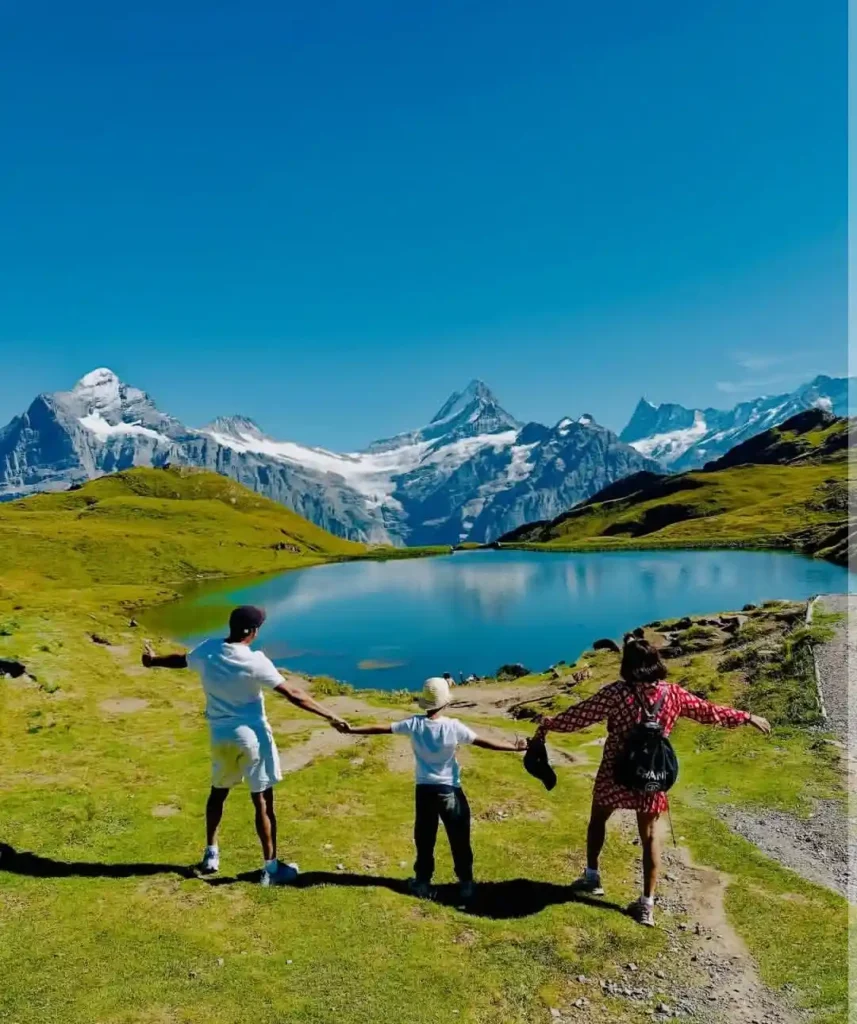
The Bachalpsee is a small mountain lake above Grindelwald that reflects the Wetterhorn and Schreckhorn peaks on still mornings.
The hike from the First cable car station is two kilometres each way on well-marked trail. It takes about 45 minutes each way at a comfortable pace.
One of the most beautiful short walks in the Alps. The reflection in the lake on a clear morning is extraordinary.
Take the First Cliff Walk
The First Cliff Walk by Tissot is a metal walkway and bridge constructed on the rock face above Grindelwald at 2168 metres.
It extends out over the edge of the cliff on a suspended bridge section that is not for those afraid of heights — but offers a view straight down into the valley and across to the Eiger face that is unlike any other viewpoint in the region.
Interlaken
Paraglide Over the Alps
Interlaken is the adventure capital of Switzerland and tandem paragliding from the slopes above the town is the experience that justifies that title most completely.
Running off a hillside and then floating above the Alps with Lake Brienz and Lake Thun visible in both directions and the Jungfrau massif directly ahead of you is one of those experiences that is impossible to fully describe to someone who has not done it.
Book with a reputable operator. Go on a clear day. You will talk about it for years.
Take the Boat on Lake Brienz
Lake Brienz is the less visited of the two lakes that flank Interlaken and arguably the more beautiful.
Its water is a vivid turquoise-blue that seems too intense to be real. The paddle steamers that cross it are historic and beautiful. The small village of Brienz on the far shore is worth the journey on its own.
Visit the Harder Kulm
The Harder Kulm viewpoint above Interlaken offers the definitive view of the two lakes and the mountains that has made the town famous.
A funicular climbs from the edge of town to the viewing platform in eight minutes. The panorama from the top — Lake Thun to the west and Lake Brienz to the east with the Jungfrau massif directly south — is one of the great Alpine views.
Go at sunset. The light is exceptional.
St. Moritz and the Engadin Valley
Drive or Walk the Engadin Valley
The Engadin Valley in the canton of Graubünden is one of the most beautiful valleys in Switzerland and one of the least crowded.
High altitude meadows. Forests of mountain pine. A string of glacial lakes in shades of blue and green. The distinctive Engadin architecture — houses with painted facades and small deep-set windows designed to keep out the cold.
Walk the Via Engiadina long-distance trail or simply drive through the valley stopping at every village that catches your eye. Both approaches reveal the same extraordinary landscape.
Take the Bernina Express
The Bernina Express train from Chur to Tirano in Italy is one of the great rail journeys of the world.
A UNESCO World Heritage route. The train climbs to 2253 metres at the Ospizio Bernina — the highest point on any regular gauge rail route in the Alps. The Morteratsch Glacier appears beside the track. The Bernina peaks rise on every side.
Book a seat on the right side of the train traveling south for the best views. Book months in advance in summer.
The Best Swiss Experiences That Are Not Mountains
The Swiss Chocolate Trail
Switzerland produces some of the finest chocolate in the world and the Swiss chocolate trail in the region between Broc and Gruyères gives you direct access to where it is made.
The Maison Cailler chocolate factory in Broc offers tours that end with unlimited tasting. The Maison Gruyère cheese dairy nearby does the same for cheese.
This is one of the finest hours you can spend in Switzerland. Do both on the same day.
The Rhine Falls
The Rhine Falls near Schaffhausen is the largest waterfall in Europe by volume.
Standing on the rocks in the middle of the falls — accessible by boat — with 600,000 litres of water per second thundering on every side of you is a visceral, physical experience that photographs cannot prepare you for.
Visit in early summer when the snowmelt swells the river to its maximum volume. The spray reaches you from 50 metres away.
The Lauterbrunnen Valley
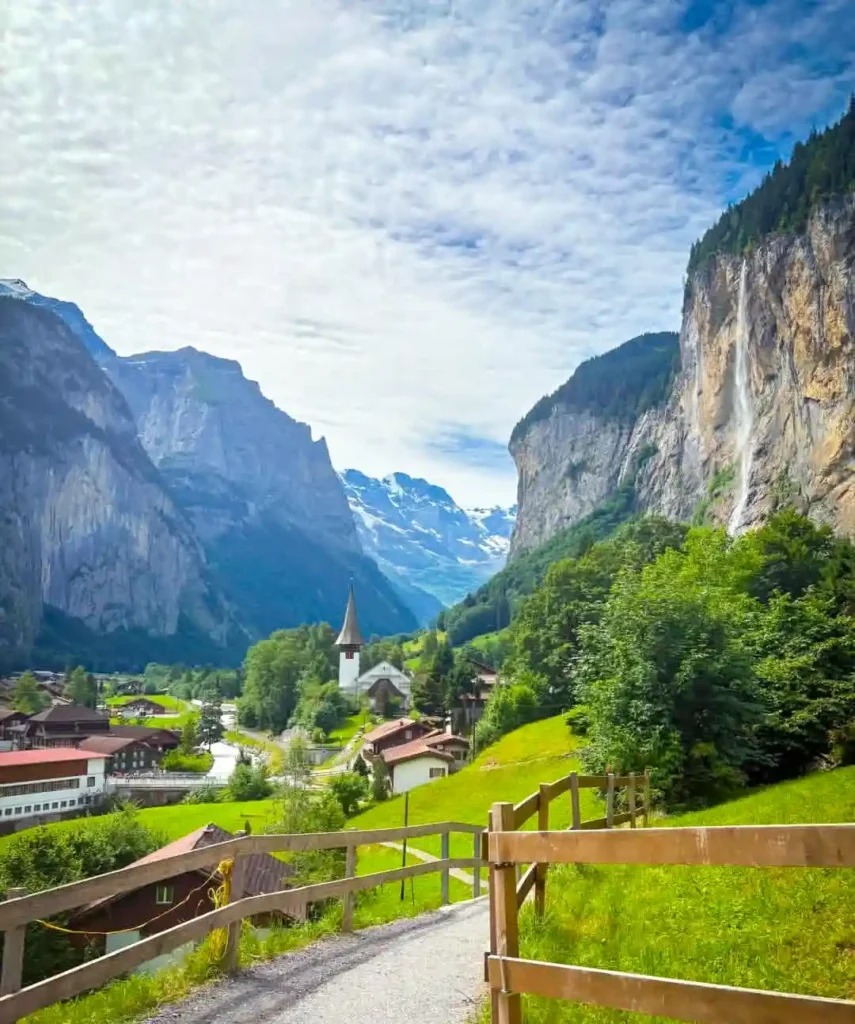
The Lauterbrunnen Valley below Grindelwald is one of the most dramatic landscapes in Switzerland.
A deep straight valley with walls rising 300 metres on either side. Seventy-two waterfalls dropping from the clifftops in thin white threads. The village in the valley floor with the church and the meadows and the sound of cowbells that carries across the whole thing.
Staubbach Falls drops 297 metres directly behind the village. Walk behind it if you can.
This is the valley that reportedly inspired J.R.R. Tolkien’s description of Rivendell. Standing in it, that feels completely believable.
The Appenzell Region
Appenzell is the Switzerland that most visitors never find and all the better for it.
A region of rolling green hills, traditional farmhouses, and the most intact Alpine folk culture in the country. The villages have painted facades, traditional crafts, and a way of life that has changed less in the last century than almost anywhere else in Europe.
Appenzell cheese is produced here and is among the finest in Switzerland. The local Alpenbitter herbal liqueur is worth trying in a small glass at a traditional Beiz.
Walk the hills above the village of Appenzell on a clear day. The view of the Alpstein massif from the trails above town is extraordinary.
Lake Geneva Region and the Lavaux Vineyards
The Lavaux wine region on the north shore of Lake Geneva is a UNESCO World Heritage site.
Terraced vineyards drop from the hillsides directly to the lake below. The wine produced here — primarily Chasselas white wines — is drunk almost entirely within Switzerland and rarely exported.
Walk the Lavaux Vineyard Terraces trail between Lausanne and Vevey for the full experience. The combination of lake, vineyards, Alps, and light at golden hour is one of the finest landscapes in Switzerland.
Stop in Montreux at the end of the walk. The lakeside promenade there — with the Chillon Castle rising from the water at its eastern end — is one of the great lakeside walks in Europe.
Practical Tips for Visiting Switzerland
The Swiss Travel Pass covers trains, boats, buses, and most mountain railways. Buy it before you arrive. It simplifies everything.
Book mountain experiences in advance. The Jungfraujoch, Gornergrat, and popular hiking routes fill up in summer. Book weeks or months ahead.
Carry some Swiss Francs. Switzerland uses the Swiss Franc, not the Euro. Most places accept cards but some smaller establishments and mountain restaurants prefer cash.
The weather changes quickly in the mountains. Always carry a layer even on warm summer days. Mountain weather can shift from sunshine to rain to snow in under an hour at altitude.
Trains run on time. Swiss trains are famously punctual. If your train leaves at 14:23 it leaves at 14:23. Not 14:24. Be on the platform with time to spare.
Sundays are quiet. Many shops close on Sundays and smaller towns become very quiet. Plan grocery shopping and practical errands for weekdays.
Drink the tap water. Swiss tap water comes directly from mountain springs and glaciers. It is some of the finest drinking water in the world. Use it. Refill your bottle everywhere.
The Best Time to Visit Switzerland
Every season in Switzerland is the right season for something.
Summer (June to August) is the peak season. The hiking trails are open. The lakes are warm enough to swim. The mountain flowers are in full bloom. The days are long and warm. Book accommodation well in advance.
Spring (April to May) brings wildflowers to the lower meadows and valleys before the summer crowds arrive. Some mountain routes are still closed. The weather is unpredictable but the light is extraordinary.
Autumn (September to October) turns the valleys golden. The crowds thin out. The air is crisp. The hiking is excellent. This is many experienced Swiss travelers’ favorite season.
Winter (November to March) transforms the country into a snow-covered landscape of extraordinary beauty. The ski resorts are at their finest. The Christmas markets in Zurich, Bern, and Basel are among the best in Europe. Zermatt and St. Moritz have their own particular winter magic.
Final Thoughts
Switzerland rewards slow travel more than almost any destination in the world.
It is a country where the temptation is to check off the famous views as quickly as possible and move on. The Matterhorn. The Jungfraujoch. The Chapel Bridge.
But the travelers who get most from Switzerland are the ones who slow down. Who take the long way between cities. Who spend an extra day in a village they were only supposed to pass through. Who sit beside a lake long enough for the light to change.
This country has more beauty per square kilometer than almost anywhere else on earth. And that beauty is not going anywhere.
Take your time with it.
Go slowly. Look carefully. Switzerland rewards the patient traveler more than you can imagine.