Mountain Outfit Ideas for Women: 15 Stylish and Practical Looks for Every Adventure

There is a feeling that comes with being in the mountains that exists nowhere else.
The air is colder and cleaner. The silence is deeper. The views make everything that felt urgent at sea level feel suddenly small and manageable.
And dressing for the mountains is its own particular kind of challenge.
You need warmth without bulk. Layers that come on and off easily as the temperature shifts through the day. Fabrics that move with you on a trail and still look good when you walk into a mountain village for lunch. Shoes that handle uneven terrain without making your feet pay for it by noon.
These fifteen outfits solve all of that. Every single one.
Read more about: Europe Capsule Wardrobe 2025: Pack 10 Items, Create 30 Outfits
What Makes a Great Mountain Outfit
Mountain dressing is built around one principle above everything else.
Layering.
The temperature in the mountains changes constantly. You start a morning hike at eight degrees and by midday it is eighteen. You reach the summit and the wind drops everything back to five. You walk into the valley and it climbs again.
A great mountain outfit is not one single piece. It is a system of pieces that work together and can be adjusted throughout the day without stopping to completely change your clothes.
Base layer. Mid layer. Outer layer. That is the mountain dressing framework. Everything else fits within it.
The Layering System Explained
The base layer sits directly against your skin. Its job is to manage moisture. To move sweat away from your body so you stay dry and warm even when you are working hard. Merino wool and moisture-wicking synthetics are the best base layer fabrics. Cotton is the worst. Wet cotton against your skin in cold mountain air is genuinely dangerous.
The mid layer provides insulation. It traps warm air and keeps your core temperature stable. A fleece, a down vest, a lightweight puffer jacket, or a chunky knit sweater. The mid layer is what you add when you stop moving and remove when you start again.
The outer layer protects against wind, rain, and the cold. A waterproof or water-resistant shell jacket. Lightweight enough to stuff into a bag when not needed. Protective enough to genuinely matter when the weather changes.
Every mountain outfit on this list is built around this system.
The Colors That Work in the Mountains
Mountain dressing has its own color palette and it is deeply satisfying.
Warm earth tones. Olive green. Rust orange. Warm camel. Dusty brown. Slate grey. Deep navy. Forest green.
These colors belong in a mountain landscape the way neutrals belong in a city wardrobe. They feel right against rock and pine and snow. They photograph beautifully in natural mountain light.
Add one accent color if you want. A bright coral mid layer. A vivid teal shell jacket. One pop of color that makes you easy to spot on a trail. That practicality doubles as style in the mountains.
Read more about: Outfit Inspo Casual: 15 Effortless Everyday Looks You Will Actually Want to Wear
15 Mountain Outfit Ideas for Women
Hiking and Trail Outfits
1. The Classic Hiker: Leggings + Fleece + Shell Jacket
This is the mountain outfit that has been right on every trail in every mountain range in the world for decades.
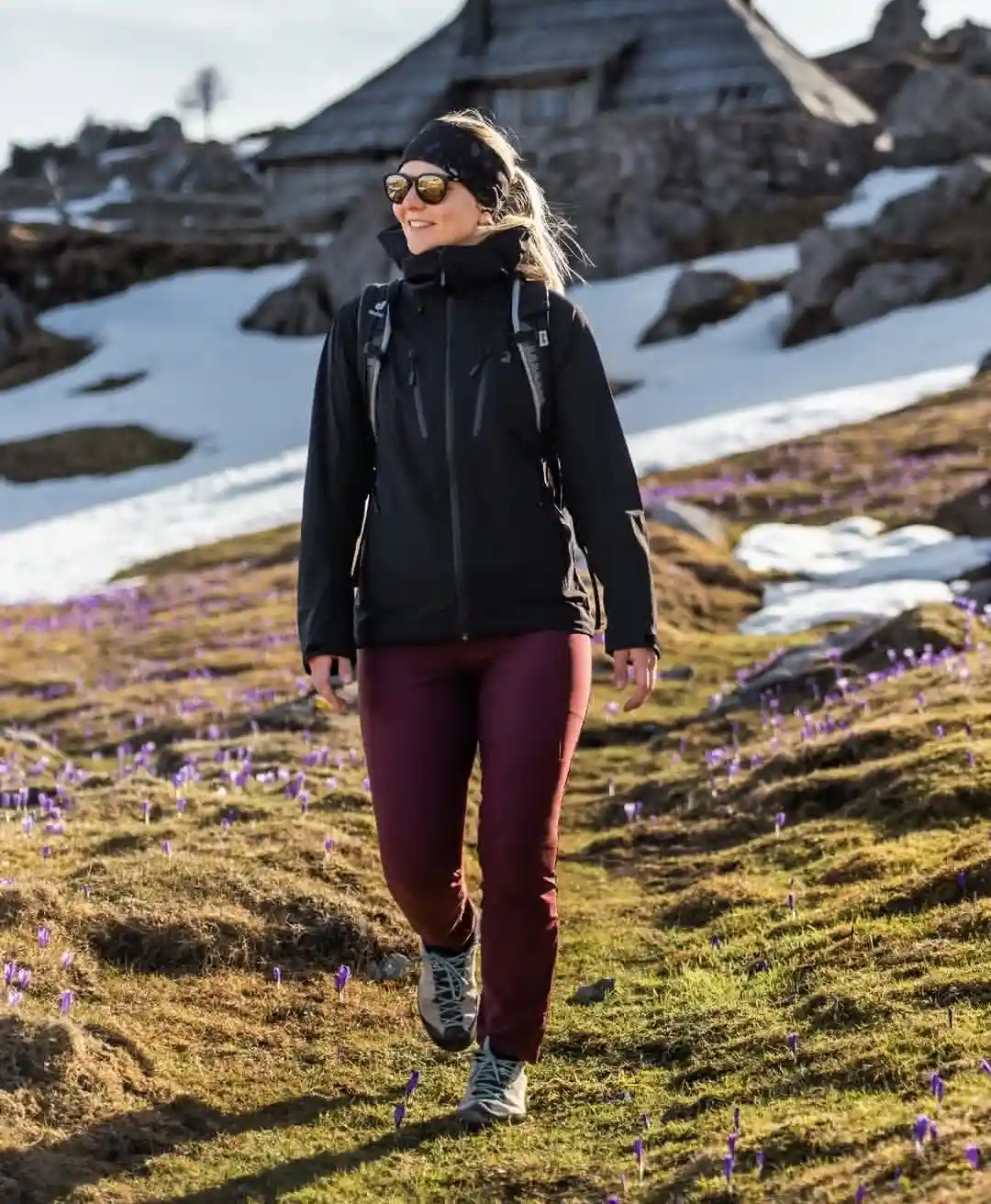
High-waist hiking leggings in a moisture-wicking fabric. A fitted fleece in olive, grey, or warm rust zipped halfway. A lightweight waterproof shell jacket stuffed into your pack until you need it.
Add hiking boots with ankle support, wool hiking socks, and a small daypack.
The leggings move freely on any terrain. The fleece provides warmth that you can regulate with the zip. The shell jacket handles anything the sky decides to do.
I wore this exact combination on a trail above Grindelwald last summer. The weather changed four times in five hours. The layering system handled every single change without me having to stop and dig through my bag.
Key Items:
- High-waist hiking leggings (moisture-wicking)
- Fitted fleece (olive, grey, or rust)
- Lightweight waterproof shell jacket
- Hiking boots with ankle support
2. The Soft Hiker: Wide-Leg Hiking Trousers + Base Layer Top + Puffer Vest
Not every mountain day is a hard trail day.
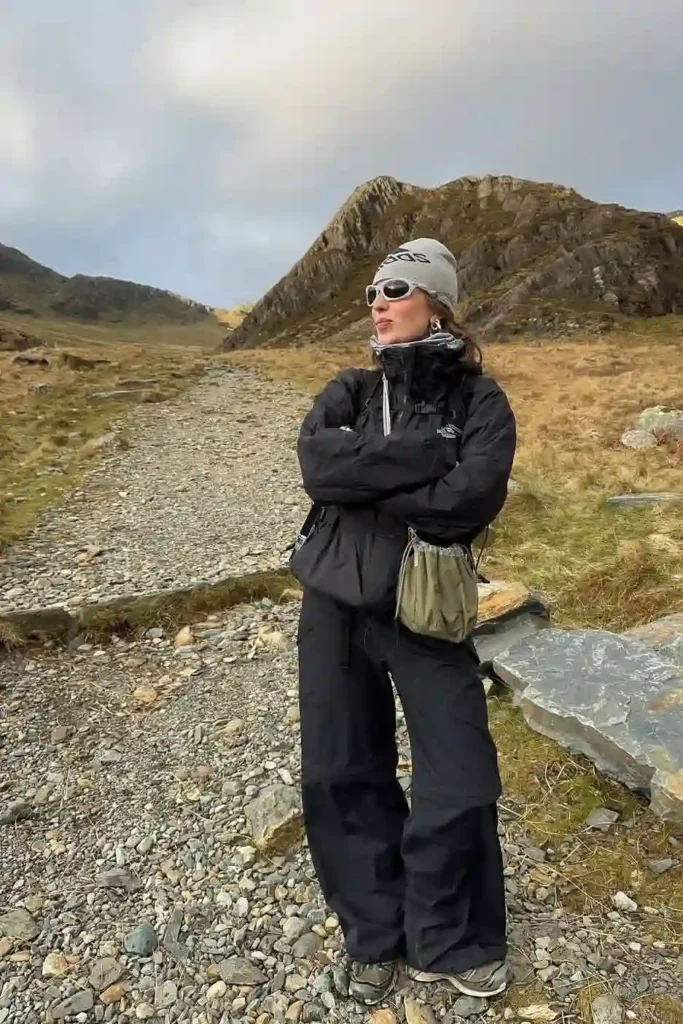
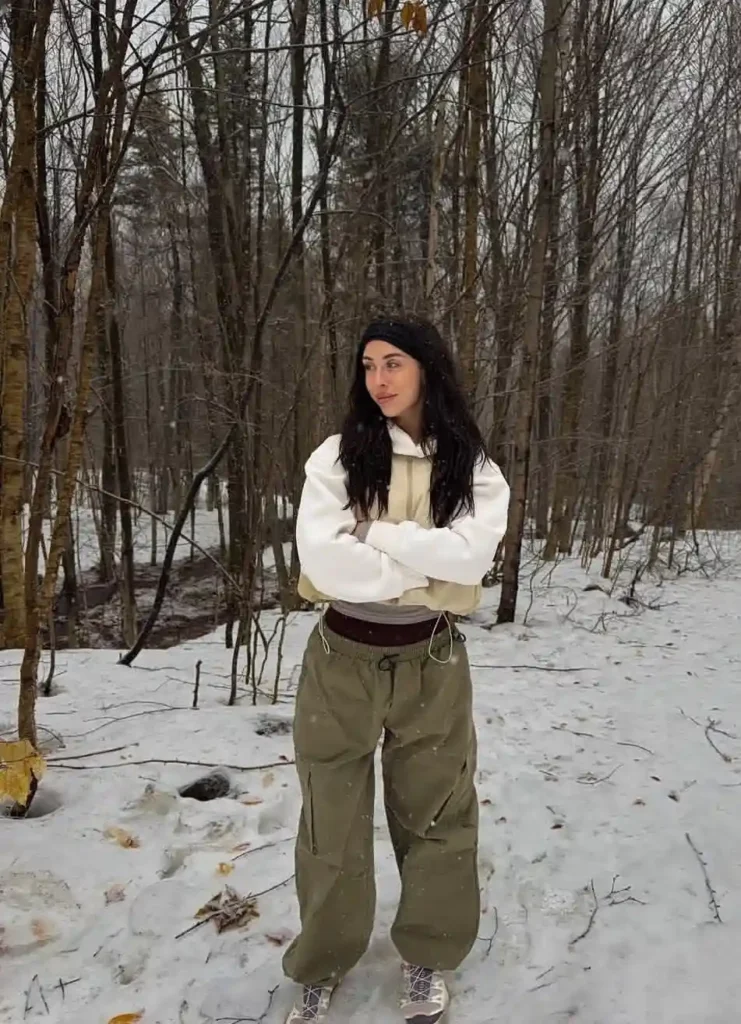
Wide-leg hiking trousers in a technical fabric — lightweight, quick-drying, with pockets — worn with a fitted long-sleeve base layer top and a puffer vest over the top.
This combination looks considerably more styled than the standard leggings-and-fleece hiker outfit while still performing on the trail. The wide-leg trouser silhouette is flattering. The puffer vest keeps your core warm without restricting your arm movement.
Add trail runners instead of full hiking boots for easier terrain. A baseball cap and sunglasses.
Key Items:
- Wide-leg hiking trousers (technical fabric)
- Fitted long-sleeve base layer top
- Puffer vest
- Trail runners and baseball cap
3. The Warm Weather Hiker: Shorts + Long-Sleeve Tee + Light Layer
For summer mountain days when the sun is strong and the elevation is not extreme.
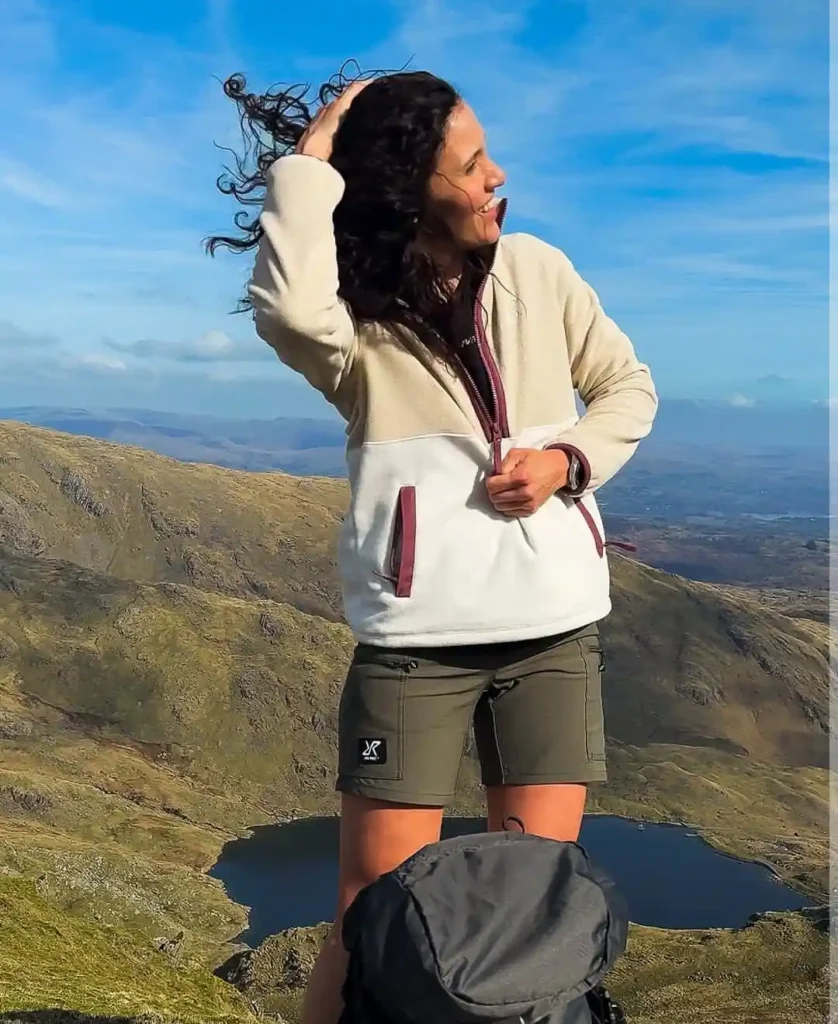
Hiking shorts in a technical fabric with pockets. A fitted long-sleeve tee in a moisture-wicking fabric — long sleeves protect your arms from sun and scratches on narrow trails. A lightweight zip-up fleece or wind jacket tied around your waist for when you need it.
Add trail runners or light hiking shoes. A hydration pack or small daypack. Sunscreen, sunglasses, and a hat.
This is the outfit for the mountain days that feel more like warm summer walks than serious alpine expeditions. It is lighter, more breathable, and more comfortable in genuine heat.
Key Items:
- Hiking shorts (technical fabric with pockets)
- Fitted long-sleeve moisture-wicking tee
- Lightweight fleece tied at waist
- Trail runners and sun hat
4. The Cold Weather Hiker: Thermal Base Layer + Mid Fleece + Insulated Jacket
For early morning starts, high altitude trails, and shoulder season mountain days when the temperature is serious.
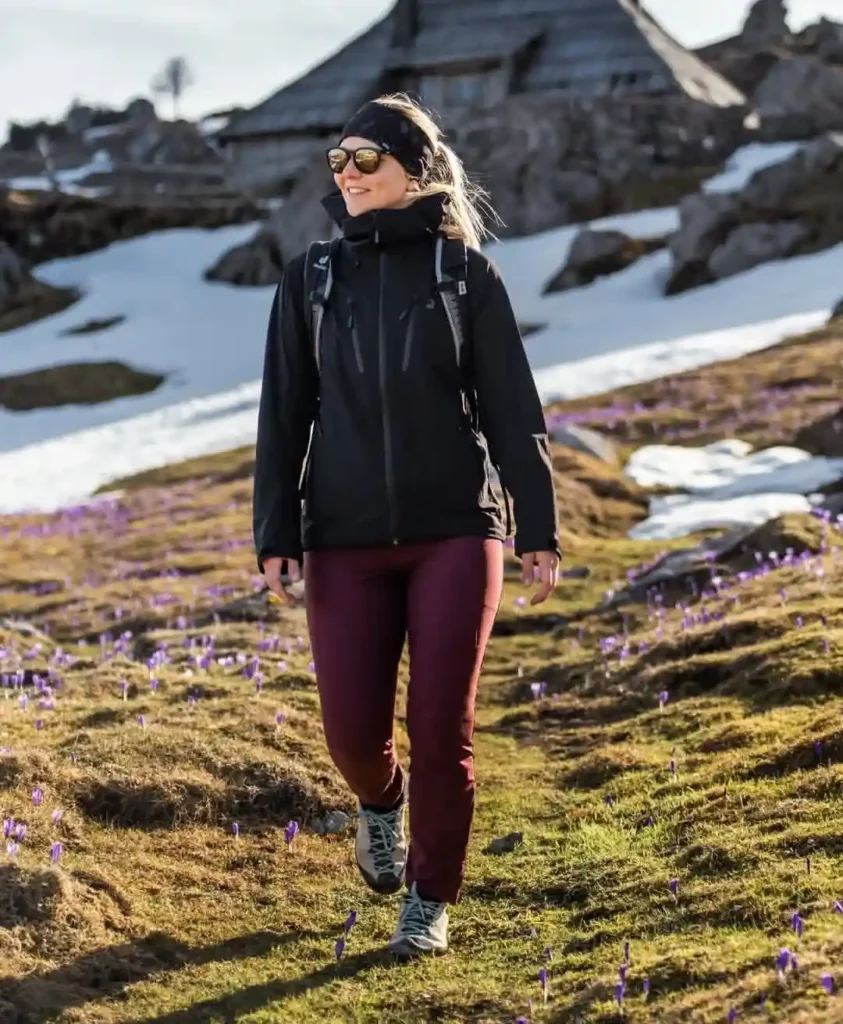
A merino wool thermal base layer top and leggings directly against the skin. A mid-weight fleece over the top. An insulated down or synthetic jacket as the outer layer.
Add waterproof hiking trousers over the leggings if rain is possible. Waterproof hiking boots. Wool socks. A merino wool beanie and gloves in the pack for the summit.
This system keeps you warm from the first cold morning steps to the warmest point of the afternoon. Every layer can be removed and stored as conditions change.
Key Items:
- Merino wool thermal base layer (top and leggings)
- Mid-weight fleece
- Insulated down or synthetic jacket
- Waterproof hiking boots and wool beanie
Read more about: Best Things to Do in Switzerland: The Complete Travel Guide
5. The Trail to Lunch Outfit: Cargo Leggings + Fitted Puffer + Clean Sneakers
The mountain day that involves a trail in the morning and a village restaurant at noon needs an outfit that handles both.
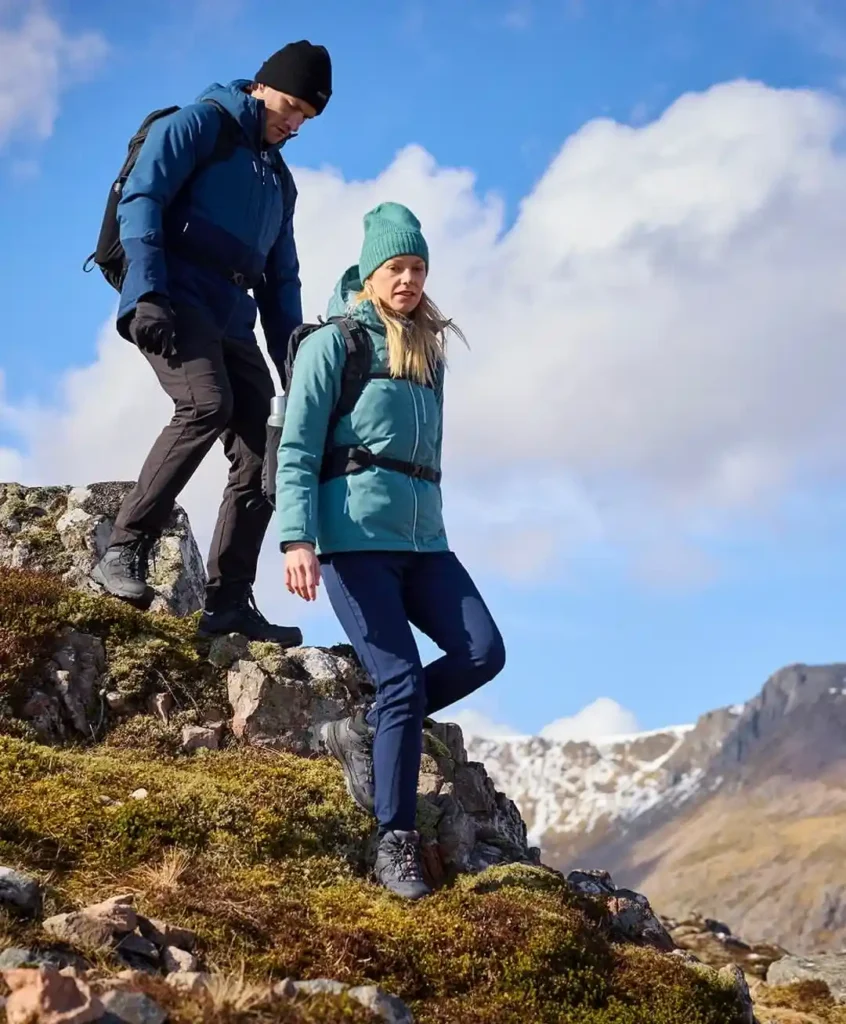
Slim cargo leggings in olive, black, or slate grey. A fitted puffer jacket in a flattering silhouette rather than an oversized one. Clean leather sneakers or smart trail runners that look good enough for a restaurant terrace.
Add a simple long-sleeve top underneath the puffer. A small crossbody bag instead of a full hiking pack for the restaurant portion of the day.
This is the Switzerland and Dolomites outfit. The one for mountain days that have a good lunch built into the itinerary.
Key Items:
- Slim cargo leggings (olive, black, or slate)
- Fitted puffer jacket
- Clean leather sneakers or smart trail runners
- Small crossbody bag
Mountain Village and Casual Mountain Outfits
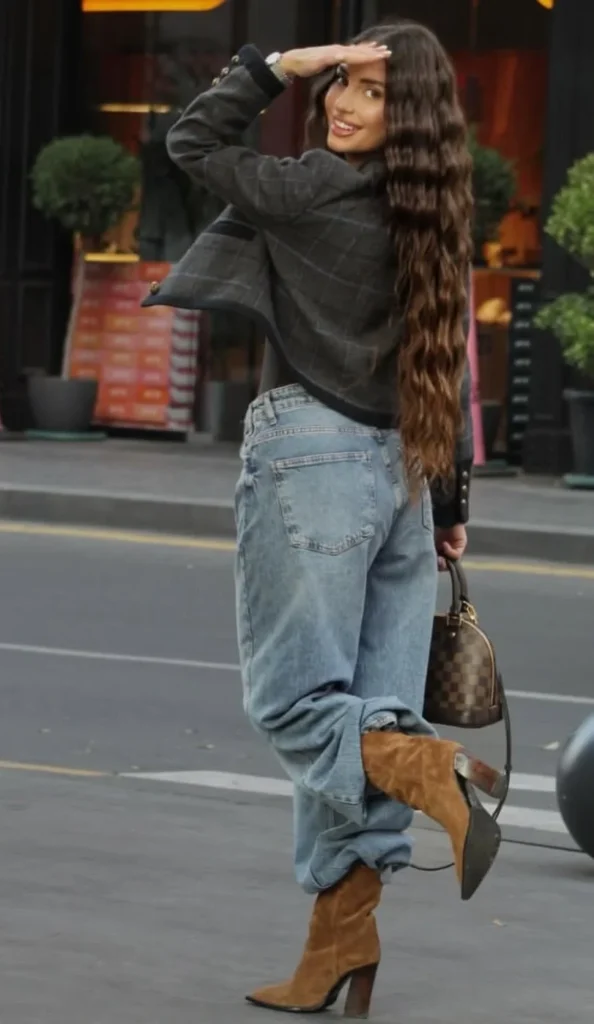
6. The Mountain Village Look: Straight-Leg Jeans + Chunky Knit + Ankle Boots
For the mountain days that are more village than trail.
Dark wash straight-leg jeans. A chunky oversized knit sweater in camel, cream, or warm rust. Leather ankle boots with a low block heel.
Add a wool coat or puffer jacket over the top. A beanie. A small leather crossbody bag.
This is the Zermatt high street outfit. The Chamonix café outfit. The mountain town weekend look that feels completely right against a backdrop of snow-capped peaks and timber-framed buildings.
It is comfortable, warm, and genuinely stylish without requiring a single piece of technical hiking gear.
Key Items:
- Dark wash straight-leg jeans
- Chunky oversized knit sweater (camel or rust)
- Leather ankle boots (low block heel)
- Wool coat or puffer jacket
7. The Cozy Mountain Cabin Outfit: Fleece Co-ord Set + Wool Socks + Boots
A matching fleece co-ord set is the mountain cabin outfit that looks intentional and feels like wearing a warm hug.
Choose a fleece set in a warm solid color. Deep forest green. Warm rust brown. Dusty slate blue. A matching fleece top and wide-leg fleece trousers or shorts.
Add tall wool socks and leather lace-up boots. A chunky knit beanie.
This is the après-ski outfit. The cabin morning outfit. The mountain weekend look for the hours spent around a fire rather than on a trail.
Key Items:
- Matching fleece co-ord set (forest green or rust)
- Chunky wool socks
- Leather lace-up boots
- Chunky knit beanie
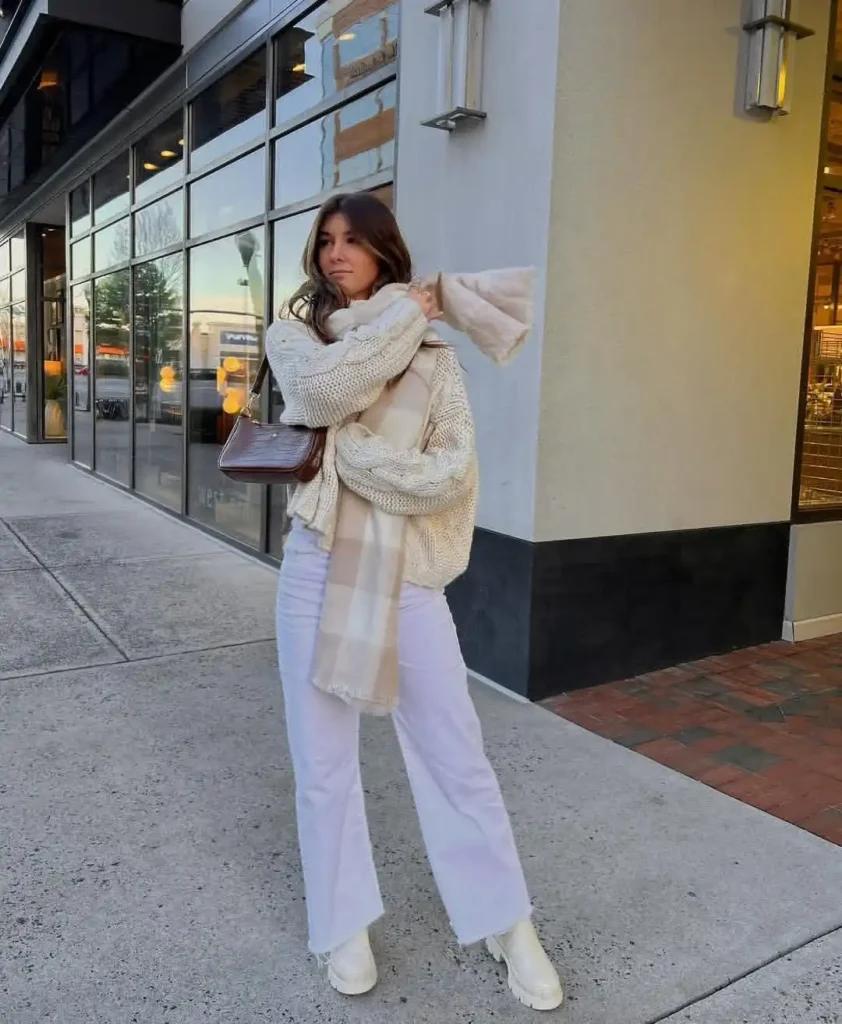
8. The Mountain Weekend Casual: Oversized Flannel + Leggings + Boots
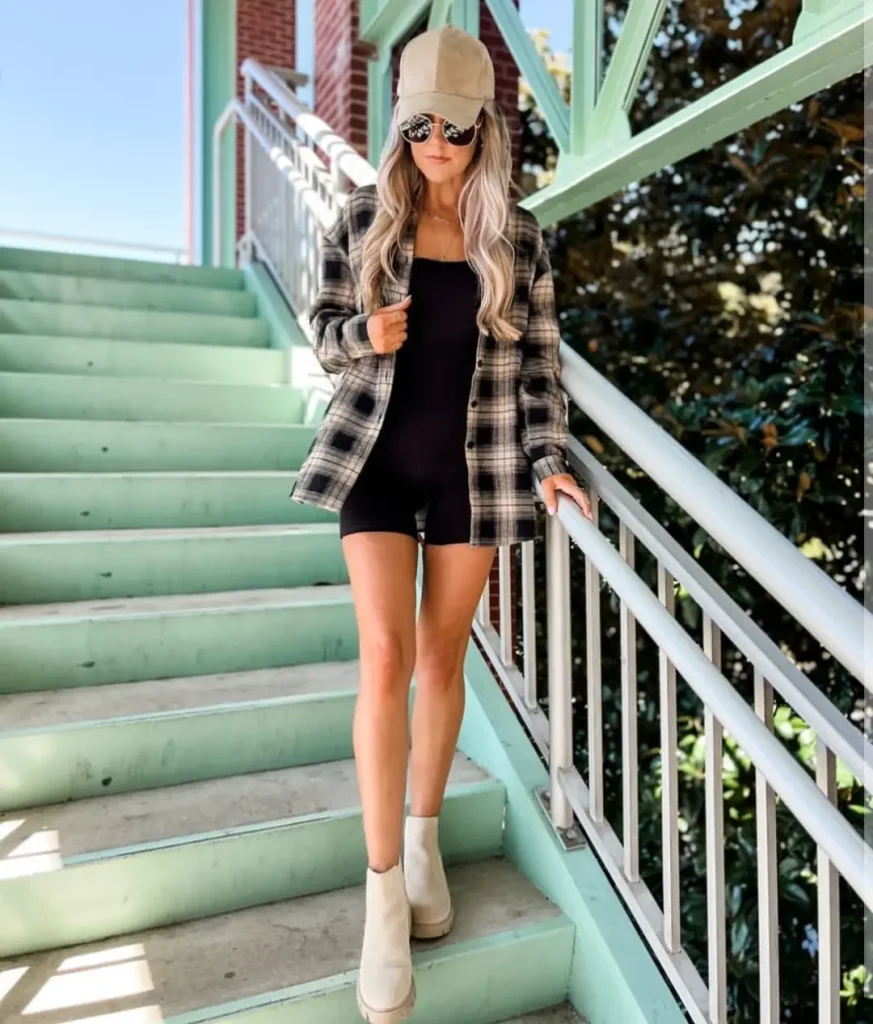
An oversized flannel shirt worn open over a simple long-sleeve base layer with fitted leggings is the most relaxed mountain casual outfit on this list.
Choose a flannel in a warm plaid. Red and black. Green and cream. Tan and brown. Wear it fully open over a fitted thermal or long-sleeve tee. Add slim leggings and lace-up boots.
It is casual, comfortable, and has exactly the warm mountain energy that flannel was made for. The plaid pattern feels at home in a mountain landscape in a way that almost no other pattern does.
Key Items:
- Oversized flannel shirt (warm plaid)
- Fitted long-sleeve base layer underneath
- Slim leggings
- Lace-up leather or hiking boots
Read more about: Things to Do in Spain: The Ultimate Travel Guide
9. The Mountain Town Day Trip: Wide-Leg Trousers + Turtleneck + Puffer Jacket
Wide-leg tailored trousers with a fitted turtleneck and a sleek puffer jacket is the mountain town outfit that looks like it belongs in a Vogue winter travel editorial.
Choose trousers in warm camel, deep navy, or forest green. A fitted ribbed turtleneck in ivory or cream. A sleek fitted puffer jacket in a complementary tone.
Add loafers or clean leather boots. A structured tote bag. Simple gold jewelry.
This combination is polished enough for a nice mountain restaurant and comfortable enough for a full day of walking through a village, browsing shops, and sitting on a sunny terrace with a warm drink.
Key Items:
- Wide-leg tailored trousers (camel, navy, or forest green)
- Fitted ribbed turtleneck (ivory or cream)
- Sleek fitted puffer jacket
- Loafers or clean leather boots
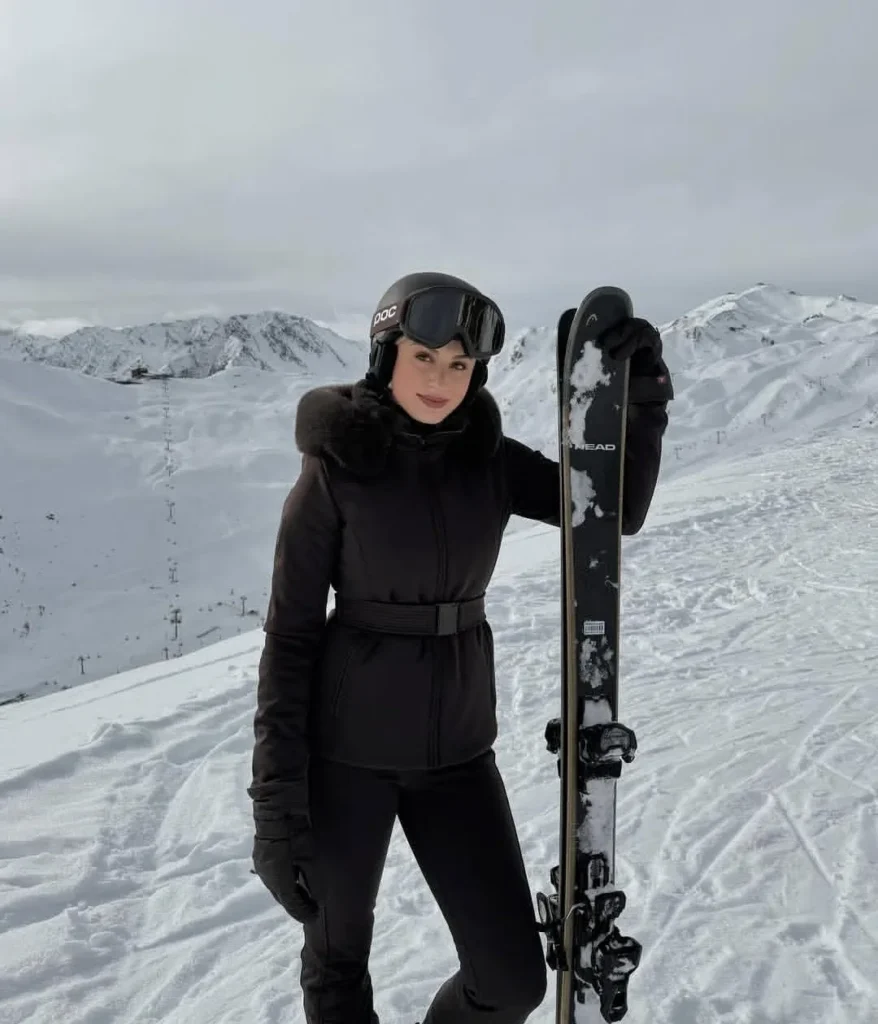
10. The All-Black Mountain Outfit
All black in the mountains is a statement that works as well at altitude as it does in the city.
Black high-waist hiking leggings. Black fitted fleece. Black shell jacket. Black hiking boots.
Everything the same color and everything slightly different in texture and technical function. The leggings are smooth and stretchy. The fleece is textured and soft. The shell is matte and structured.
Add one accent. An olive green beanie. A rust orange buff worn around the neck. A pop of warm color that breaks the black just enough to look intentional.
All-black mountain dressing is confident and practical simultaneously. It photographs beautifully against snow and rock. And it never looks wrong in a mountain setting.
Key Items:
- Black high-waist hiking leggings
- Black fitted fleece
- Black shell jacket and hiking boots
- One warm accent color accessory
Ski and Snow Outfits
11. The Ski Day Outfit
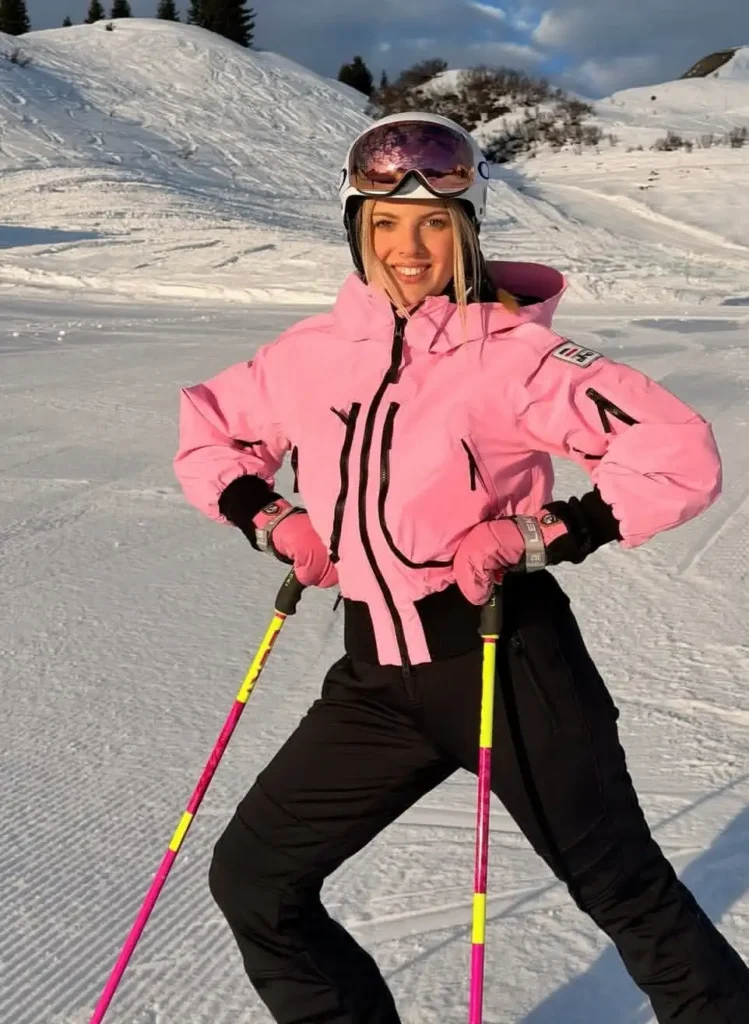
A ski day outfit is its own category entirely and it has its own rules.
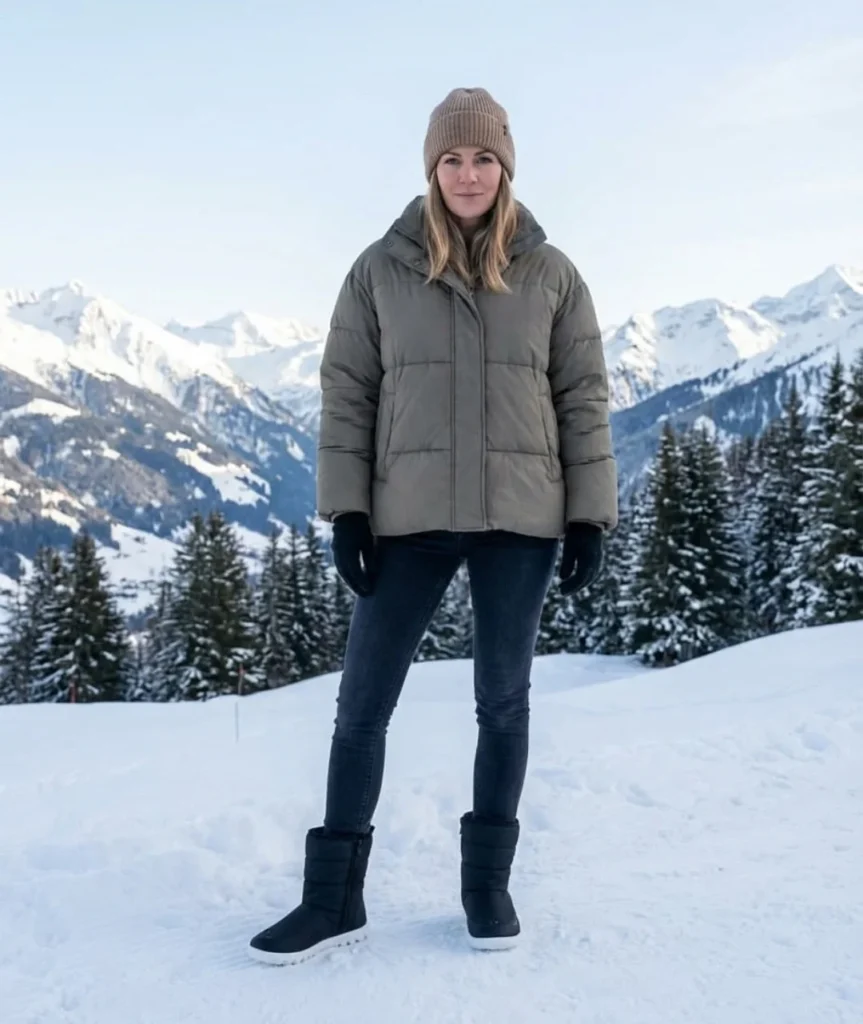
A moisture-wicking thermal base layer in merino or synthetic. A fitted mid-layer fleece. A waterproof and windproof ski jacket in a bold color or clean neutral. Matching or complementary ski trousers with waterproofing.
Helmet. Goggles. Ski gloves. Warm ski socks that reach to the knee.
Everything on a ski day serves a functional purpose first. But function and style are not mutually exclusive on the mountain. A well-fitted ski jacket in a great color looks as good as it performs.
Choose a ski jacket that fits close to the body rather than oversized. It performs better and looks considerably more polished on the slope and in the mountain restaurant at lunch.
Key Items:
- Merino wool thermal base layer
- Fitted fleece mid layer
- Waterproof ski jacket (well-fitted)
- Waterproof ski trousers and helmet
12. The Après-Ski Outfit
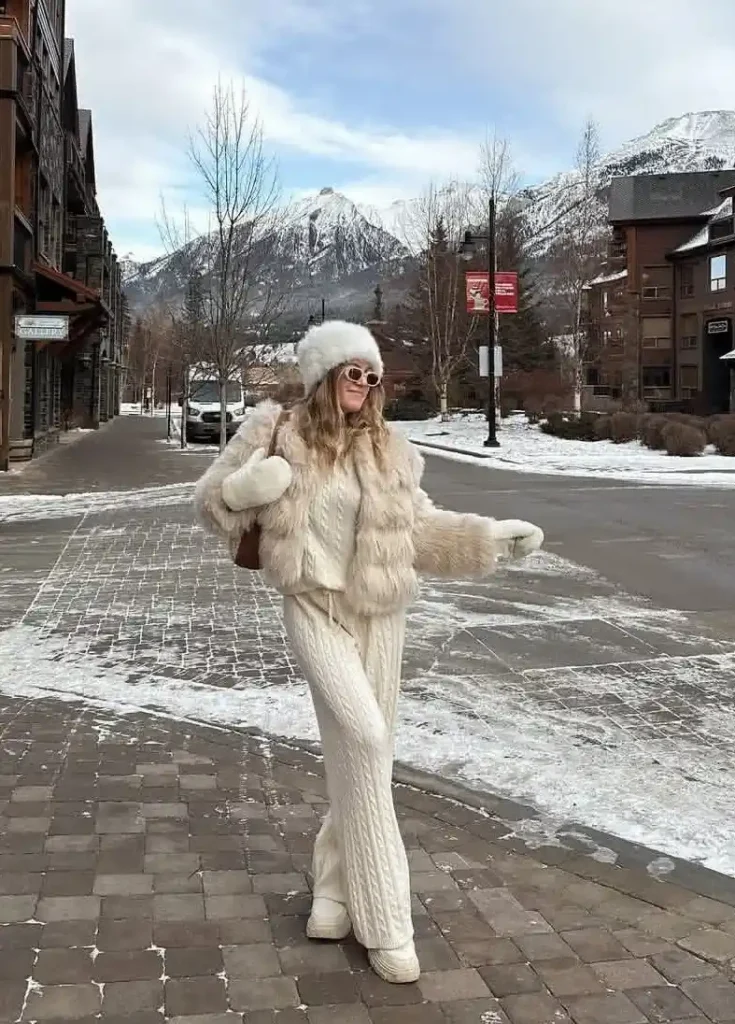
The après-ski hour — that golden window between coming off the mountain and going to dinner — deserves its own outfit entirely.
A fitted turtleneck sweater in cream, camel, or warm burgundy. Slim straight-leg trousers or fitted ski trousers in a clean solid. Tall snow boots or lined leather boots. A chunky knit beanie worn slightly back on the head.
Add a long wool coat or oversized puffer over the whole thing for walking between venues. A small crossbody bag.
This is the Verbier terrace outfit. The St. Moritz bar outfit. The mountain evening that starts in ski boots and becomes something considerably more elegant by the time dinner arrives.
Key Items:
- Fitted turtleneck sweater (cream, camel, or burgundy)
- Slim straight-leg trousers
- Tall snow boots or lined leather boots
- Long wool coat or oversized puffer
Read more about: Paris Summer Outfit Ideas for Women: How to Dress Like You Actually Live There
Stylish Mountain Looks for Photography and Travel
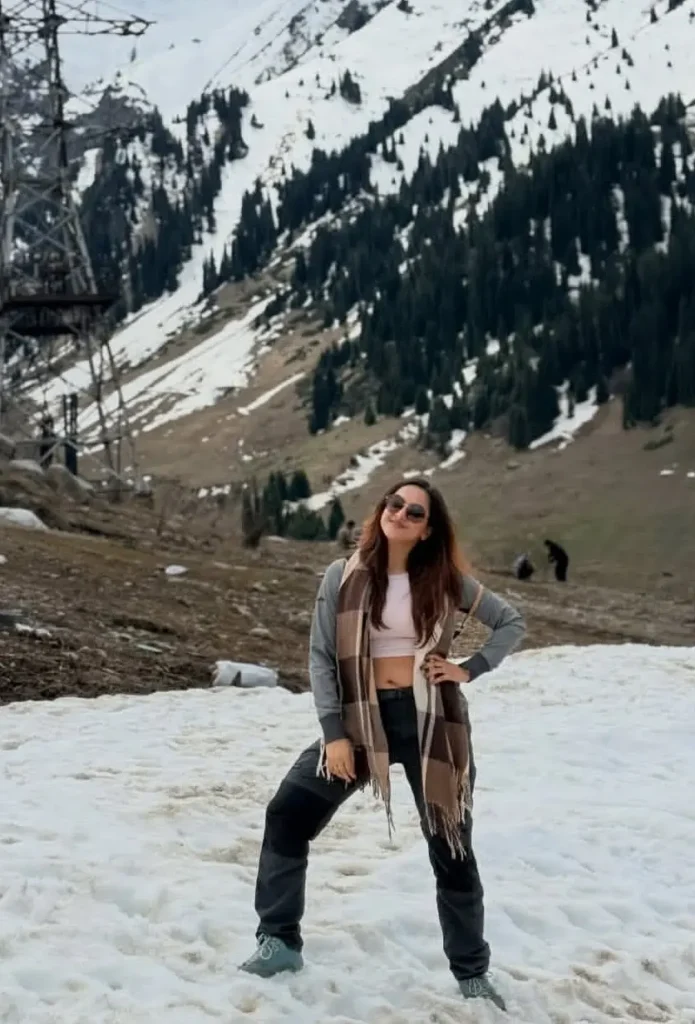
13. The Mountain Photography Outfit: Neutral Layers + Bold Outer Layer
For the mountain days that are as much about the photographs as the hiking.
A neutral base — cream turtleneck, beige wide-leg trousers or leggings — with one bold outer layer that photographs beautifully against mountain backgrounds.
A terracotta orange puffer jacket. A cobalt blue shell. A deep forest green wool coat. Something with color and presence that makes you the warm focal point in a landscape of grey rock and white snow.
Add clean hiking boots or leather lace-up boots. Simple jewelry. A beanie in a complementary neutral.
The key is letting the outer layer be the whole visual statement. Photograph from a distance on a wide trail or open mountain vista. The color does the work.
Key Items:
- Neutral base layers (cream turtleneck and beige trousers)
- Bold colored outer layer (terracotta, cobalt, or forest green)
- Clean hiking or lace-up boots
- Complementary neutral beanie
14. The Mountain Sunrise Outfit: Warm Layers + Great Boots + Everything Tucked
For early mountain starts. The pre-dawn wake-up call. The drive to the viewpoint. The walk to the summit in darkness to catch the sunrise.
A thermal base layer. A chunky knit sweater tucked into wide-leg hiking trousers. A fitted puffer jacket over the top. Everything tucked and layered and warm from the first cold dark step outside.
Good waterproof boots with warm insoles. Thick wool socks. A chunky beanie pulled low. Gloves in the pocket.
This is the outfit built for that specific, extraordinary hour when the mountain is cold and silent and the sky is beginning to change color and everything feels completely worth the early alarm.
Key Items:
- Thermal base layer
- Chunky knit sweater (tucked in)
- Fitted puffer jacket
- Waterproof insulated boots and wool beanie
15. The Mountain Weekend Getaway Outfit: Monochrome Earth Tones
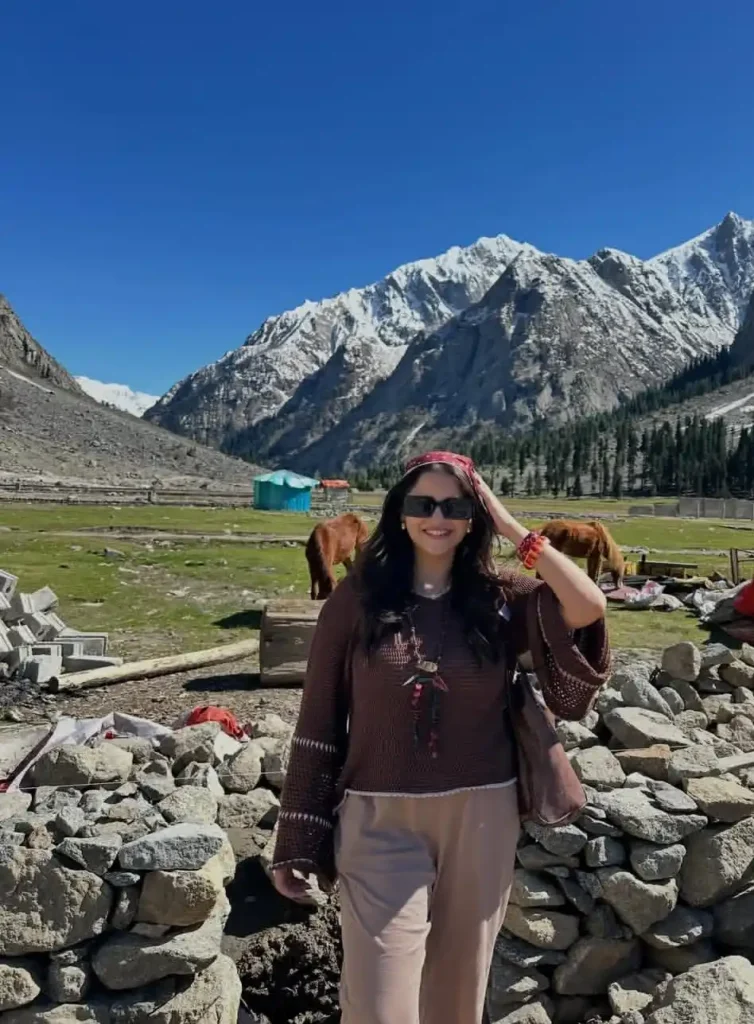
A monochrome earth tone outfit for a mountain weekend getaway is the most effortlessly stylish look on this entire list.
All camel. All olive. All warm rust brown.
A fitted long-sleeve top in warm camel. Wide-leg hiking trousers or tailored trousers in the same tone. A long wool coat or oversized knit cardigan in the same color family.
Add leather lace-up boots in tan or cognac. A structured leather tote or backpack. Minimal gold jewelry.
The monochrome earth tone outfit belongs to mountain landscapes the way no other color scheme does. It is warm and grounded and completely at home against stone, timber, pine forest, and autumn foliage.
It photographs extraordinarily well. And it requires almost no thought to put together because every piece already works with every other piece by definition.
Key Items:
- Fitted long-sleeve top (camel or warm rust)
- Wide-leg trousers in matching earth tone
- Long wool coat or oversized cardigan
- Tan leather lace-up boots and structured bag
The Mountain Accessories That Complete Every Look
Accessories in mountain dressing are never decorative only. They are functional first and beautiful second.
Beanies are essential in the mountains regardless of season. Temperature drops fast at altitude. A merino wool or wool-blend beanie packs flat and makes an enormous difference when the wind picks up at a summit.
Gloves should always be in your pack even on warm days. A thin liner glove takes up almost no space. You will be glad you have it.
Sunglasses with UV protection are non-negotiable in the mountains. The UV index at altitude is significantly higher than at sea level. Snow reflection makes it higher still.
Hiking boots are the most important single purchase in a mountain wardrobe. Buy the best quality you can afford. Break them in thoroughly before any serious trail. Blisters at altitude with no alternative shoes is a specific kind of suffering that planning completely prevents.
Wool socks make a genuine difference to comfort on the trail. Merino wool regulates temperature, resists odor, and cushions the foot better than any synthetic alternative. Buy at least two good pairs.
A daypack that fits well and distributes weight evenly transforms a mountain day. Choose one between 20 and 30 litres for a day hike. Fit matters more than brand.
How to Pack for a Mountain Trip
Mountain packing is about weight and versatility in equal measure.
Every piece needs to earn its place. Every layer needs to serve multiple functions.
Pack the base layers first. Two merino wool long-sleeve tops. One thermal base layer. These three pieces go under everything.
Add one fleece and one shell jacket. These two pieces cover the mid and outer layer needs for most mountain days.
Pack one pair of hiking trousers and one pair of hiking leggings. One pair of hiking boots worn on the travel day.
Add one village outfit — dark wash jeans, a chunky knit, ankle boots — for the non-trail days and the evenings.
That is genuinely the whole mountain wardrobe. Ten to twelve pieces that cover every scenario the mountains present.
Read more about: Streetwear Outfits Women Summer: 15 Cool and Effortless Looks
What NOT to Wear in the Mountains
This matters as much as what to wear.
Cotton as a base layer. Cotton absorbs moisture and holds it against your skin. In cold mountain air wet cotton drops your body temperature dangerously. Never wear cotton directly against your skin on a mountain trail.
Thin-soled sneakers on serious trails. Regular sneakers have no ankle support and no grip on wet rock or uneven terrain. They are genuinely dangerous on anything beyond a flat easy path.
Denim on the trail. Denim is heavy, restricts movement, takes forever to dry when wet, and provides no technical benefit on a mountain trail. Save it for the village days.
Only one layer. Underestimating mountain weather is the most common mistake mountain visitors make. Always have one more layer in your pack than you think you need.
Completely new boots on a long hike. New boots need breaking in. Blisters from new mountain boots can end a hiking trip on the first day. Break them in at home for weeks before any serious trail.
Final Thoughts
Mountain dressing is some of the most satisfying dressing there is.
Every piece has a purpose. Every layer earns its place. The system works together in a way that city dressing rarely achieves.
And when you are standing on a summit with the right layers on — warm but not overheated, moving freely, with everything you need in the pack on your back — you understand why people who love mountains also love dressing for them.
These fifteen outfits cover every mountain scenario. The serious hike. The village day. The ski slope. The sunrise start. The après-ski evening.
Pick the combinations that match your mountains. Wear them with the confidence of someone who came prepared.
Because in the mountains, being prepared is the most stylish thing you can be.
Layer well. Move freely. Let the mountains show you everything.