Best Castles in Europe: The Ultimate Guide to History’s Most Stunning Fortresses

There is a moment that happens to almost every person who stands before a great European castle for the first time.
You are looking up at walls that have survived wars, sieges, and centuries of weather. You are walking through corridors where kings made decisions that changed the world. You are standing somewhere that feels less like a tourist attraction and more like a conversation with history.
Europe’s castles do not just look impressive. They feel impressive.
Each one tells a story — of power and conquest, of architectural ambition, of civilisations layered one on top of another over a thousand years. And the variety packed across this one continent is staggering: fairy-tale Bavarian towers, Scottish clifftop fortresses, Czech riverside palaces, Welsh coastal ruins, and French châteaux surrounded by formal gardens that go on further than the eye can see.
This guide covers the finest of them.
Read more about: Things to Do in Spain: The Ultimate Travel Guide to an Unforgettable Trip
Before You Go: What to Know About Visiting European Castles
Castles exist in almost every country in Europe, but they are not all the same kind of place.
Some are fully restored royal palaces still used by living monarchies. Some are romantic ruins open to the wind. Some are UNESCO World Heritage Sites with strict visitor limits and booking requirements months in advance. Some charge no admission at all and can be walked into on any afternoon.
Understanding what kind of castle you are visiting before you arrive makes the experience dramatically better.
The shoulder seasons — April to May and September to October — are the best time to visit most castles. Summer crowds at the most famous sites can make the experience feel more like queuing than exploring. In spring and autumn the light is better, the temperatures are manageable, and the sites feel like yours.
Many of the most visited castles in Europe — Neuschwanstein in Germany, Château de Versailles in France, Edinburgh Castle in Scotland — require advance booking in high season. Check before you go. Turning up without a ticket in July will often mean a very long wait or a turned-away visit.
Comfortable shoes are not optional. Castle floors are almost universally uneven, steep, and made of stone that has been worn smooth by centuries of feet. Wear good shoes. Bring a layer. The interiors of old stone buildings are cold even in summer.
The Best Castles in Europe by Country
Germany
Neuschwanstein Castle, Bavaria
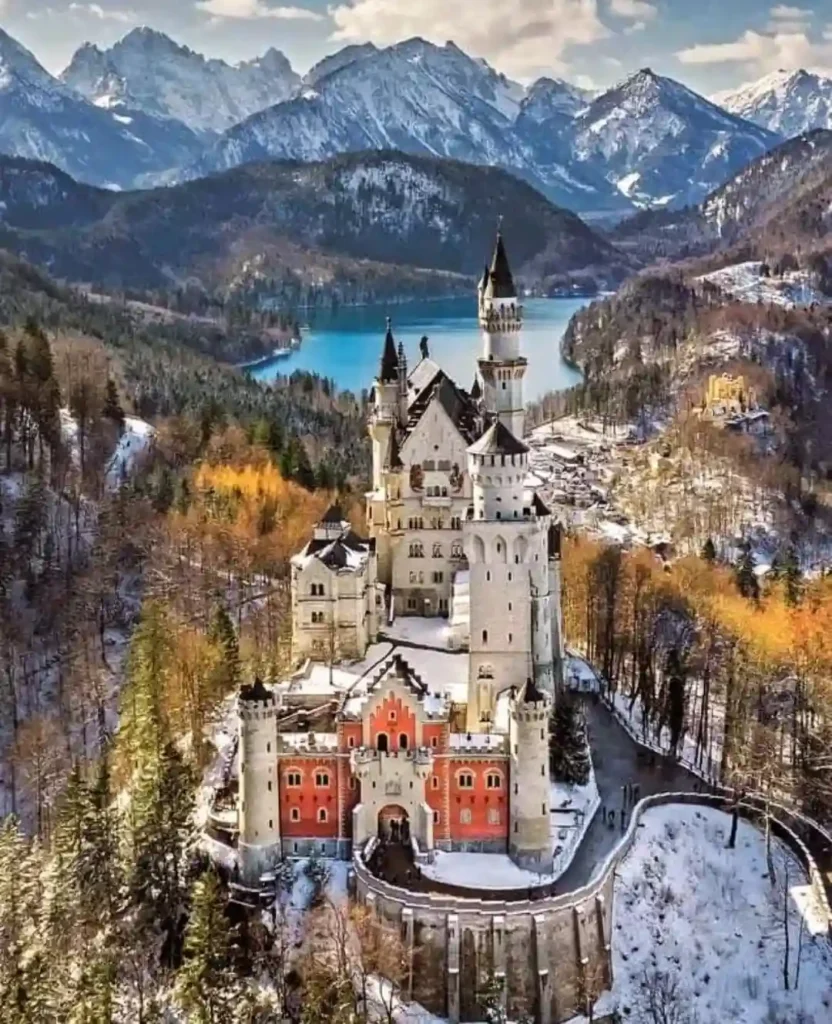
Neuschwanstein is the most photographed castle in Europe and the inspiration behind the Disney fairy-tale castle. That sounds like it might be a warning. It is not.
Nothing — not the photographs, not the films it has inspired, not the sheer volume of people who visit every year — quite prepares you for what it actually looks like rising above the forest and the lake below.
King Ludwig II of Bavaria commissioned it in 1869 as a private retreat and a tribute to the operas of Richard Wagner. He barely lived in it. The interior rooms that were completed are extraordinary — the throne room with its Byzantine gold ceiling, the Singers’ Hall decorated with scenes from Parsifal, the bedrooms carved with extraordinary Gothic detail.
What to know: Book timed entry tickets well in advance at the official Bavarian Palaces website. The castle is a steep 30-minute walk from the ticket office. Take the Mary’s Bridge path for the famous view from above. Go in early morning in spring or autumn when the light hits the towers directly.
Heidelberg Castle, Baden-Württemberg
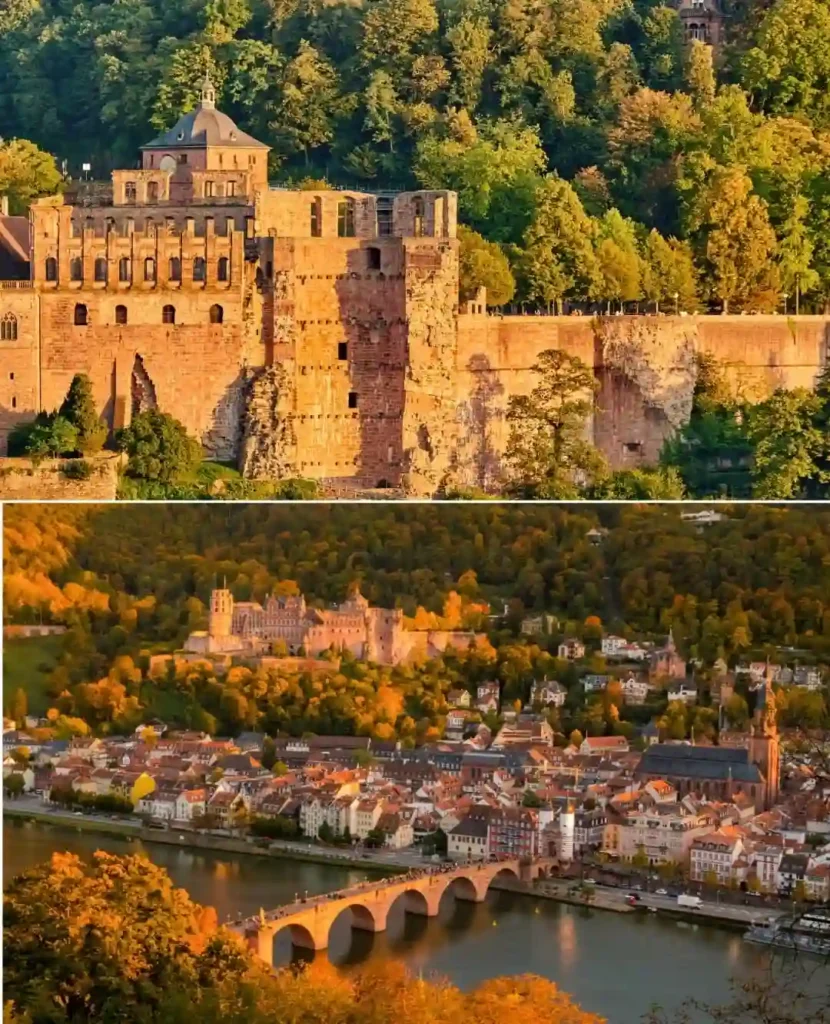
Heidelberg Castle sits in magnificent ruin above the old town of Heidelberg on the River Neckar, and it is one of the finest examples of Renaissance architecture in Germany despite — or perhaps because of — having been partially destroyed by French forces in the 17th century and never rebuilt.
The red sandstone ruins rising above terraced gardens with the old town and the river laid out below them create one of the great views in Germany.
The wine vat inside — one of the largest wine barrels ever built, holding 220,000 litres — is a curiosity that delights visitors of all ages. The pharmaceutical museum inside the reconstructed wing is one of the finest of its kind in Europe.
What to know: The castle is walkable from the old town via a steep footpath or reachable by funicular railway. Go in the late afternoon when the sandstone glows. The illumination of the ruins on select evenings in summer is one of the most spectacular events in the region.
France
Mont Saint-Michel, Normandy
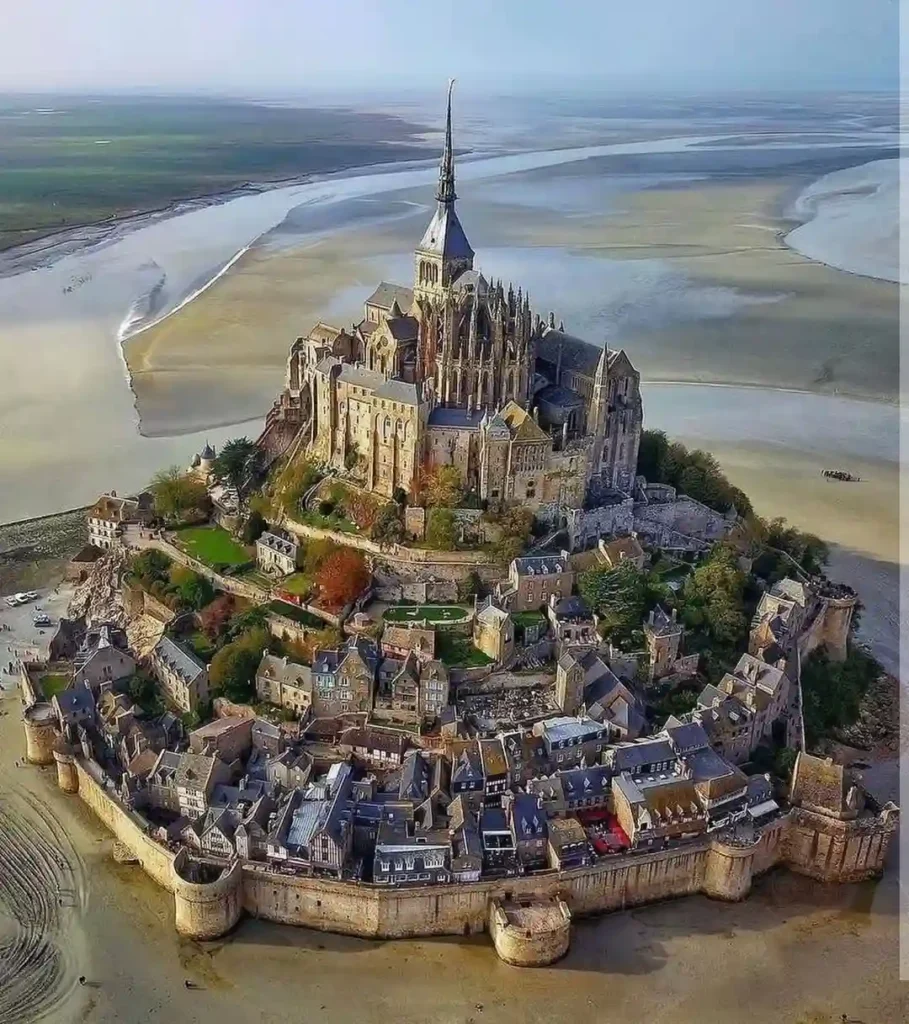
Mont Saint-Michel is not strictly a castle — it is an island commune with a medieval abbey at its summit — but it belongs on any list of the most extraordinary fortified structures in Europe.
A granite island rising 92 metres from a tidal bay connected to the mainland by a narrow causeway, topped by a gothic abbey that has stood for over a thousand years. When the tides come in — and they come in faster than a horse can gallop, the old saying goes — the mount becomes an island surrounded by quicksand and sea.
Walking up through the narrow medieval streets to the abbey at the summit, looking out from the terrace over the bay, is one of the defining experiences of any visit to France.
What to know: Go at high tide if possible. Book abbey tickets in advance in summer. Stay overnight — the mount transforms completely after the day visitors leave and the early morning mist over the bay is extraordinary.
Mont Saint-Michel, Normandy
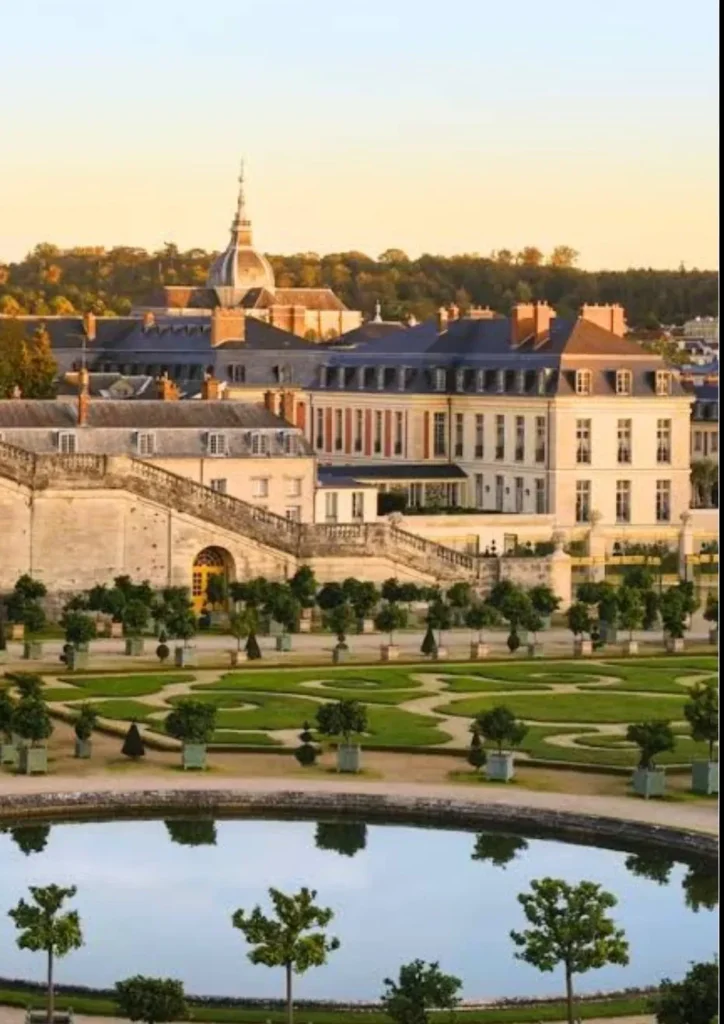
Versailles is not a castle in the medieval sense. It is something else entirely — a statement of absolute royal power expressed through architecture, landscape, and the systematic humiliation of the French aristocracy who were required to live here under the eye of Louis XIV.
The Hall of Mirrors alone — 73 metres long, 357 mirrors reflecting 20,000 candles on the other side — makes the journey worthwhile. The gardens, which stretch for kilometres behind the palace in geometrically perfect order, are a landscape that has no equal in Europe.
What to know: Book tickets in advance — this is not optional in summer. Go early and walk directly to the Hall of Mirrors before the crowds arrive. Allow a full day. The gardens alone require several hours. The Grand Trianon and Petit Trianon palaces within the park are often quieter and just as beautiful.
Read more about: Best Things to Do in Switzerland: The Complete Travel Guide
Scotland
Edinburgh Castle
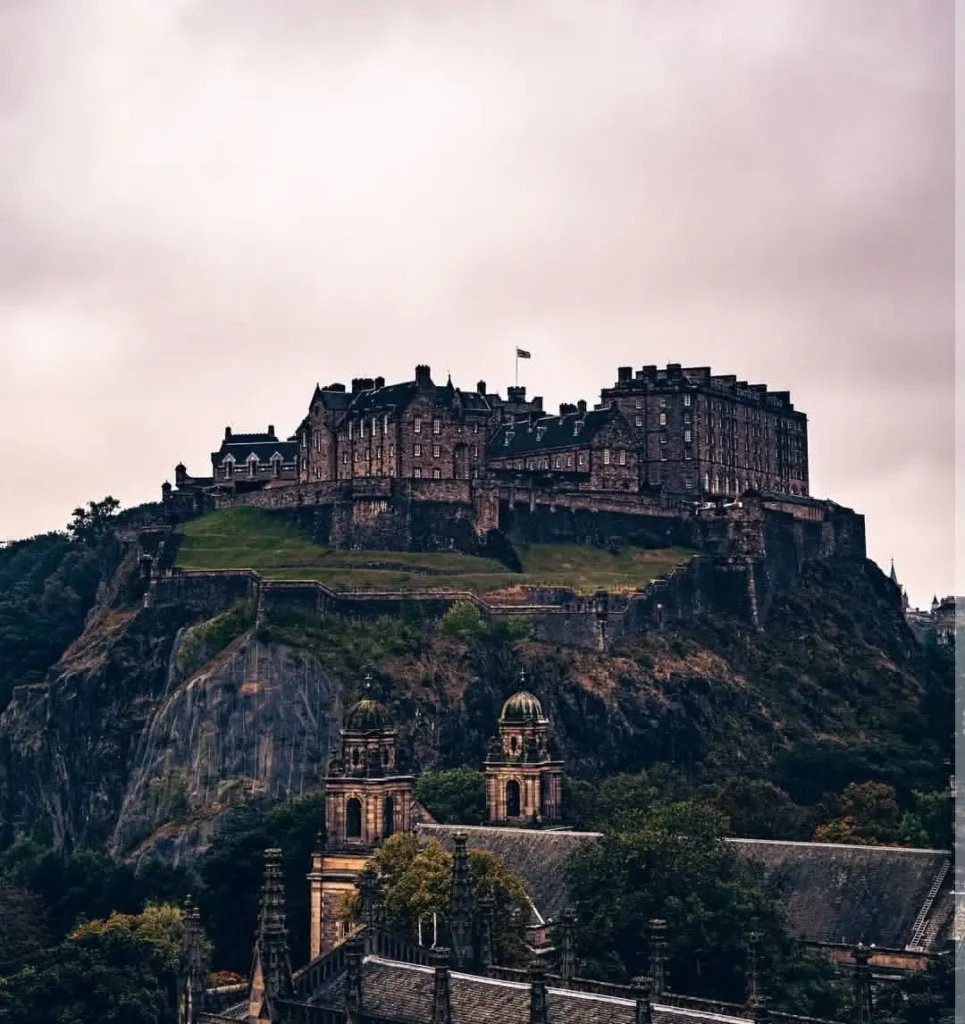
Edinburgh Castle sits on an ancient volcanic plug at the top of the Royal Mile and has been continuously occupied for at least 3,000 years. It is not a romantic ruin or a pretty palace. It is a working fortress that has seen more history than almost any other building in Britain.
The Scottish Crown Jewels — the Honours of Scotland, the oldest crown jewels in the British Isles — are displayed here. The Stone of Destiny, on which Scottish and then British monarchs have been crowned for centuries, is here. The National War Memorial is one of the most affecting memorials in Scotland.
The view from the castle esplanade over the city — the Georgian New Town to the north, Arthur’s Seat rising in the east, the Firth of Forth beyond — is Edinburgh at its most dramatic.
What to know: Book in advance in summer. The One O’Clock Gun fires every day except Sunday — stand on the esplanade at 1pm and watch the city below flinch at the sound. Allow at least three hours.
Eilean Donan Castle, Scottish Highlands
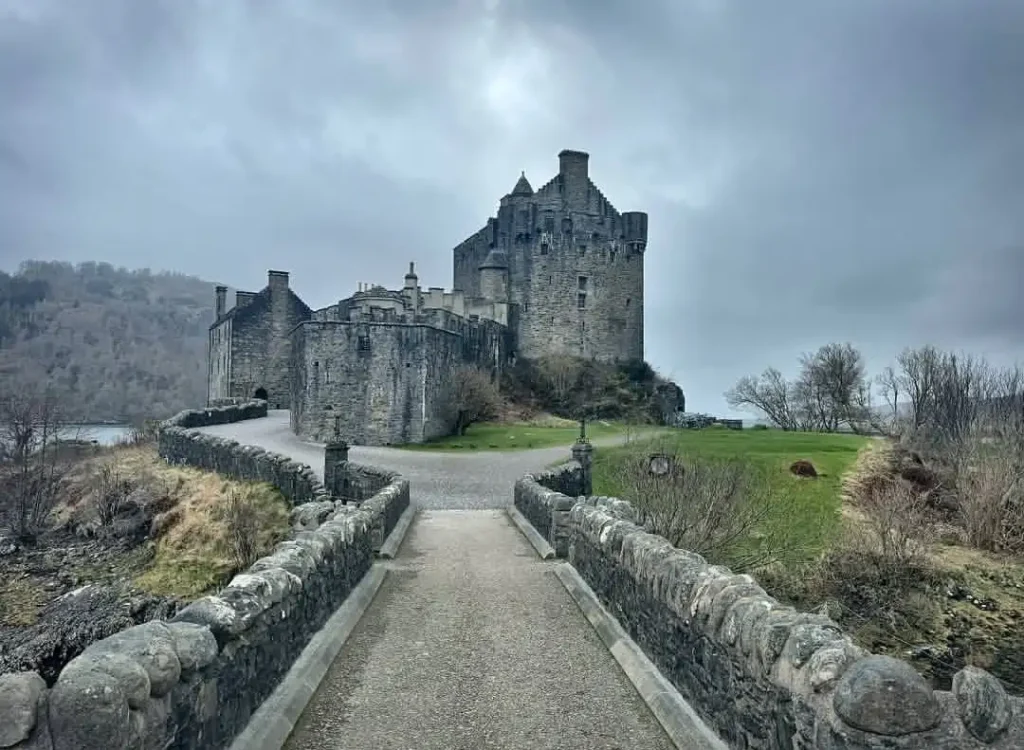
Eilean Donan is the most recognisable castle in Scotland and one of the most photographed in the world — a small island castle at the confluence of three lochs, connected to the mainland by an arched stone bridge, with mountains rising behind it in every direction.
It was a ruin for nearly two centuries before being meticulously restored in the early 20th century. The restoration is so thorough and so skilled that it is impossible to believe the castle was not always standing. The interior rooms — the banqueting hall, the billeting room, the bedroom of Rob Roy MacGregor — are beautifully presented.
What to know: Book tickets in advance. Visit in spring or autumn when the midges are less aggressive and the lighting is more dramatic. The castle is best photographed from the road on the western approach as you drive in.
Czech Republic
Prague Castle, Prague
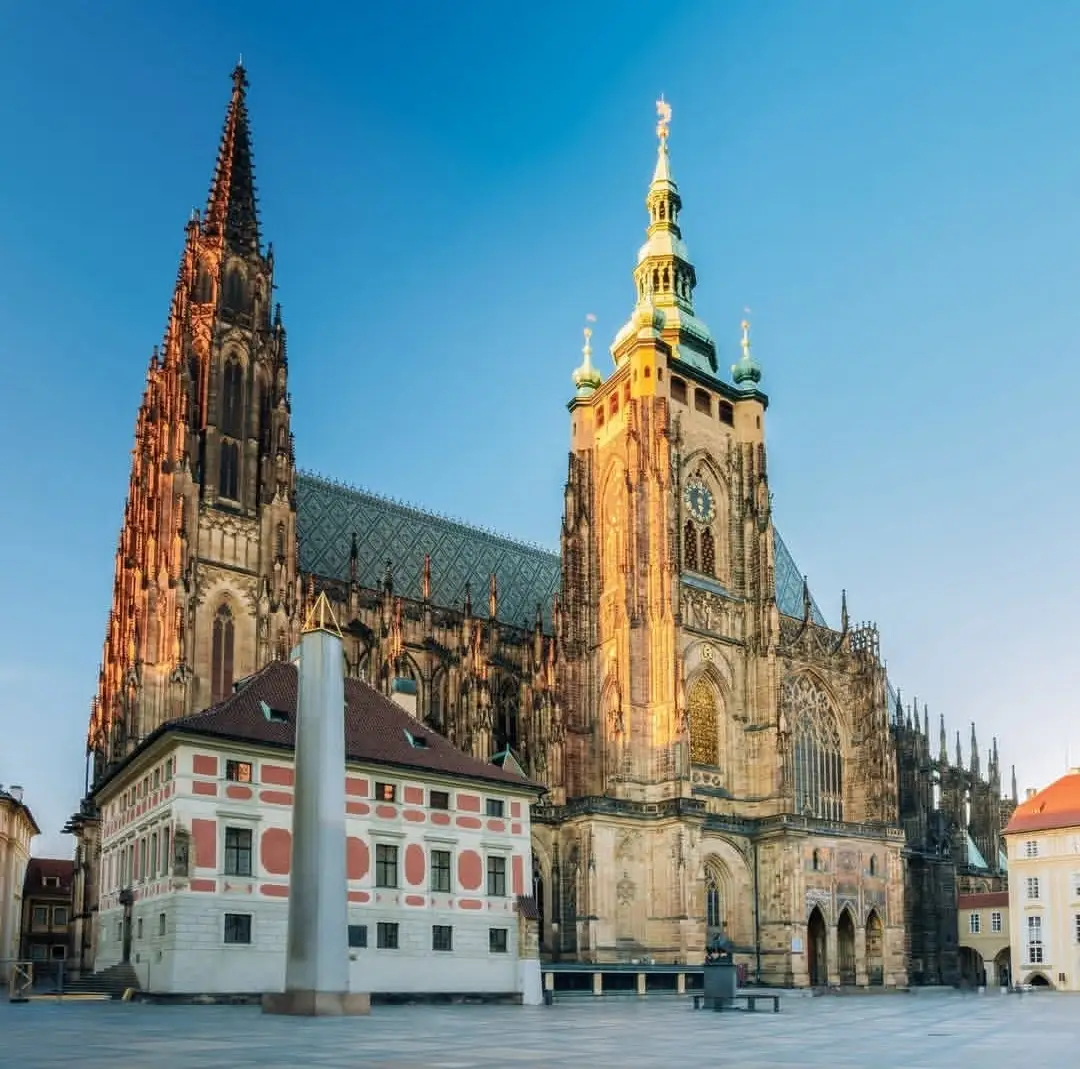
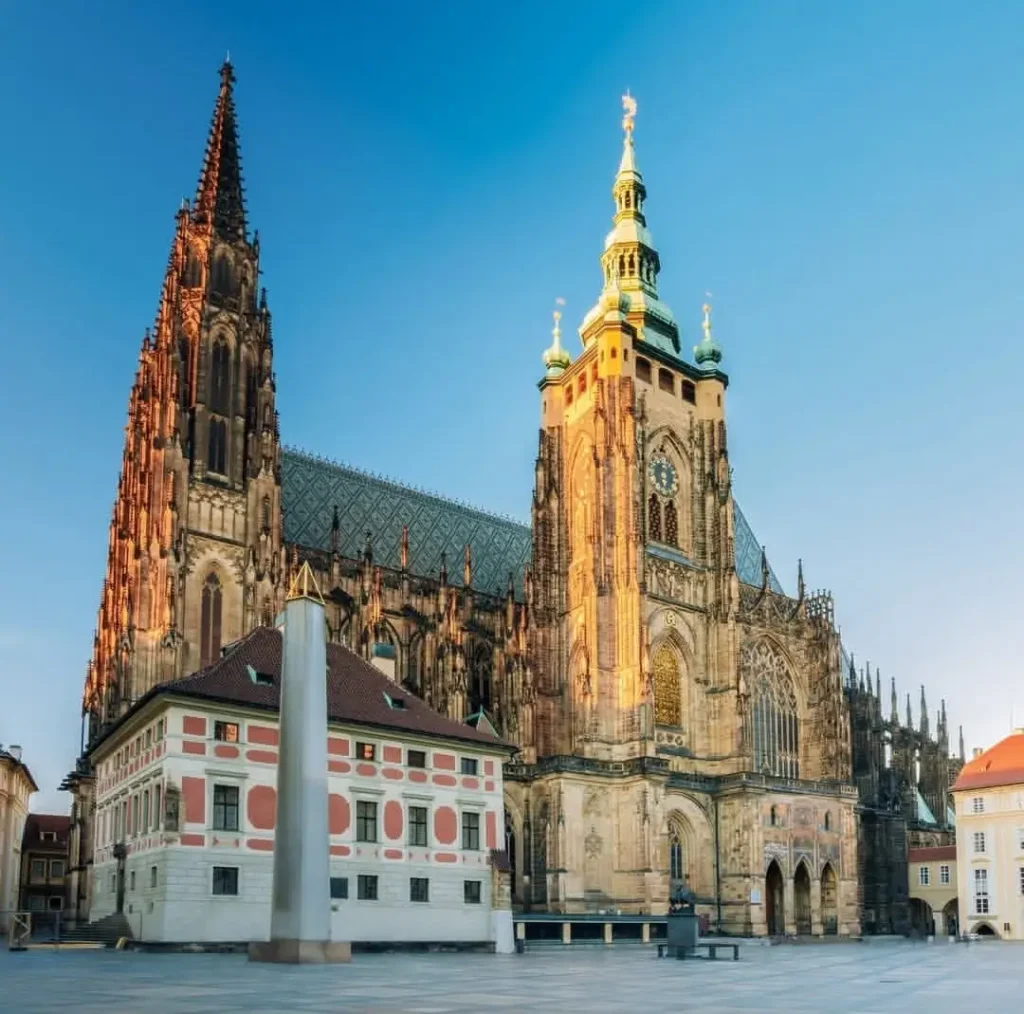
Prague Castle is the largest ancient castle complex in the world by area — a 70,000 square metre complex of palaces, gardens, churches, galleries, and medieval alleyways perched above the Vltava River.
St. Vitus Cathedral inside the castle grounds is one of the great Gothic cathedrals of Europe. The Golden Lane — a row of tiny medieval houses built into the castle walls where artisans and soldiers lived — is one of the most charming streets in Prague. Franz Kafka briefly lived in one of them.
The view from the castle ramparts over the red rooftops of Prague, the river, and Charles Bridge below is the defining image of the city.
What to know: The castle complex is free to walk through. Individual buildings require tickets. Go early in the morning — the complex gets very crowded by mid-morning in summer. The Golden Lane is best in the early evening when the day visitors have left.
Český Krumlov Castle, South Bohemia
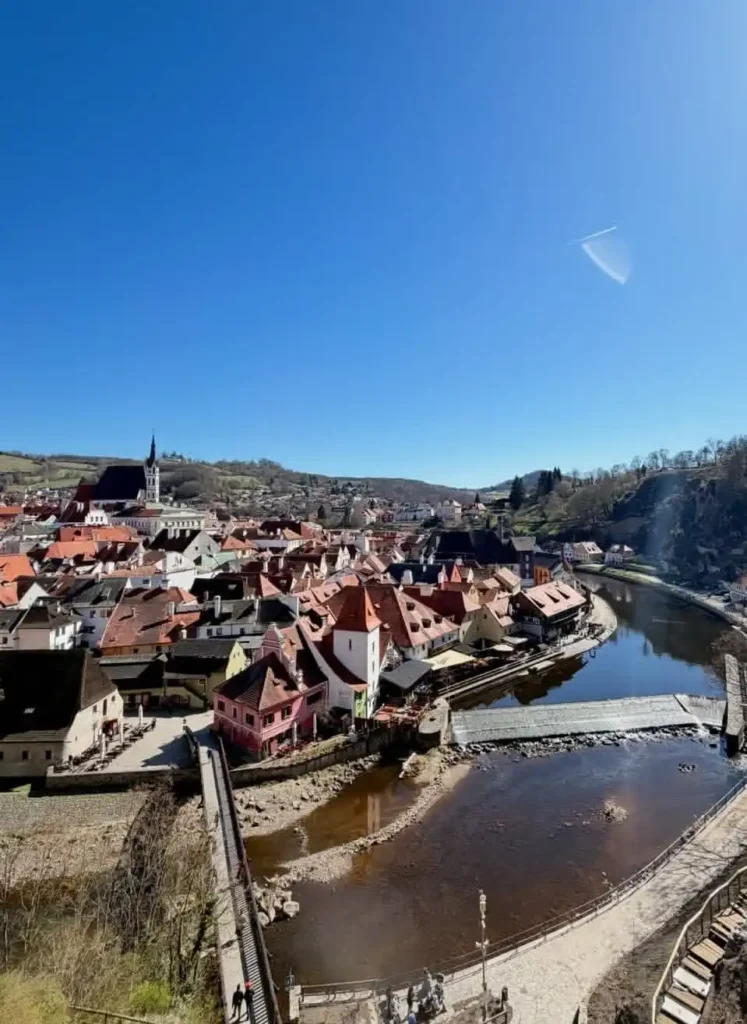
Český Krumlov is one of the best-preserved medieval towns in Central Europe, and the castle that dominates it from a rocky spit in a bend of the Vltava River is one of the most spectacular in the Czech Republic.
The castle complex — the second largest in Bohemia after Prague Castle — includes a baroque theatre that is one of the finest surviving examples of its kind in the world, complete with original stage machinery, costumes, and sets that have not been changed in three centuries.
What to know: Book the theatre tour in advance — it is strictly limited. Walk the castle tower for the view over the town’s medieval rooftops and the river below.
Wales
Conwy Castle, North Wales
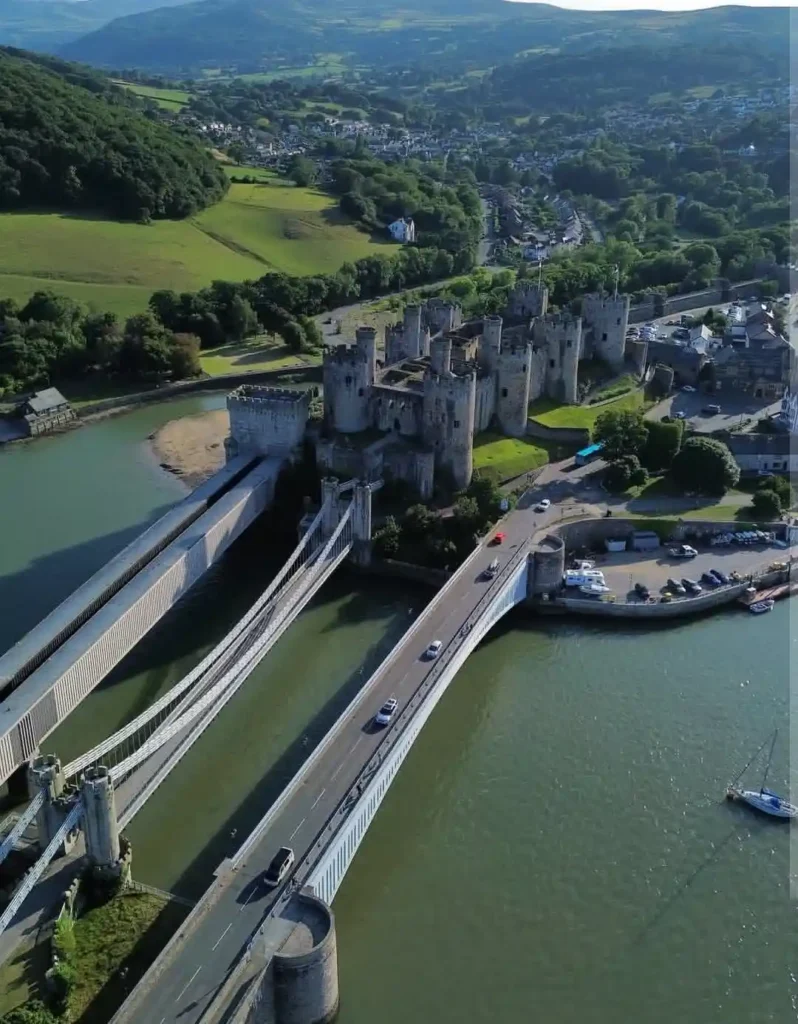
Conwy Castle is arguably the finest example of medieval military architecture in Europe. Built by Edward I of England between 1283 and 1289 as part of his campaign to control Wales, it was constructed in just four years — an extraordinary feat of mediaeval engineering.
Eight massive round towers connected by a curtain wall, a great hall, the remains of royal apartments, and views over the Conwy estuary and the mountains of Snowdonia beyond. The medieval walled town that surrounds it — also built by Edward, also largely intact — makes the whole ensemble one of the great historical sites in Britain.
What to know: Conwy Castle is a UNESCO World Heritage Site. Visit in the morning light when the castle is reflected in the estuary. Walk the full circuit of the town walls — they are among the best preserved in Europe. Wales offers extraordinary value for castle visitors — the CADW heritage pass gives access to dozens of sites across the country.
Read more about: Europe Capsule Wardrobe 2026: Pack 10 Items, Create 30 Outfits
Ireland
Rock of Cashel, County Tipperary
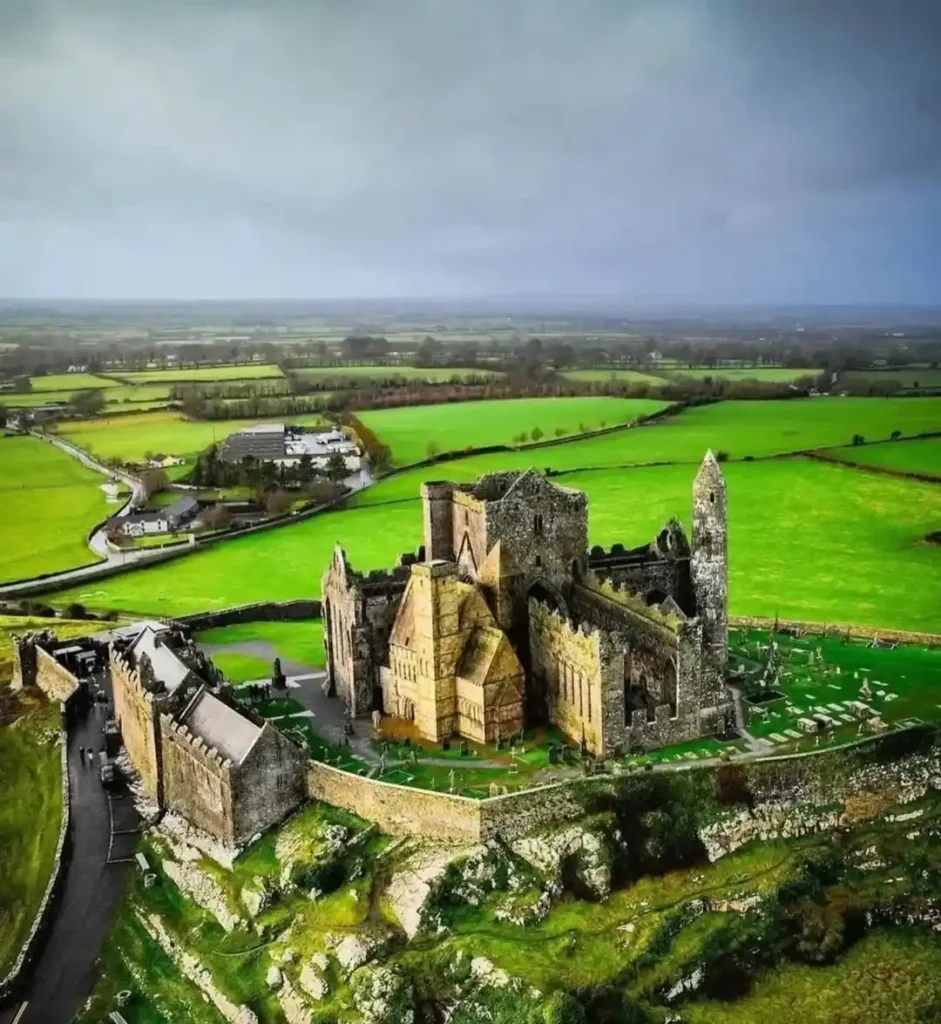
The Rock of Cashel is one of the most dramatic historical sites in Ireland — a limestone outcrop rising abruptly from the Tipperary plain, crowned with a cluster of medieval buildings that include a 12th-century round tower, a Romanesque chapel, a Gothic cathedral, and a medieval hall.
It was the seat of the Kings of Munster for centuries before being given to the Church in 1101. The setting — the rock visible from miles across the flat plain, the buildings silhouetted against the Irish sky — is one of those images that stays with you.
What to know: Visit in the late afternoon when the light comes from the west and the stonework glows. Allow two to three hours to walk the complex properly. The views from the rock over the surrounding plain are extraordinary.
Romania
Bran Castle, Transylvania
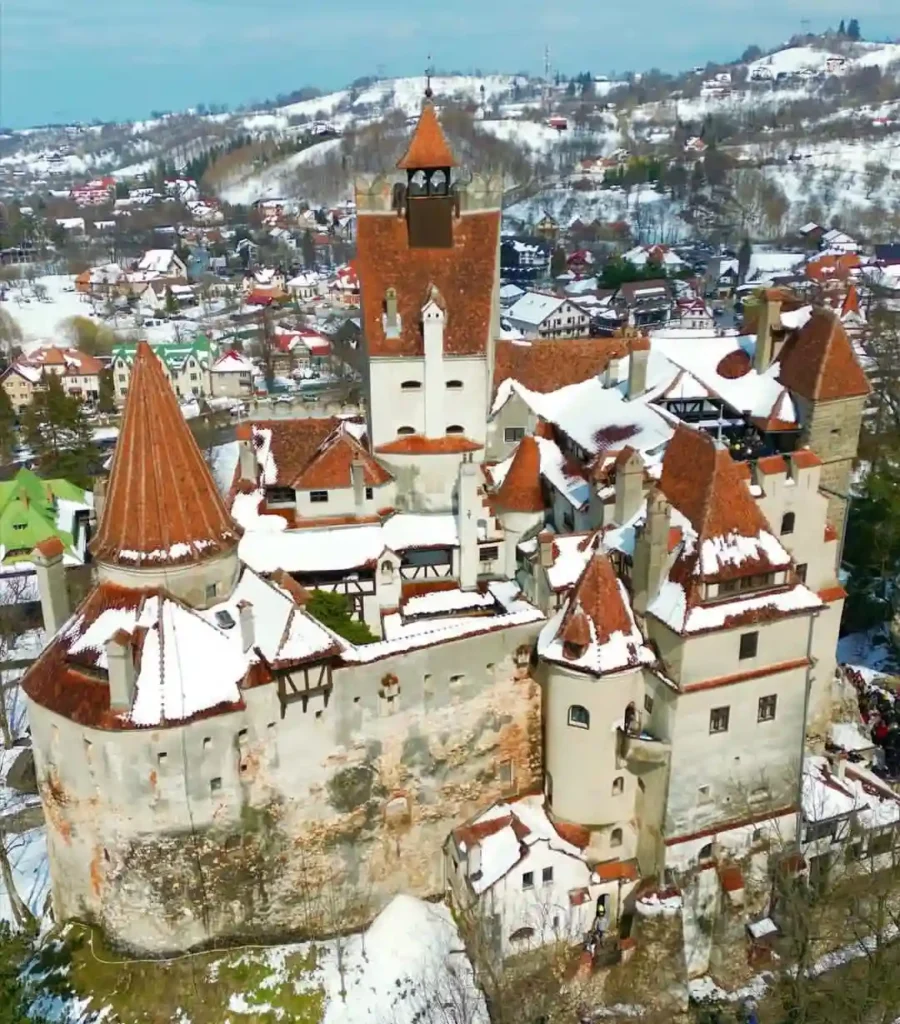
Bran Castle is marketed as “Dracula’s Castle” for reasons that are largely historical fiction — Bram Stoker never visited Romania and his Dracula has only a loose connection to Vlad the Impaler, who may or may not have spent a brief time at Bran. None of this matters.
The castle itself — a 14th-century fortress perched on a rocky outcrop at the border of Transylvania and Wallachia, all towers and battlements and steep staircases and unexpected rooms — is exactly what a castle in Transylvania should look like. The interior, arranged as a museum of medieval furniture and weapons and royal artefacts, is genuinely interesting.
What to know: Go in autumn when the forests of Transylvania turn red and gold and the mist sits in the valleys below the castle at dawn. It is one of the most atmospheric places in Europe. Combine with a visit to Peles Castle an hour away — a 19th-century royal palace of extraordinary opulence that is among the finest in Central Europe.
Best Castle Experiences Beyond the Single Monuments
Drive the Loire Valley, France
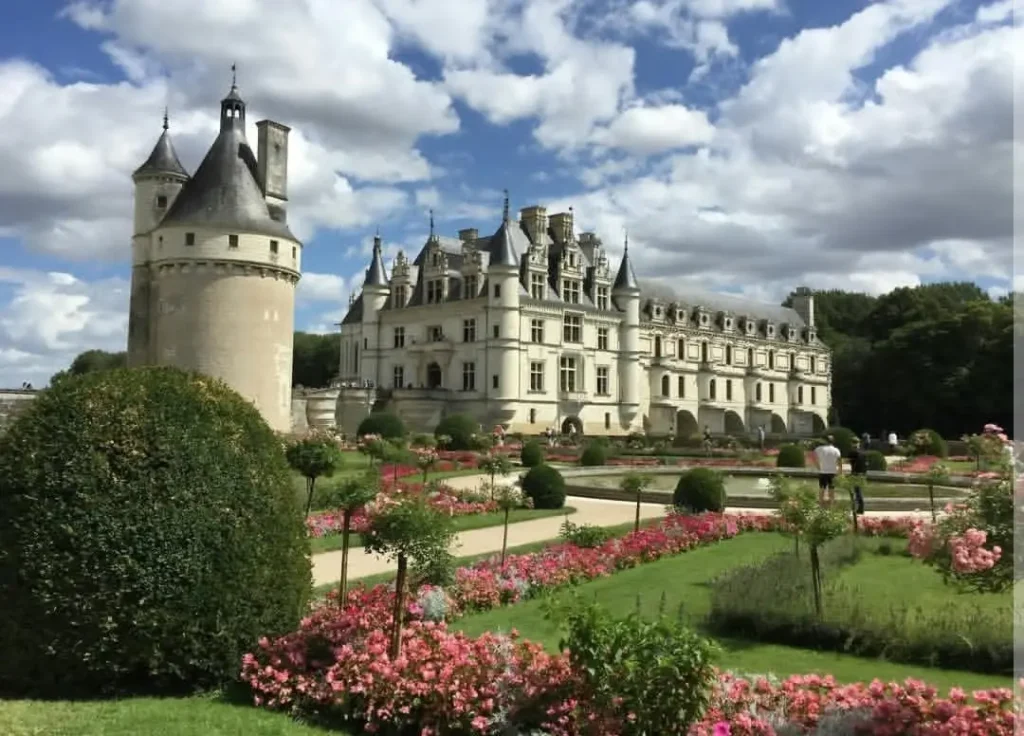
The Loire Valley contains more châteaux per square kilometre than anywhere else in the world. Chambord, Chenonceau, Amboise, Azay-le-Rideau, Villandry — each one extraordinary, each one different, set in a river valley of exceptional beauty that has been designated a UNESCO World Heritage Landscape.
Rent a car. Take four or five days. Drive slowly between them. Eat the local food — rillettes, goat’s cheese, pike perch, and the white wines of Sancerre and Muscadet that taste like the river itself.
This is France at its most refined and most historically generous.
Walk the Castles of the Rhine, Germany
The Rhine Gorge between Bingen and Koblenz is one of the most castle-dense stretches of river in the world — more than 40 castles and castle ruins lining a 65-kilometre stretch of river gorge, rising from the water on every promontory and ridge.
Take the boat from Bingen to Koblenz. Watch the castles pass. Get off at Bacharach or St. Goar and walk the surrounding vineyards. Eat local Riesling and local fish.
The Rhine Gorge is a UNESCO World Heritage Site and one of the great landscape experiences in Germany.
Follow the Castles of Wales
Wales has more castles per square mile than any country on earth — the legacy of centuries of conflict between Welsh princes and English kings. The CADW heritage pass gives access to dozens of historic sites across the country.
The castles of Edward I in North Wales — Conwy, Caernarfon, Harlech, Beaumaris — form a single UNESCO World Heritage Site and collectively represent the most ambitious medieval military building programme ever undertaken in Britain.
Drive the North Wales coast. Walk the beach at Harlech with the castle rising behind you. Climb Caernarfon’s Eagle Tower for the view over the Menai Strait.
Practical Tips for Visiting European Castles
Book in advance for the most popular sites. Neuschwanstein, Versailles, Edinburgh Castle, and Prague Castle all require — or strongly benefit from — advance booking, especially between June and August. Do not assume you can walk up and get in.
Visit early or late in the day. The best light for photography and the most peaceful experience both happen in the first two hours after opening or the last two hours before closing. Midday in summer at a famous castle is a particular kind of hell.
Read something before you go. A castle makes sense when you understand who built it, why, and what happened there. Twenty minutes with a good guide or a Wikipedia article transforms a pile of stones into a story.
Wear comfortable shoes. Castle floors are universally uneven, steep, and slippery. This is a firm rule with no exceptions.
Get a heritage pass where available. Scotland, Wales, England, Ireland, France, and Germany all offer heritage passes that give access to multiple sites at significant discount. For castle-heavy itineraries these pay for themselves very quickly.
Allow more time than you think you need. Every great castle has something — a view, a room, a detail, a corner of the grounds — that you will only find if you have the time to wander beyond the main visitor circuit. Give yourself that time.
The Best Time to Visit European Castles
Spring (March to May) is the finest time for most outdoor castle sites. The crowds have not yet arrived, the gardens are at their most beautiful, and the light — especially the long golden light of April and May evenings — makes everything look extraordinary.
Summer (June to August) brings warmth and long daylight hours but also maximum crowds at the most famous sites. If you are visiting Neuschwanstein or Versailles in July, book months ahead and arrive at opening time.
Autumn (September to October) is the finest time for castle visits in the forested regions — Bavaria, Transylvania, the Rhineland, the Scottish Highlands. The foliage is extraordinary, the light is warm and low, and the visitor numbers drop significantly after late August.
Winter (November to February) is quieter at almost every site and often brings dramatic atmospheric conditions — snow on Neuschwanstein, mist on Edinburgh Castle, frost on the Loire Valley châteaux — that are difficult to experience any other time of year. Opening hours are reduced at some sites.
Final Thoughts
Europe’s castles are not just impressive things to look at. They are three-dimensional records of the continent’s history — of the people who needed them, the people who built them, the people who fought over them, and the people who preserved them for visitors who come centuries later still trying to understand what it meant to live inside walls this thick.
Go slowly. Read the rooms. Look out from the towers.
Every castle has something in it that no photograph or guidebook can convey — some quality of light, some unexpected detail, some view from an upper window that arrives without warning and stays with you for years.
Europe rewards the castle visitor who pays attention with experiences that do not leave.