Summer Camping Outfits: What to Actually Wear When the Outdoors Is the Destination

There is a specific kind of packing problem that arrives the week before a camping trip.
The hiking boots are sorted. The tent and the sleeping bag and the camp stove and the headlamp — all of that outdoor equipment is handled. The logistics of the trip are organised with the kind of thoroughness that camping demands.
And then you get to the clothing and the problem begins.
Because camping clothing exists in a specific territory that most wardrobes do not naturally cover. It is not the clothing of everyday life — the jeans and the trainers and the work outfits that fill most wardrobes. It is not the athletic gear of the gym. And it is not the hiking-specific technical clothing that serious mountaineers require.
It is something in between. Clothing that is genuinely functional — that handles the cold morning when the fire has not yet been lit, the warm afternoon when the sun is direct and the activity is real, the cool evening when the temperature drops faster than expected around the campfire, the occasional rain that camping always produces regardless of what the forecast said. Clothing that can be worn for multiple days without losing its integrity. Clothing that layers correctly and packs efficiently.
And — because this is a style guide and not a survival manual — clothing that looks good. Because looking good at a campsite is entirely possible and the woman who does it consistently is the woman who planned what she was wearing before she packed it.
This guide covers all of it.
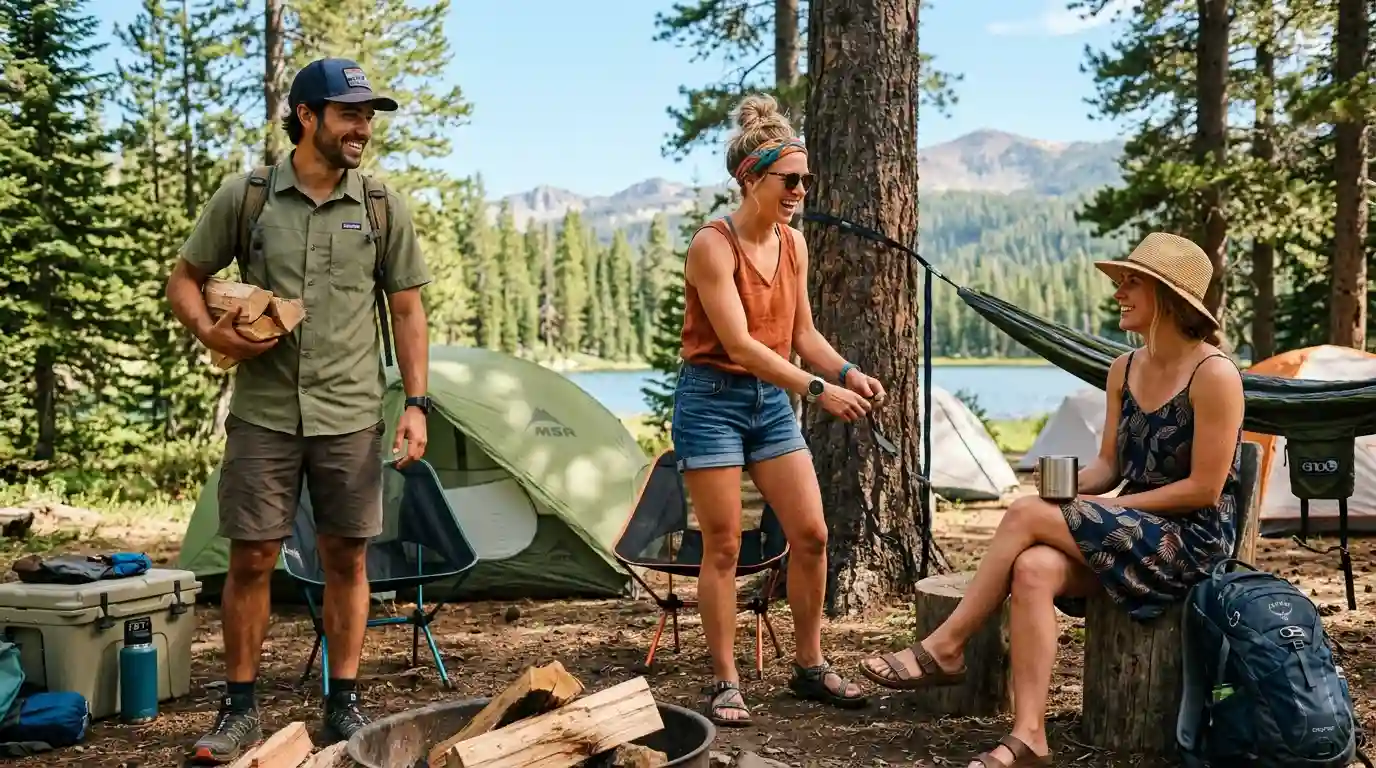
Thirteen summer camping outfits that are genuinely functional, pack efficiently, handle the full temperature range of a summer camping trip, and look exactly right for the outdoor setting they are worn in.
Read more about: Cute Summer Outfits: 15 Ideas That Actually Work When It Is Hot Outside
Before You Pack: What Summer Camping Dressing Actually Requires
Summer camping dressing has a completely different set of requirements from any other clothing context and most people approach it with the wrong framework — either packing their most worn-out clothes because “it’s just camping” or packing their regular wardrobe because they did not think carefully enough about what camping actually asks of clothing.
Both approaches produce problems within the first day.
Temperature range. A summer camping day runs from cold to warm to hot to cool to cold in a sequence that no single outfit handles. The morning when you crawl out of the tent at six AM can be genuinely cold — ten degrees in a mountain campsite in August is not unusual. The same day at noon can be thirty degrees with direct sun. The evening around the campfire drops quickly after sunset. The night in the tent can be any temperature depending on elevation and latitude. The camping wardrobe is a layering wardrobe above all else.
Fabric performance. Camping is not the context for cotton as a base layer. Cotton absorbs moisture — sweat, rain, river water — and retains it, leaving the fabric cold and damp against the skin for hours. Merino wool and synthetic performance fabrics manage moisture by wicking it away from the body. As a base layer and a mid layer, merino wool is the camping fabric that most people discover and then never camp without again. For outer layers and casual wear at the campsite, cotton and linen are acceptable.
Multi-day wear. Camping trips extend over multiple days and the clothing that handles them needs to remain usable for longer than a typical outfit. Merino wool specifically resists odour across multiple days of wear in a way that cotton does not — a merino base layer worn for two or three days requires less washing than cotton worn for one.
Pack size and weight. Every item of camping clothing needs to justify its space in the pack. Pieces that serve only one purpose — the outfit that is only the campfire outfit, the top that works with only one other piece — are poor camping packing choices. Every piece needs to work with at least three others.
Protection. Sun protection at altitude and in open terrain. Insect protection in the evenings when mosquitoes emerge. Some level of water resistance for the inevitable rain. These are not fashion considerations but they are the considerations that make camping comfortable or uncomfortable regardless of how good the outfit looks.
These principles apply to every outfit that follows.
Read more about: Spain Summer Outfit Ideas: What to Actually Wear in the Most Vibrant Country in Europe
01. The Base Layer and Flannel Shirt — The Camping Morning Outfit
The camping morning — the first hour after crawling out of the tent when the world is quiet and cold and the kettle is on and the light is the most beautiful it will be all day — requires the outfit that handles the cold without requiring the effort of full dressing.
A merino wool or thermal base layer top — fitted, long-sleeve, in a neutral colour — with wide-leg or straight-leg outdoor trousers or well-worn jeans. A flannel shirt worn open over the base layer as a mid layer. Clean hiking boots or trail shoes. A beanie if the morning is genuinely cold.
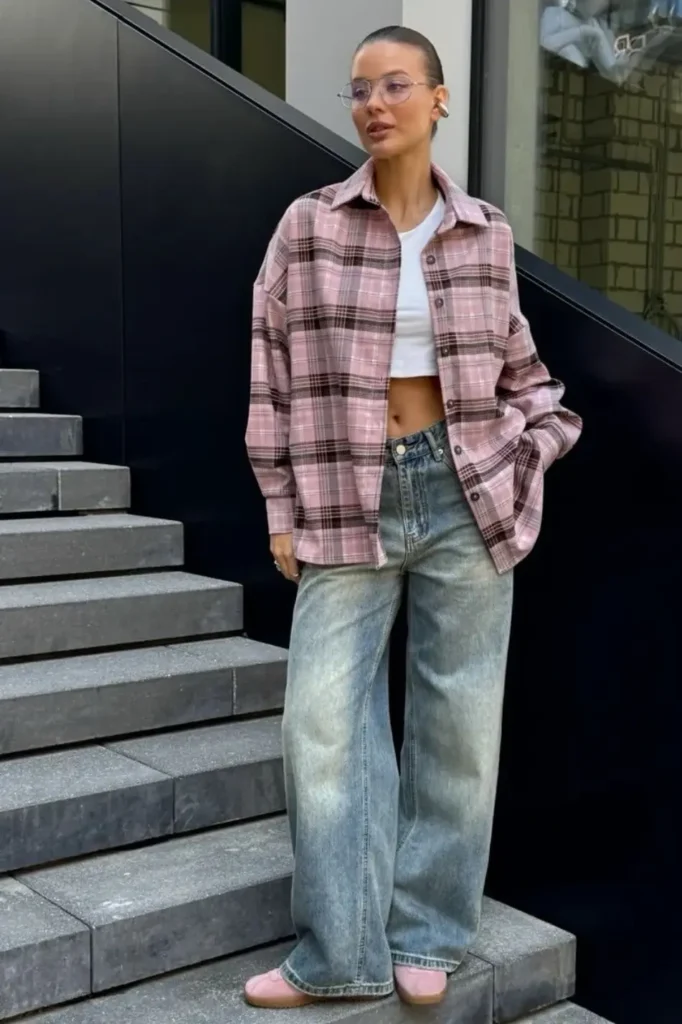
The flannel shirt is the camping morning piece with the most cultural resonance and the most practical function. It is warm when worn closed, adjustable when worn open, and converts easily to a tied-at-the-waist layer when the morning warms up. In a classic plaid — red and black, blue and green, earthy neutrals — it is the camping aesthetic at its most specifically correct.
This is the outfit for the slow morning coffee by the fire. The quiet walk around the campsite as the world wakes up. The breakfast preparation in the cool air before the day’s activity begins. It is the most atmospheric camping outfit in this guide because it is the outfit that belongs to the best hours of any camping trip.
02. The Hiking Day Outfit
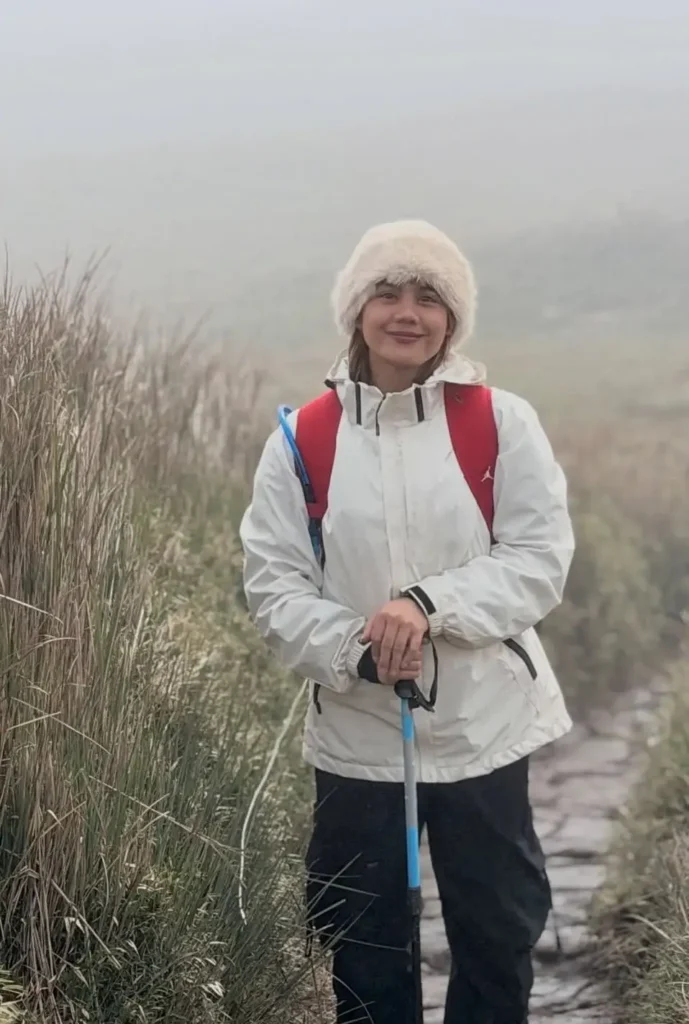
The hiking day is the most physically demanding day of a camping trip and the outfit for it is the most performance-focused in this guide.
A moisture-wicking base layer top — merino wool or a quality synthetic — in a light colour that reflects rather than absorbs heat. Hiking trousers or zip-off trousers that convert to shorts in warm conditions. Properly fitted hiking boots or trail shoes that have been broken in completely before the trip. A lightweight packable jacket in the pack. A hat for sun protection. Sunscreen applied before leaving the campsite.
The hiking outfit is functional first and stylistic second — but functional outdoor clothing has developed an aesthetic that is distinctly its own and the woman who wears technical hiking gear with intention and the right fit looks specifically and correctly like someone who is in the outdoors by choice rather than by accident.
The fit of hiking trousers matters significantly. Well-fitted hiking trousers — not baggy, not restrictive, in a length that does not bunch at the boot — read as intentional and technical. Ill-fitted hiking trousers in any fabric read as borrowed and uncomfortable regardless of their technical specification.
Read more about: FIFA World Cup Outfits for Women: The Complete Style Guide for Every Match Day
03. The Campfire Evening Outfit
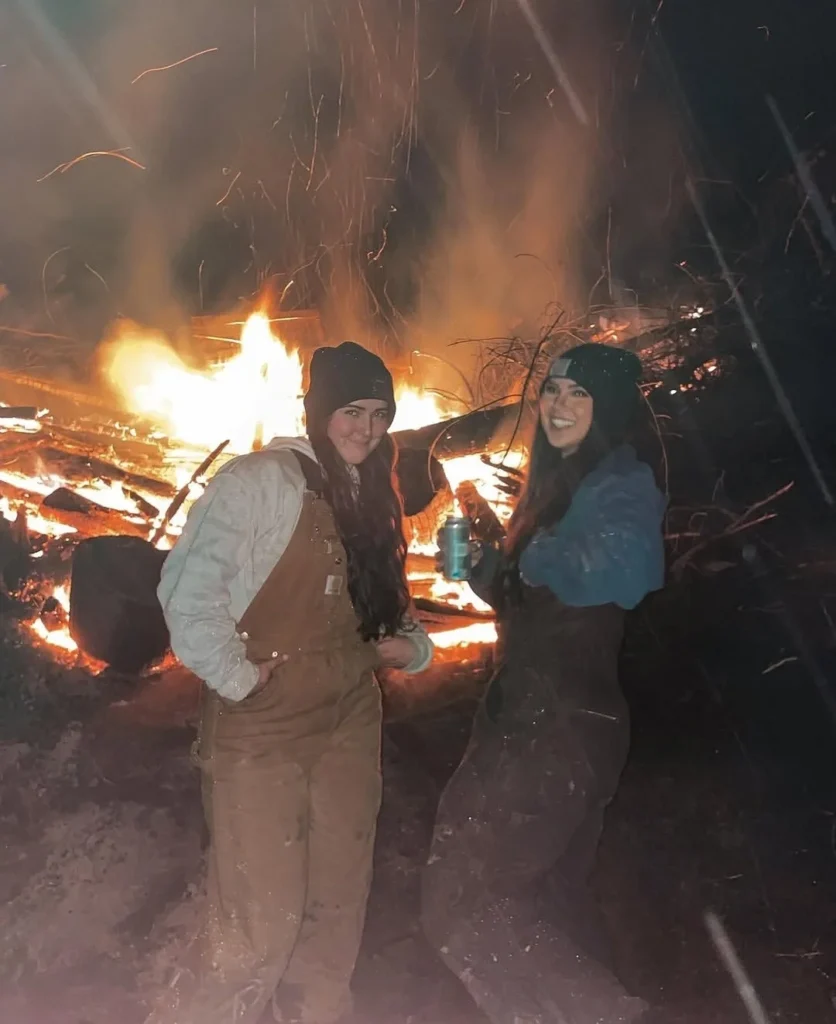
The campfire evening is the social heart of any camping trip — the hour or two after dinner when the fire is lit and the day’s activity is finished and the conversation goes wherever it goes in the warm light of the fire.
An oversized fleece or a chunky knit sweater in a warm tone — rust, camel, cream, forest green — over a simple fitted base layer tee or a long-sleeve merino. Wide-leg outdoor trousers or well-worn jeans. Clean camp shoes — a slip-on clog or a simple slide that does not require lacing after the hiking boots have been removed. A beanie or a warm hat if the evening is cold.
The campfire evening outfit is the outdoor equivalent of the home comfortable outfit — relaxed, warm, specifically designed for sitting in one place for an extended period in cooling evening temperature. The oversized fleece is the campfire piece in the same way that the chunky knit is the winter Sunday piece — its specific warmth and its specific aesthetic register make it correct for the occasion in a way that no technical layer manages.
The colour matters for campfire dressing in a way that it does not always matter for functional outdoor clothing. The warm tones — rust, camel, forest green, warm cream — glow in firelight in a way that cool tones do not. Dress for the fire’s light as well as for the temperature.
04. The Active Outdoor Day Outfit
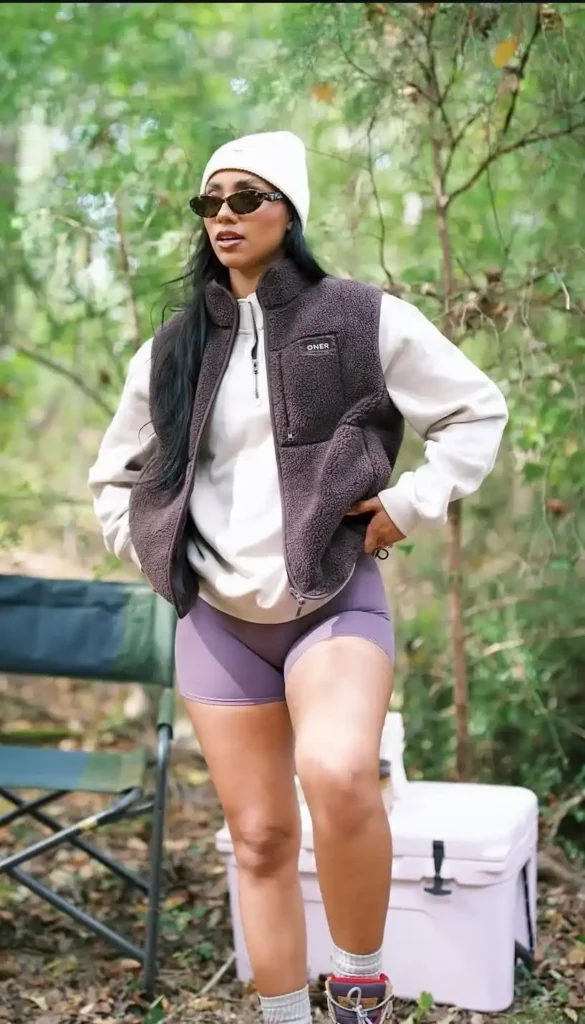
Not every camping day is a full hiking day. The day at the lake, the morning kayaking, the afternoon at the campsite with short exploratory walks — these activities require an outfit that handles moderate activity without the full performance specification of a serious hiking day.
A fitted athletic tee or a lightweight long-sleeve in a moisture-wicking fabric — merino or a quality synthetic — with quick-dry shorts in a neutral colour. Trail shoes or sporty flat sandals for lower-intensity activities. A lightweight packable jacket tied at the waist. A cap for sun protection.
The quick-dry short is the camping piece with the most practical function per unit of pack space. It handles water activities — the lake, the river, the unexpected rain — by drying quickly enough that the discomfort is brief. It handles moderate heat in a way that hiking trousers do not. It packs flat and weighs almost nothing.
This is also the campsite lounge outfit — the combination that works from morning activity to afternoon rest to the short evening walk before the campfire without requiring a change.
05. The Rain Day Camping Outfit
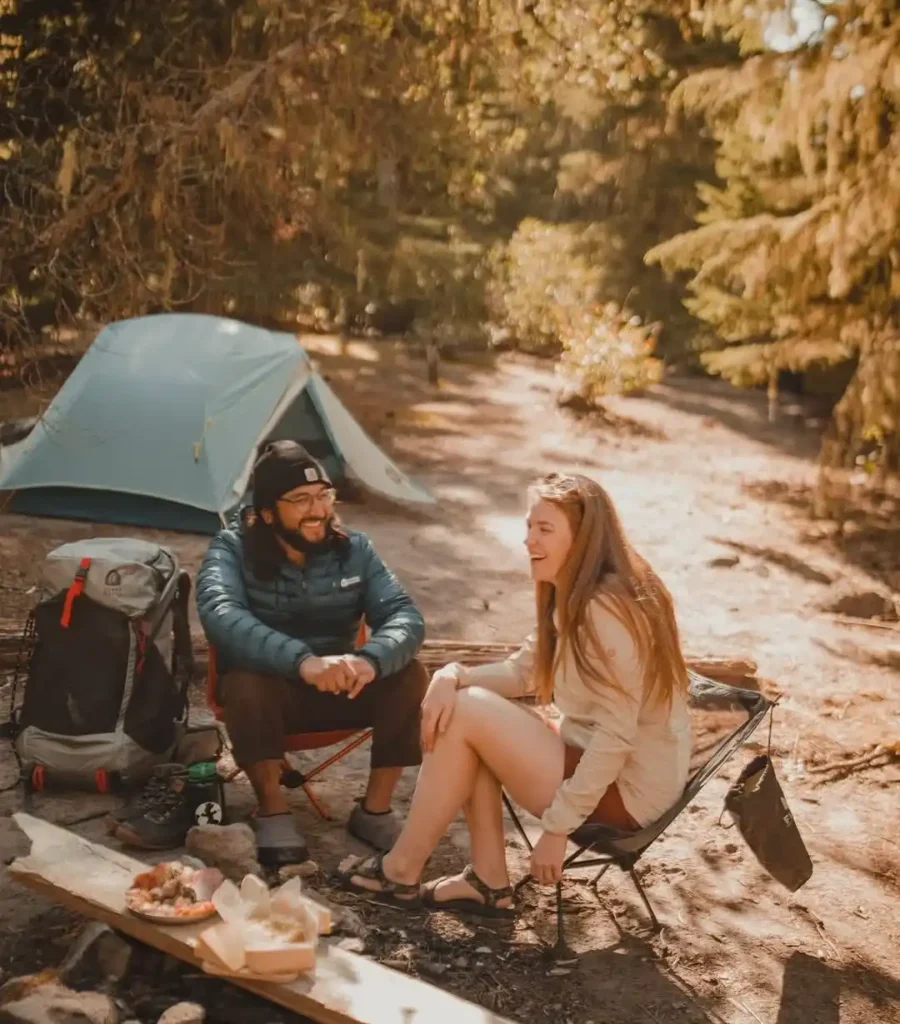
Every camping trip has at least one rain day and the preparation for it is what separates comfortable camping from miserable camping.
A waterproof outer layer — a proper rain jacket with sealed seams and a hood, not a water-resistant jacket that is merely slightly resistant to light drizzle — over a merino or synthetic mid layer and a moisture-wicking base. Waterproof trousers over the hiking trousers or jeans beneath them. Waterproof hiking boots or gaiters over trail shoes. A hat with a brim under the rain jacket hood.
The waterproof rain jacket is the single most important item in a camping wardrobe and the one most frequently downgraded in quality to save money. A cheap rain jacket that is not waterproof in sustained rain is not a rain jacket. It is a light shower jacket that fails when the rain becomes real. Invest in a genuinely waterproof outer layer and wear it when the rain arrives without hesitation.
The rain day camping outfit is not a stylistic outfit. It is the outfit that keeps the wearer dry and warm in conditions that would otherwise end the trip early. Get it right and the rain day becomes one of the most memorable days of the trip — the quiet, the grey light, the sound of rain on the tent fly, the hot drink that is more warming than any summer drink manages to be.
Read more about: Portugal Outfit Ideas: What to Actually Wear in One of Europe’s Most Beautiful Countries
06. The Sunset Walk Outfit
The golden hour at a campsite — the long summer evening when the light turns warm and low and everything looks more beautiful than it did at noon — is the daily highlight of any camping trip and it deserves an outfit that meets it correctly.
Wide-leg outdoor trousers or linen-blend trousers in a warm neutral — camel, stone, cream, warm olive — with a fitted merino or cotton long-sleeve in a complementary tone. Clean trail shoes or leather hiking boots. A lightweight packable jacket tied at the waist or carried in the hand. No hat — the golden hour light does things to hair and faces that a hat covers.
The sunset walk outfit is the camping wardrobe’s version of the evening outfit. It does not require the technical specification of the hiking day or the pure warmth of the campfire evening. It requires only the right proportion, the right colour in the right light, and the mobility to walk the trail or the shoreline that the sunset is best seen from.
The warm neutral trouser in golden hour light is the outdoor photograph that looks like it was lit by a cinematographer. The specific warmth of that hour turns camel and cream and warm olive into colours that glow rather than simply reflect. Dress for the light as much as for the temperature.
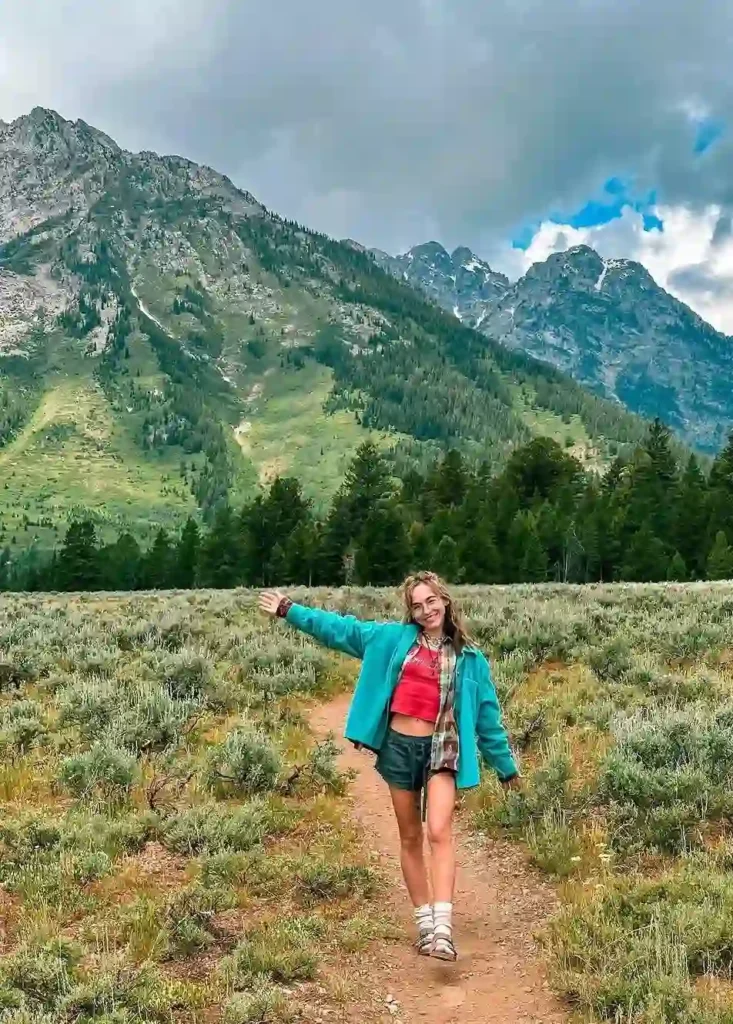
07. The Camp Chore Outfit
Every camping trip involves practical work — setting up and breaking down the tent, preparing food, washing dishes at the camp water point, collecting firewood. These activities require clothing that can be genuinely used without worry.
A fitted base layer or simple cotton tee — the one that is already slightly worn and does not require care about mud or smoke — with cargo shorts or outdoor shorts and camp shoes or trail shoes. A utility-style overshirt or flannel for the cooler chore moments.
The cargo short earns its camping place through function rather than fashion — the multiple pockets that carry the things that camping constantly requires: a lighter, a small knife, a lip balm, a headlamp, the tent pegs that always need to be where the hand reaches. On a campsite the cargo short is the piece with the most practical function per unit of wearing and the camping trip that includes one is consistently more efficient than the one that does not.
This is not the outfit for the photographs. It is the outfit for the work that makes the photographs possible.
Read more about: 2026 Summer Fashion Trends: The Complete Guide to What Is Actually Worth Wearing
08. The Lake or River Day Outfit
A campsite near water — a lake, a river, a coastal spot — changes the camping wardrobe requirements significantly. The water activities require swimwear and quick-dry clothing. The transition between water and campsite requires a cover-up that handles both.
A quality swimsuit or bikini under quick-dry shorts and a moisture-wicking tee or tank. A lightweight button-front shirt as the cover-up that walks from the water to the campsite to the lunch spot without requiring a change. Sports or trail sandals that handle wet surfaces. A lightweight towel that packs small and dries quickly.
The lightweight button-front shirt is the water day equivalent of the linen shirt for beach travel — the single piece that converts the swimwear context into a campsite-appropriate outfit by virtue of its coverage and its casual but intentional quality.
A dry bag or waterproof pouch for the phone and the valuables that water activities put at risk. A dry change of clothes at the campsite for after the water activity. These are the practical components that make a lake or river camping day comfortable rather than a sequence of damp inconveniences.
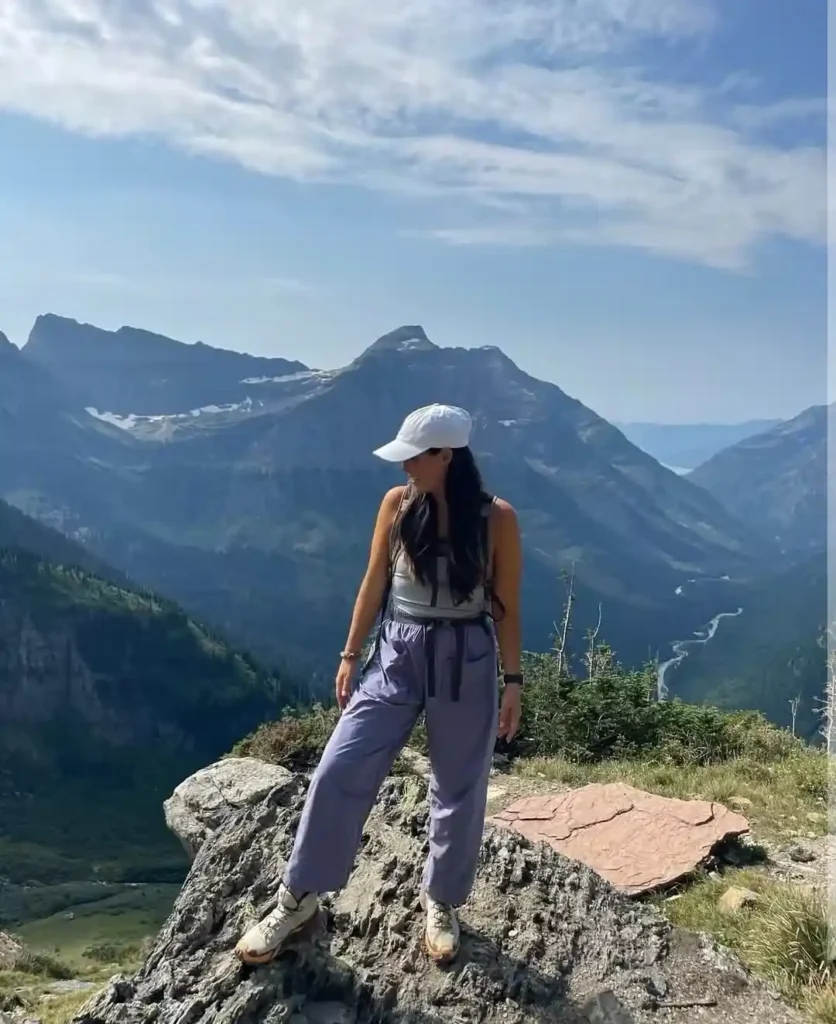
09. The Overlook Hike Outfit
The day hike to a scenic overlook — the summit view, the cliff top above the valley, the viewpoint that the campsite is positioned to access — is the set-piece moment of any camping trip and the outfit for it sits between the full hiking outfit and the casual outdoor day outfit.
Well-fitted hiking trousers or outdoor shorts in a quality technical fabric. A merino base layer that works as the sole top on warm days and the foundation layer for cooler conditions. Clean hiking boots. A packable down vest or lightweight jacket in the pack for the summit, which is cooler than the trail below it regardless of the day’s temperature. A hat. Sunscreen.
The packable down vest is the overlook hike piece with the best warmth-to-pack-size ratio of any camping garment. It adds significant warmth at the summit without adding the bulk or weight of a full jacket. In a clean colourway — black, navy, warm rust, forest green — it also reads as specifically outdoor-fashion in a way that the full puffer jacket does not.
This is the outfit that appears in the summit photograph that the whole camping trip was organised around. Make it count.
Read more about: Party Outfit Ideas: The Complete Style Guide for Every Occasion
10. The Camping Festival Outfit
Camping does not always mean wilderness. The summer music festival — days of outdoor music with camping on site — has its own camping wardrobe requirements that overlap with but are distinct from the wilderness camping wardrobe.
A floral or printed midi dress with ankle boots — the festival camping outfit that handles the mud and the crowd and the three days of wear without losing its integrity. Or denim shorts with a graphic tee and a flannel shirt tied at the waist and wellies or ankle boots for the wet conditions that outdoor festivals in unpredictable climates produce.
The festival camping outfit requires: the waterproof boot or shoe for the wet conditions that every outdoor festival eventually produces. A layer for the cold evening set and the early morning return to the tent. A bag that carries everything needed for the day without requiring a return to the campsite between sets. And the outfit that looks genuinely good in the photographs that a music festival specifically produces.
The balance of functionality and style at a camping festival is weighted more toward style than at a wilderness campsite — the festival audience is visible, the moments are photographed, and the outfit is part of the social experience in a way that wilderness camping does not require. Dress for both the practicality of camping and the visibility of the festival.
Read more about: Europe Vacation Outfit Ideas: The Complete Style Guide for Every Destination
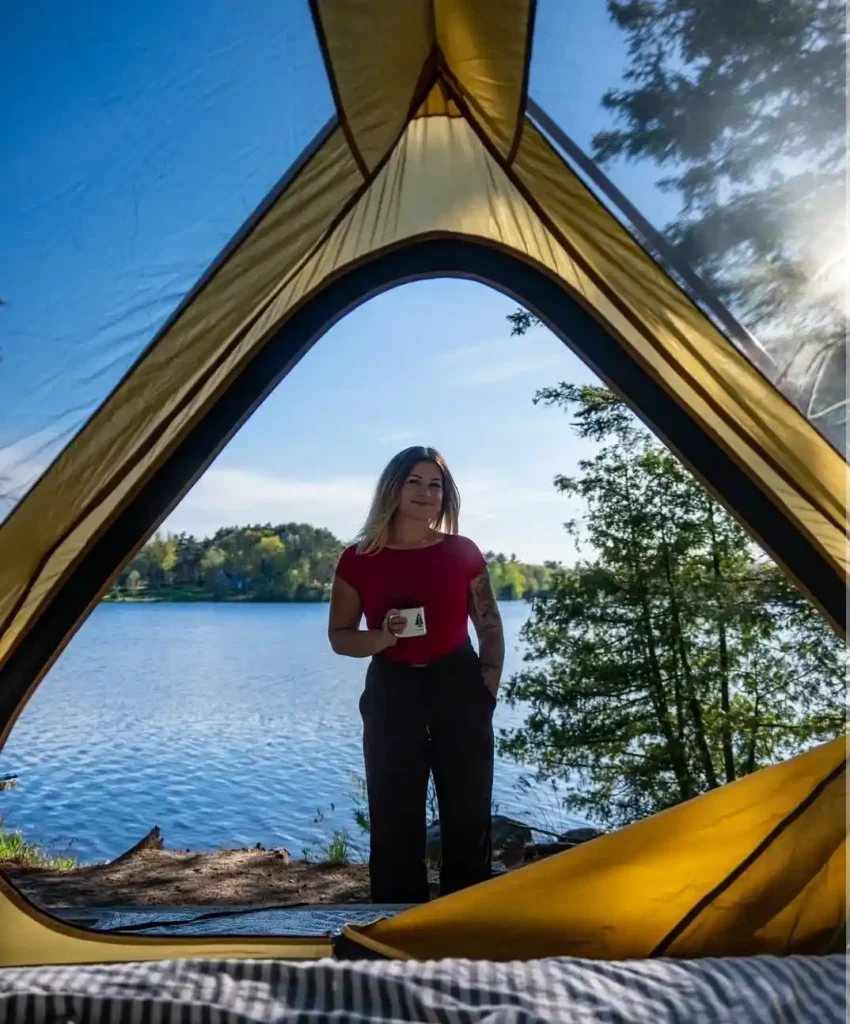
11. The Warm Weather Campsite Lounge Outfit
The warmest days of a summer camping trip — the early afternoon when the sun is direct and the activity is finished and the campsite settles into the gentle heat of a summer afternoon — require the most relaxed outfit in the camping wardrobe.
A lightweight cotton or linen short — wide-leg and comfortable, in a warm neutral or a summer colour. A simple fitted tank or a loose cotton tee. A sun hat. Sunglasses. Camp slides or flat sandals. A lightweight long-sleeve to pull over when the direct sun is too much or the light wind off the lake carries a chill.
This is the hammock outfit. The reading in the shade outfit. The afternoon conversation around the camp table outfit. It handles the warm afternoon rest in the way that no technical or performance fabric manages as well as simple cotton and linen.
The camp slide — the simple slip-on clog or sandal that replaces the hiking boot when the boot can be removed — is the campsite relaxation piece that most experienced campers regard as essential. The relief of removing the hiking boot after a long day and replacing it with something that requires no effort is the camping luxury that costs almost nothing and is worth considerable wardrobe space.
Read more about: College Outfit Ideas for Girls: The Complete Style Guide for Every Day on Campus
12. The Cold Night Sleeping and Morning Outfit
Summer camping nights can be significantly colder than the afternoon temperature suggests and the sleeping outfit is the camping clothing decision that most directly affects the quality of the rest that the next day depends on.
A merino wool base layer — long-sleeve top and long leggings or trousers — worn as the sleeping layer. A lightweight down jacket or fleece for the coldest nights. Merino or wool socks. A sleeping bag rated for the expected low temperature.
The merino base layer is the camping sleeping outfit that works hardest. It regulates body temperature through the night’s variable conditions, wicks moisture generated by the body during sleep, and resists the odour that multiple nights of wear in a camping context would produce in cotton. It is also the base layer that transitions directly from sleeping to the cold morning without requiring a change — the merino base from the sleeping bag becomes the base of the morning outfit as the day warms.
This is not the most visible outfit in the camping wardrobe. It is the most important one. The sleep quality it enables is what makes every other outfit in this guide enjoyable rather than endured.
13. The Post-Camping Town Visit Outfit
Most camping trips include at least one visit to the nearest town — the resupply run, the coffee that the campsite cannot produce at the standard the morning requires, the restaurant meal that the camping diet makes feel like a specific luxury.
The town visit outfit is the camping wardrobe’s attempt at the ordinary world — the outfit that reads as casual and normal in a town context rather than specifically as camping clothing.
A simple fitted tee or long-sleeve in a clean colour — the merino base layer works for this purpose if it is in a clean, neutral colourway. Well-fitted jeans or outdoor trousers that read as trouser rather than hiking gear. Clean hiking boots or trail shoes. A flannel shirt or lightweight jacket. A structured crossbody bag rather than the hiking daypack.
The crossbody bag is the detail that converts the camping outfit into a town outfit most efficiently. The hiking daypack identifies the wearer as coming from the campsite. The crossbody bag makes the same outfit read as simply casual. It is the one accessory that bridges the camping and town contexts with minimal effort.
Essential Camping Outfit Pieces — The Non-Negotiables
The merino base layer. One long-sleeve and one short-sleeve merino base layer covers the temperature range of a summer camping trip better than any alternative. Temperature regulating, odour resistant, moisture wicking. The single most important fabric innovation available to the camping wardrobe.
The flannel shirt. The mid layer that is also the campfire layer, the morning layer, and the town visit layer. One quality flannel in a plaid that complements the rest of the camping wardrobe.
The packable down jacket or vest. The warmth layer that packs into its own pocket and adds more warmth per gram than any other camping garment. Essential for summit days and cold evenings.
The waterproof rain jacket. Genuinely waterproof, sealed seams, hood. Not water-resistant. The rain jacket that actually keeps the wearer dry when the rain is real.
The hiking boot that fits correctly. Broken in completely before the trip. Properly laced. The right sock thickness for the boot. The single most important piece of camping footwear and the one that most ruins camping trips when it is wrong.
The camp slide. The slip-on shoe that goes on when the hiking boot comes off. Light, easy, comfortable. The campsite luxury.
The quick-dry short. The active and water-day bottom that dries fast and packs small.
The sun hat and the beanie. One for the warmth of the day, one for the cold of the morning and the evening. Both are needed. Neither takes significant space.
Practical Tips for Camping Outfit Planning
Pack in layers rather than outfits. The camping wardrobe is not a collection of outfits. It is a collection of layers that combine and recombine across the temperature range of each day. Think in layers — base, mid, outer — rather than in morning, afternoon, and evening outfits.
Choose neutral colours that work with everything. The camping wardrobe built on neutrals — black, navy, forest green, camel, cream, warm grey — creates the maximum number of combinations from the minimum number of pieces. Every layer works with every other layer. No piece requires a specific pairing.
Pack less than you think you need. The camping wardrobe consistently reveals itself to be smaller than pre-trip anxiety suggests. Three to four days of camping typically requires fewer pieces than most people pack for two days. The layers recombine. The merino wool lasts multiple days without washing. The hiking trouser is worn daily. Trust the layering system and pack accordingly.
Test the full outfit before the trip. The hiking boot that has not been broken in. The rain jacket that has not been used in rain. The tent that has not been set up. Any of these can ruin the trip. Wear the camping outfit for a full day of outdoor activity before the trip. Know what works before it matters.
Merino wool is worth the investment. The quality wool base layer costs more than the cotton equivalent. Over multiple camping trips it costs less — it lasts longer, requires less washing, and performs better across a wider temperature range. The camping investment that pays for itself most consistently.
Read more about: Paris Travel Outfits: What to Actually Wear in the Most Stylish City in the World
The Summer Camping Colour Palette
The camping colour palette is built on the colours of the outdoor environment — the colours that look right against forest, mountain, lake, and open terrain.
The camping neutrals: forest green, warm olive, camel, stone, warm cream, and charcoal. These are the trouser colours, the mid layer colours, and the outer layer colours. They work against every outdoor backdrop and with every other piece in the camping wardrobe.
The base layer colours: clean white, warm grey, and navy. These are the colours that work beneath every outer layer and read as clean and intentional when visible at the neckline or the cuff.
The campfire and evening accent tones: rust, warm burgundy, deep teal, and burnt orange. These are the colours that glow in firelight — the sweater, the fleece, the mid layer that is visible at the campsite in the evening hours.
The functional colours: hi-vis yellow and orange for genuinely remote or winter camping where visibility matters. Not an aesthetic choice but a safety one in the right contexts.
Build the camping wardrobe from the neutrals, choose one or two accent tones for the campfire pieces, and keep the base layers clean. The system works and the wardrobe works with it.
Final Thoughts
The best camping wardrobe is the one you forget about.
The one that handles the cold morning and the hot afternoon and the wet afternoon after the dry morning and the cold evening and the night in the tent without requiring any conscious management. The one where every layer is immediately available and immediately correct for the conditions it is needed for. The one that is so well-considered before the trip that it requires no thought during it.
Because camping is the activity that rewards the full attention of the person doing it. The quality of the light at sunrise. The sound of the river. The specific temperature of a mountain morning and the specific warmth of a campfire evening. The stars that the city does not allow.
None of these require thought about what you are wearing if you have thought about it before you arrived.
The thirteen outfits and the essential pieces in this guide are the thinking done in advance. The layers that cover the temperature range. The merino that handles the multiple days. The rain jacket that handles the weather. The camp slide that handles the end of the hiking day.
Pack them. Layer them. Wear them without thinking about them.
The outdoors is waiting and it is at its best in summer.
Go prepared. Camp well. Look exactly right for where you are.
The tent is pitched. The fire is lit. The stars are appearing one by one.
This is exactly where you should be.