Best Things to Do in Paris with Kids: The Complete Family Travel Guide

There is a moment that happens to almost every parent who brings their children to Paris for the first time.
You are standing somewhere — at the base of the Eiffel Tower, beside a carousel in the Tuileries Garden, on a bateau mouche gliding beneath the bridges of the Seine — and you watch your child’s face as they take it all in.
And you realise that Paris, which you perhaps thought of as an adult city, a sophisticated city, a city of museums and wine and long dinners, is actually one of the most magical places in the world to bring a child.
The city is full of wonder. It just takes knowing where to look.
The carousels are everywhere. The parks are enormous and beautifully designed for children to run in. The museums have programmes specifically for families. The bakeries produce things that make small humans fall completely silent with joy.
And there is far more to do here with children than most parents ever realise before they arrive.
This guide covers all of it.
Read more about: Best Things to Do in Switzerland: The Complete Travel Guide
Before You Go: What to Know About Paris with Kids
Paris with children is a completely different city from Paris without them.
This is not a warning. It is simply a fact that changes how you plan.
The city moves at a pace that rewards flexibility. Children need breaks, snacks, unexpected detours into parks, and more time in any given place than the itinerary suggests. Paris handles all of this remarkably well if you let it.
The Paris Métro is efficient and covers the entire city but involves stairs, crowds, and gaps between the platform and the carriage that startle small children. Buy a carnet of tickets, keep children close on platforms, and consider walking between nearby attractions rather than taking the Métro for short distances. The city is more walkable than most families realise.
Museums are genuinely child-friendly here. Most of the major institutions — the Louvre, the Musée d’Orsay, the Pompidou — offer free entry for children under 18. This is not a small thing. Plan for fewer attractions per day than you would without children and stay longer in the ones that genuinely captivate them.
Paris is a walking city. Comfortable shoes for every member of the family are not optional. The cobblestones of Montmartre, the long paths of the Tuileries Garden, the riverbanks of the Seine — none of these are stroller terrain in all sections. Carry less. Move more slowly. Let the city reveal itself.
And eat well. French children eat well and French restaurants expect yours to also. The brasseries, the neighbourhood bistros, the crêperies — all of them are more child-welcoming than their formal appearance suggests. Order the croque-monsieur. Order the crêpe au beurre. Watch what happens to a child who encounters a really good pain au chocolat for the first time.
Read more about: Europe Capsule Wardrobe 2026: Pack 10 Items, Create 30 Outfits
The Eiffel Tower and the Champ de Mars
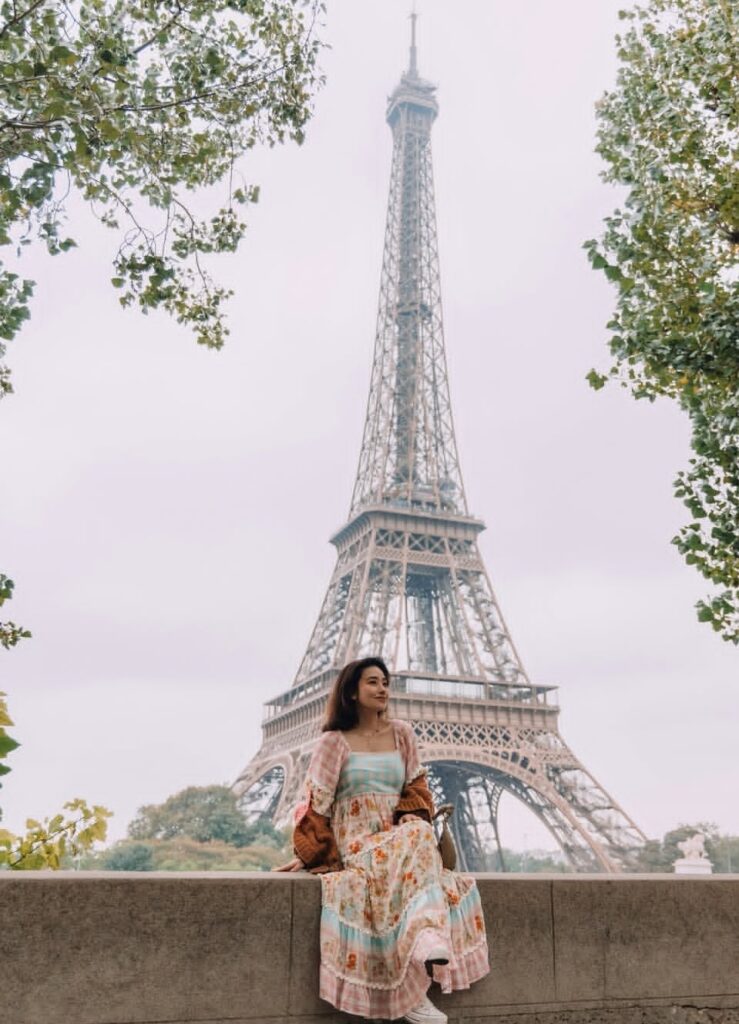
Climb the Eiffel Tower
There is no way to prepare a child for their first sight of the Eiffel Tower.
You come around a corner or emerge from a Métro station and suddenly it is there — all 330 metres of iron lattice rising above the rooftops — and the effect on small children is immediate and total. Eyes wide. Silence first. Then noise.
Book tickets in advance — this cannot be said firmly enough. The queues for walk-up visitors at the Eiffel Tower are among the longest at any attraction in Europe. Online booking with a timed entry slot eliminates this entirely.
The second floor is the sweet spot for families. The views are extraordinary and the lifts reach it without the full climb. The summit is worth the extra effort for older children and adventurous families, but the second floor gives you everything you actually need.
Go at dusk. Stay until the tower’s light show begins on the hour after dark. Every child who has ever seen the Eiffel Tower sparkle remembers it for the rest of their life.
Read more about: Things to Do in Spain: The Ultimate Travel Guide to an Unforgettable Trip
Play on the Champ de Mars
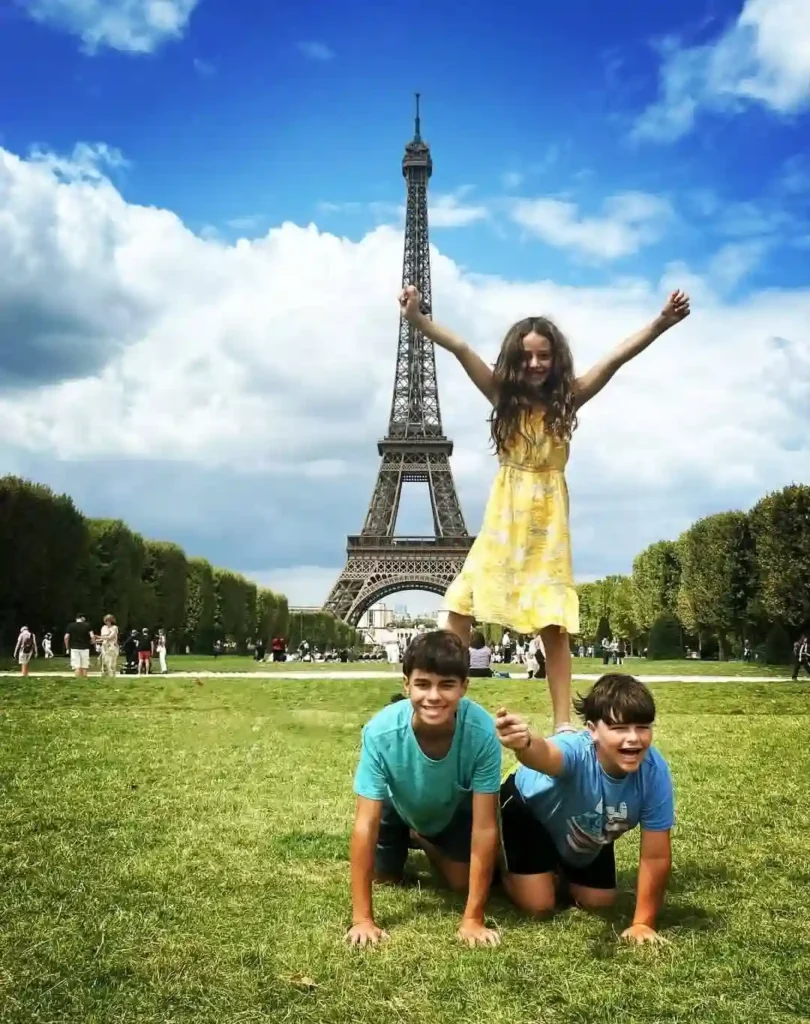
The Champ de Mars — the long park stretching away from the Eiffel Tower — is one of the finest green spaces in Paris for families.
Children run here. Families picnic here. There is space in a city that otherwise has very little of it. Pick up a baguette, some cheese, some fruit from a nearby market and eat on the grass with the tower directly above you.
This is the Paris moment that costs almost nothing and produces the photographs everyone keeps forever.
Disneyland Paris
A Full Day at the Magic Kingdom
Disneyland Paris sits 32 kilometres east of the city centre and deserves its own day — or two, honestly, if your children are the right age for it.
It is one of the finest Disney parks in the world. The Fantasyland section is extraordinary for younger children — the castle is bigger and more dramatic than the American original. Big Thunder Mountain, Pirates of the Caribbean, and Buzz Lightyear Laser Blast run without the crowds that equivalent rides at Orlando or Anaheim attract.
Book everything in advance. Park tickets, hotel if you are staying overnight, Lightning Lane passes for the most popular rides. Paris in school holiday periods fills Disneyland to a capacity that makes unplanned visits miserable. Plan with the same thoroughness you would give a mountain expedition.
Stay in a Disney hotel if budget allows. The early park access, the proximity, and the morning when your child wakes up and remembers where they are — these things are worth the premium for the right family.
Read more about: Best Castles in Europe: The Ultimate Guide to History’s Most Stunning Fortresses
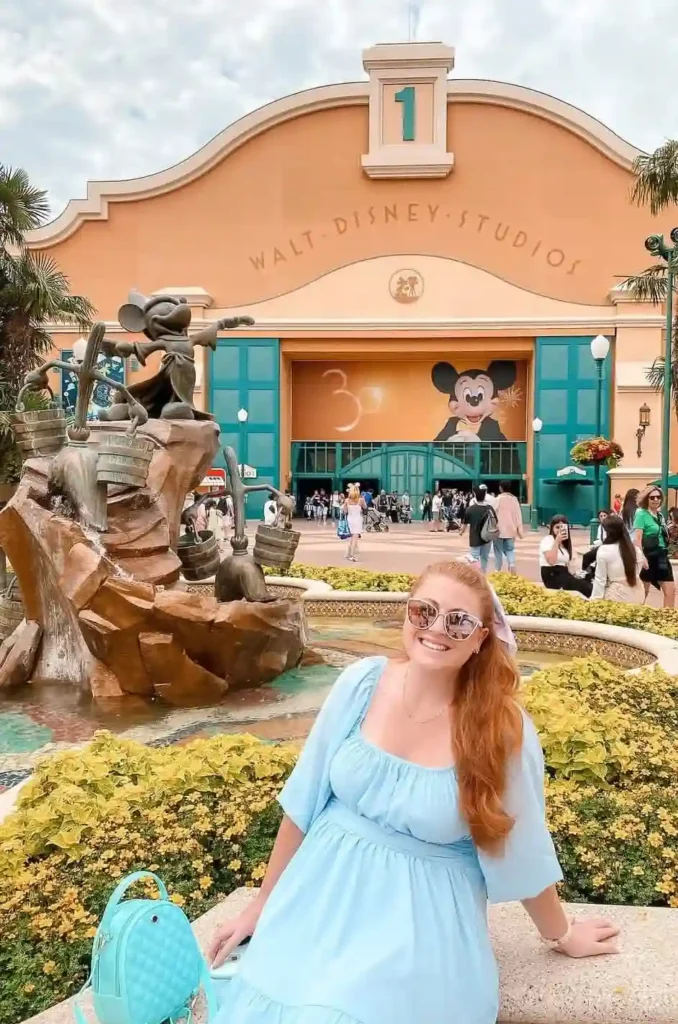
Walt Disney Studios Park
The adjacent Walt Disney Studios park runs on a separate ticket and is worth adding for families with children old enough for the more intense rides and experiences.
The Avengers Campus, the Ratatouille adventure ride built around the Paris of the film, and the Cars-themed section all reward the extra day. The Ratatouille ride in particular — a gentle, beautifully designed journey through a mouse’s-eye view of a Parisian kitchen — is one of the finest family rides in any park in Europe.
The Louvre and Family-Friendly Museums
Visit the Louvre — But Do It Strategically
The Louvre is the largest art museum in the world and it can overwhelm adults within two hours. Taking children in without a plan produces exhaustion, frustration, and the specific kind of family argument that lingers for years.
Take children to the Louvre with a plan.
Pick three things. The Mona Lisa for the experience of seeing the world’s most famous painting. The Winged Victory of Samothrace at the top of a dramatic staircase that produces a gasp in most visitors who see it for the first time. The Egyptian Antiquities section, which holds mummies, sarcophagi, hieroglyphs, and ancient objects that captivate children in a way that very little else in any museum manages.
Children under 18 enter free. Book adult tickets online to avoid the queue. Enter through the Richelieu wing rather than the main pyramid entrance — the crowds are significantly lighter and the experience is calmer.
Two hours maximum. End at the outdoor fountain area for a rest and a snack before the next thing.
Read more about: Europe Capsule Wardrobe 2026: Pack 10 Items, Create 30 Outfits
The Musée d’Orsay
The Musée d’Orsay is the Louvre’s more manageable sibling and in many ways the better choice for families.
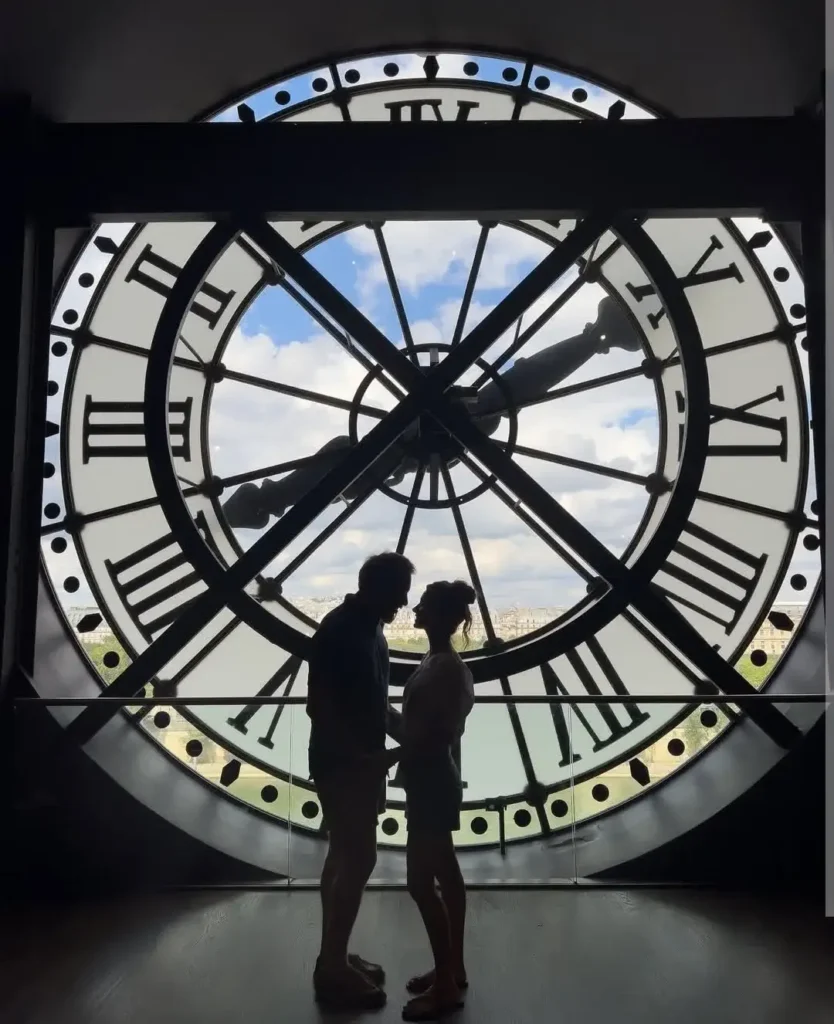
Its collection of Impressionist painting — Monet, Renoir, Degas, Van Gogh, Cézanne — sits inside a converted Beaux-Arts railway station whose architecture is as extraordinary as the art it contains.
The giant clock faces on the building’s façade overlooking the Seine are one of the great viewpoints in Paris. Find them. Stand inside and look through the glass at the river and the city beyond.
Children under 18 enter free. The collection is large enough to be substantial and focused enough to be comprehensible. Two to three hours is about right for a family visit.
The Cité des Sciences et de l’Industrie
The Cité des Sciences in the Parc de la Villette in northeastern Paris is one of the finest science museums in Europe and the single best museum in Paris specifically designed for children.
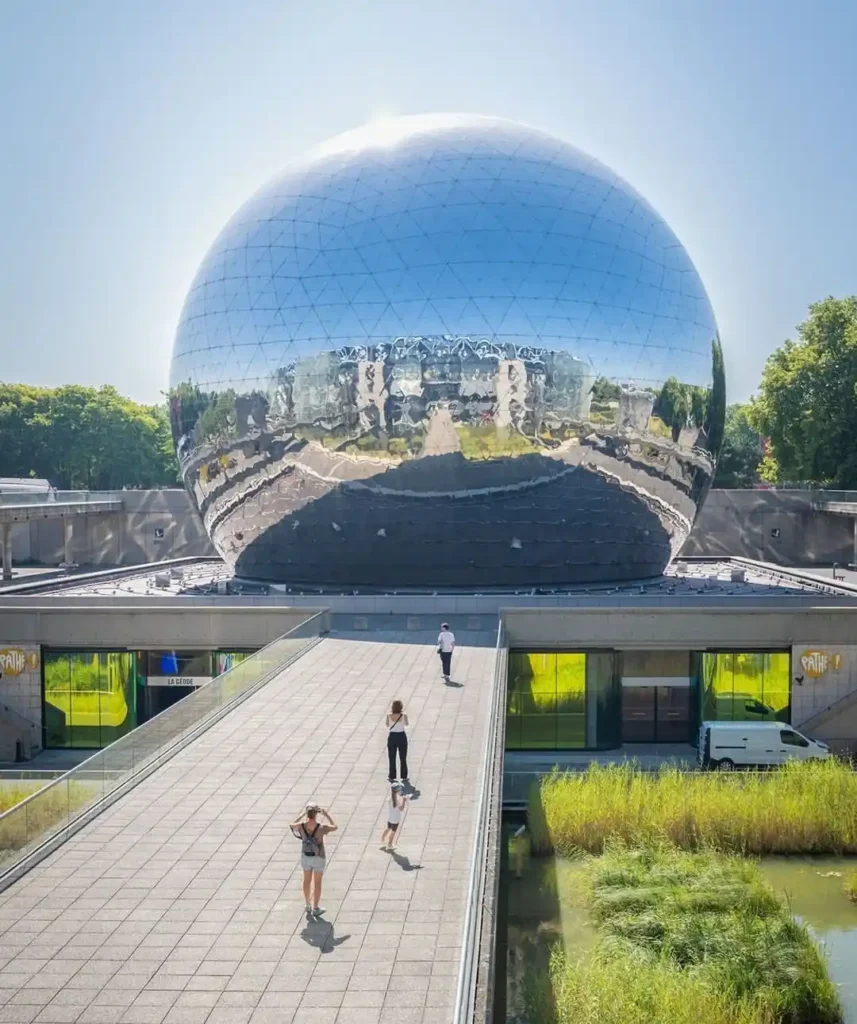
Interactive exhibits on space, mathematics, biology, technology, and the human body fill a vast modernist building beside a park large enough for children to genuinely run in. The La Géode dome cinema beside the museum shows immersive dome-screen films that older children find genuinely spectacular.
This is the museum to prioritise for families with children aged five to fourteen. It will outlast every other cultural experience you attempt in Paris with that age group.
Read more about: Waterfall Outfit Ideas for Women: 15 Stylish and Practical Looks for Every Waterfall Adventure
Parks, Gardens, and Open Spaces
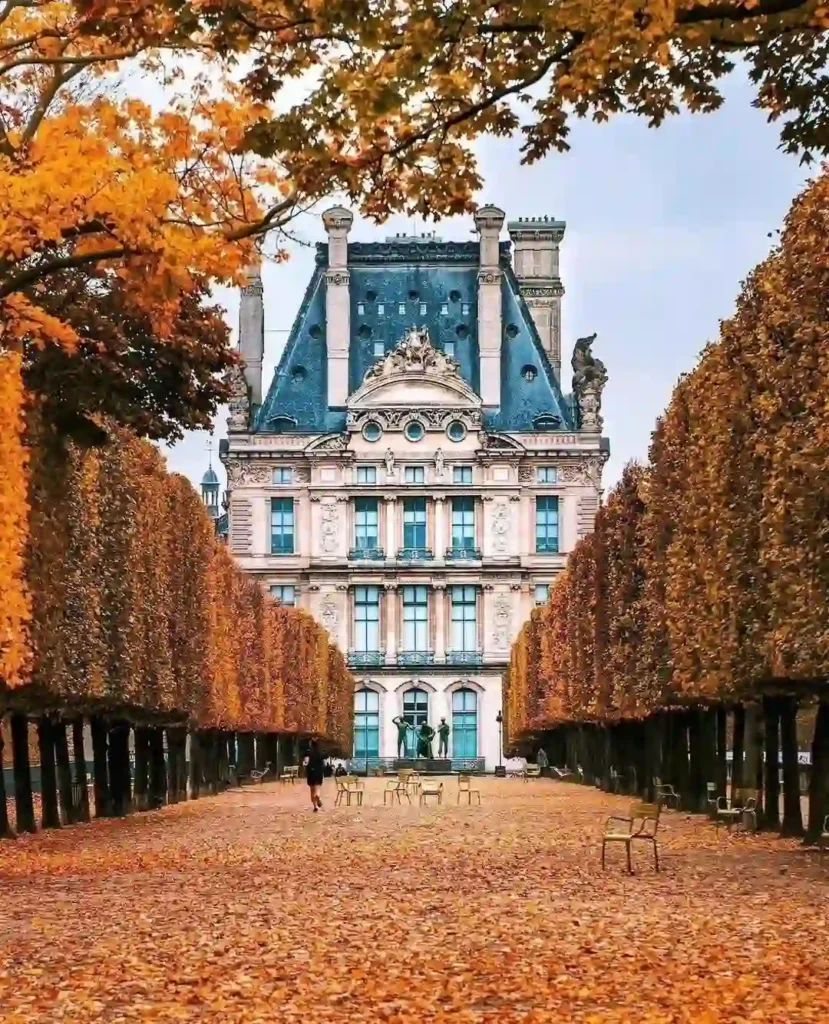
The Tuileries Garden
The Tuileries Garden runs between the Louvre and the Place de la Concorde along the right bank of the Seine and is one of the finest urban parks in Europe for families.
Carousels at multiple points along its length. A large pond where children rent small sailing boats with long poles — a tradition that has been running here since the nineteenth century and remains one of the most purely joyful things a child can do in Paris. Sand play areas. Ice cream and crêpe stands at intervals.
Walk through it rather than taking the Métro between the Louvre and the Champs-Élysées. The walk takes twenty minutes and is considerably more enjoyable than anything underground.
The Luxembourg Garden
The Luxembourg Garden on the Left Bank is arguably the finest children’s park in Paris.
A puppet theatre — the Théâtre du Luxembourg — runs traditional Guignol puppet shows that have been entertaining Parisian children since 1933. The sailing pond here is the original and the finest — children crowd the edges with their poles guiding little boats across the water. There is a small fairground at the eastern end of the garden with rides sized for small children.
The garden is used primarily by Parisians rather than tourists. Sitting in one of the green metal chairs with a coffee while your children play is the most local experience a visiting family can have in this city.
The Bois de Boulogne
The Bois de Boulogne on the western edge of the city is an enormous park — nearly 850 hectares — with a specific section built entirely for children.
The Jardin d’Acclimatation is an amusement park and nature centre within the Bois that has been operating since 1860. Rides, a small zoo, a puppet theatre, a farm section, a mirror maze, miniature golf, and a water park section in summer. It runs for a full day without repetition for most children under ten.
The Fondation Louis Vuitton — Frank Gehry’s extraordinary glass and aluminium building at the edge of the park — is worth a look even with children for the sheer spectacle of the architecture, visible from the path through the park.
The Seine and the City from the Water
Take a Bateau Mouche
Paris from the Seine is a completely different city from Paris on foot.
The glass-topped tour boats that glide along the river between the Eiffel Tower and the Île Saint-Louis pass more significant architecture per minute than almost any other journey in Europe. Notre-Dame Cathedral rising above its island. The Pont Neuf, the oldest bridge in Paris. The grand buildings of the Left and Right banks sliding past on either side.
Children respond to this in ways that surprise parents who expect them to be bored. The movement of the water, the underside of the bridges passing close overhead, the city appearing from an angle they have never seen it — all of it holds attention in the way that the fourth museum of the day does not.
Book a daytime departure for the best views. Book an evening departure for the magic.
Explore the Île Saint-Louis
The Île Saint-Louis — the smaller of the two islands in the Seine at the heart of Paris — is one of the most perfectly preserved pockets of seventeenth-century Paris still in existence.
Walk its single main street. Look at the architecture. And stop at Berthillon, the ice cream and sorbet maker whose products are made on the island and are among the finest in the city.
A Berthillon sorbet on a warm Paris afternoon with the Seine visible at the end of every street is one of the simplest and most satisfying things you can do in this city with children. Do not rush it.
Montmartre and the Sacré-Cœur
Climb to the Sacré-Cœur
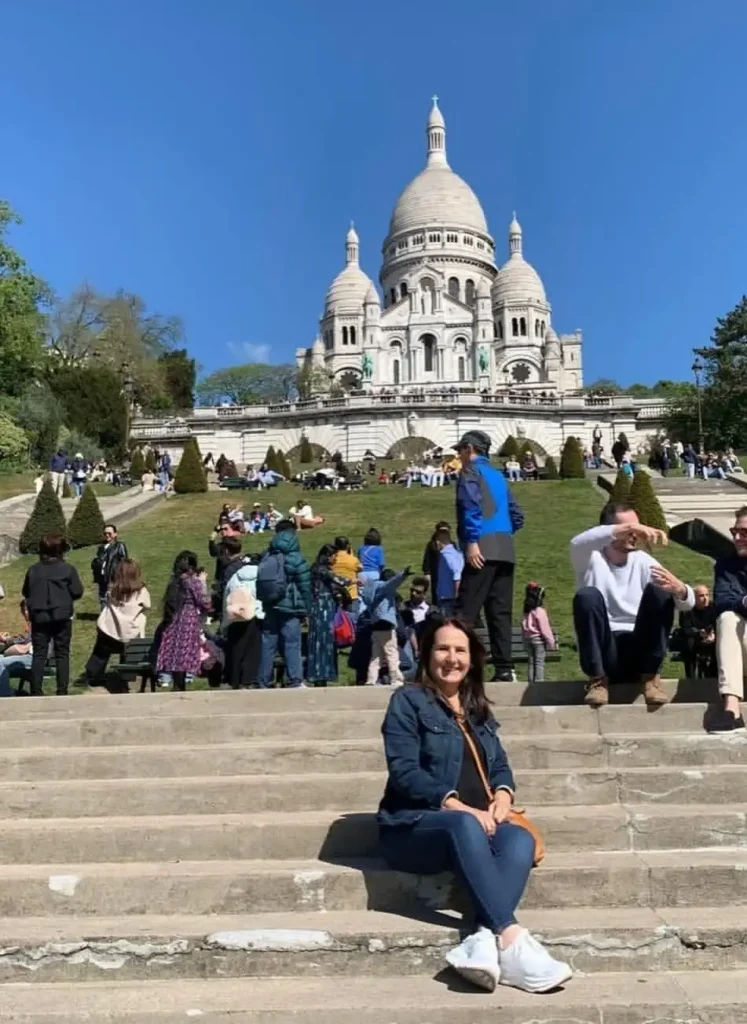
The Sacré-Cœur basilica sits at the top of the Butte Montmartre — the highest point in Paris — and the view from its steps across the entire city is one of the great panoramas in Europe.
The funicular railway from the bottom of the hill to the top is the obvious choice with children. It takes two minutes and runs on standard Métro tickets. Children find it considerably more appealing than the long staircase.
The basilica itself is genuinely beautiful and free to enter. The mosaic interior is one of the most elaborately decorated church interiors in France. Light a candle. Let children move quietly through the space.
The steps in front of the basilica are one of the great places to sit in Paris. Spread out on the steps. Look at the city. Watch the street musicians. Stay longer than you planned.
Wander the Village Streets
The streets below the Sacré-Cœur — the winding, steep, cobblestone lanes of old Montmartre — are among the most beautiful in Paris.
Street artists work in the Place du Tertre in the square behind the basilica. The artists here are primarily there for the tourist trade, but the spectacle of an entire square of painters at their easels is something most children find genuinely fascinating.
The Moulin Rouge is at the bottom of the hill. Its windmill sails and its name are recognisable to any child who has encountered it in film or television. Walk past it. Explain what it is. Keep walking.
Food Experiences Worth Planning Around
The Morning Boulangerie
A Paris morning with children should begin at a boulangerie.
The ritual is simple and it is among the best food experiences in the world. Stand at the counter. Order a pain au chocolat for each child. Watch what happens.
French boulangeries are not all equal. Find one with a queue of locals at 8am. That queue is the only quality signal that matters.
Go every morning. The ritual becomes part of the trip in a way that no restaurant meal does.
Crêperies Near the Luxembourg Garden
The crêpe stands and proper crêperies around the Luxembourg Garden — particularly along the Rue de Bretagne and through the Marais — produce the definitive crêpe au beurre sucre that has made French street food one of the most imitated and least-matched things in the world.
Eat them hot, standing up, from paper wrapping. This is not a restaurant meal. It is a city experience that costs almost nothing and produces unreasonable happiness in people of all ages.
Les Halles Market Area and the Marais
The Marais district in the 3rd and 4th arrondissements is the most food-rich neighbourhood in Paris for families.
Falafel on the Rue des Rosiers — the best falafel in Europe by the consensus of everyone who eats it regularly. Jewish bakeries with challah and babka. The Marché des Enfants Rouges, Paris’s oldest covered market, which has been operating since 1615 and now functions as an indoor food market with counters offering food from a dozen different cuisines.
Walk the Marais in the afternoon. Eat slowly. Let children point at things and eat what interests them.
Practical Tips for Paris with Kids
Book everything. The Eiffel Tower, the Louvre, popular restaurants — all of these reward advance booking with a significantly better experience. Walk-up availability at major attractions in Paris in summer is genuinely poor.
Walk more than you think you can. Paris is best understood at walking pace and children who walk between attractions see the city in a way that children who Métro between them do not.
Carry snacks at all times. Paris between mealtimes is not always a place of easy snack access. A child who is hungry in a museum queue or on a long walk is a different proposition entirely from a child who has crackers in the bag.
Every museum of significance in Paris is free for children under 18. Use this. Plan days around two or three museums with outdoor time between them rather than attempting to see everything in one institution.
The Paris Museum Pass covers adult entry to over 50 museums and monuments without queuing at each one. Buy it if your adult itinerary includes more than three major paid attractions. It pays for itself on the second day.
Keep the pace slow enough that the children are actually in Paris rather than moving through it. The temptation to cover more is real. The reward for slowing down is greater.
The Best Time to Visit Paris with Kids
Every season in Paris offers something different for families.
Summer (June to August) is warm, long, and full of outdoor events. The city’s parks and river banks come alive. The Paris Plages — an artificial beach created along the Seine each summer — is one of the city’s most unexpectedly joyful seasonal events. The queues at major attractions are at their longest. Book everything well in advance.
Spring (April to May) brings mild temperatures, blooming gardens, and lighter crowds than summer. The Luxembourg Garden in spring — with its chestnut trees in flower and its sailing pond reopened — is one of the finest family experiences the city offers. Fewer queues, better light, the same city.
Autumn (September to October) is the season that experienced Paris travellers often prefer with children. The crowds have thinned. The light is extraordinary. The school holiday period in October brings more families but the city handles it well.
Winter (November to March) transforms Paris in ways that suit families differently. The Christmas markets along the Champs-Élysées are genuinely spectacular. The museums are at their least crowded. Ice skating appears outside the Hôtel de Ville and in several parks. The city is colder and requires more layers, but the magic is entirely its own.
Final Thoughts
Paris with children is not a compromise.
It is not a lesser version of the Paris you dreamed of as an adult, diluted by the demands of small people who need naps and get overwhelmed by too many museums in a row.
It is, if you plan it well and let it be what it is, one of the finest family trips available anywhere in the world.
The city has been receiving visitors for centuries. It knows what delight looks like. It has built carousels into its parks and puppet theatres into its gardens and crêpe stands into its street corners not by accident but because Paris has always understood that the best cities are the ones that work for everyone.
Take your time. Eat slowly. Let the children lead occasionally.
They will find the Paris that adults walk past without seeing. And it turns out that Paris, seen through a child’s eyes, is the most beautiful version of the city there is.
Go slowly. Stay curious. Paris rewards families who let it.